Category: Articles

  • Decolonial Listening: Sonorous Bodies and the Urban unconscious in Mexico city

    Decolonial Listening: Sonorous Bodies and the Urban unconscious in Mexico city

    [vc_section css=”.vc_custom_1579170657650{margin-top: 20px !important;margin-right: 20px !important;margin-bottom: 20px !important;margin-left: 20px !important;border-top-width: 1px !important;border-right-width: 1px !important;border-bottom-width: 1px !important;border-left-width: 1px !important;padding-top: 0px !important;padding-right: 0px !important;padding-bottom: 0px !important;padding-left: 0px !important;border-left-color: #000000 !important;border-left-style: solid !important;border-right-color: #000000 !important;border-right-style: solid !important;border-top-color: #000000 !important;border-top-style: solid !important;border-bottom-color: #000000 !important;border-bottom-style: solid !important;border-radius: 1px !important;}”][vc_row gap=”5″ equal_height=”yes” content_placement=”top”][vc_column align=”center” padding_right=”30px” padding_left=”30px”][vc_empty_space height=”40px”][vc_column_text]

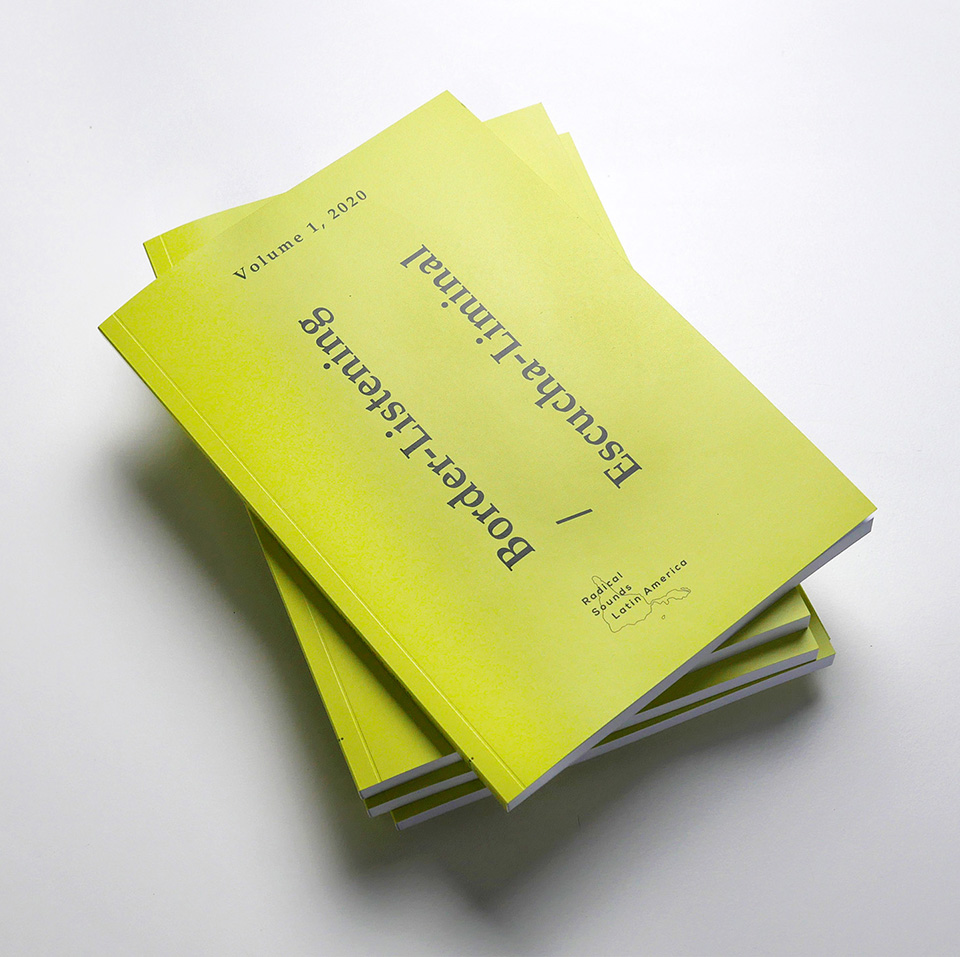
    Border-Listening/Escucha-Liminal 2020

    [/vc_column_text][vc_column_text]

    Donovan Adrián Hernández Castellanos
    Rodrigo Toro

    Decolonial Listening
    Sonorous Bodies and the Urban unconscious in Mexico City

    [/vc_column_text][vc_empty_space height=”40px”][vc_column_text]

    Download PDF

    [/vc_column_text][/vc_column][/vc_row][vc_row gap=”5″ equal_height=”yes” content_placement=”top” el_class=”article-body”][vc_column padding_left=”30px” el_class=”footnotes”][vc_empty_space height=”40px”][vc_column_text]Donovan Adrián Hernández Castellanos has a PhD in Philosophy from Universidad Nacional Autónoma de México (UNAM) and carried out postdoctoral work on postcolonial studies at Universidad Autónoma de México (UAM-X). He is the author of three books, the most recent of which is Urban Archaeologies, Critical Topographies. The dialectic of the city in Siegfried Kracauer and Walter Benjamin (Parmenia, 2020). He also wrote the article “Freedom” for Routledge Publisher’s Vol. II series Key Topic: Rethinking the Americas. He was a panelist at the Seedbed Seminar “Critical Thought against the Capitalist Hydra” convened by the Zapatist Army of National Liberation (EZLN) (Chiapas) and was an invited observer at the Fifth National Indigenous Congress. He has published various educational materials on human rights and contemporary arts as well as opinion articles. He was commissioned by the Cultural Promotion department of UNAM to write an essay on contemporary theater.[/vc_column_text][vc_column_text]Rodrigo Toro was born in Mexico City in 1985. He graduated with honors from the Faculty of Music at UNAM, under the guidance of the famous guitarist Pablo Garibay, and was awarded the “Gabino Barreda” Univeristy Medal. He has given recitals in Germany, Argentina, Brazil, Cuba, France, Nicaragua, Mexico and Uruguay. He has received support from  Ministry of Culture,   and the Santander Iberoamerican undergraduate scholarship to carry out studies and artistic projects. He is currently doing a master’s degree in musical interpretation within the UNAM Postgraduate program and is a guitar teacher at Metropolitan Autonomous University. He is dedicated to concert music, musical research, musical production and the promotion of the contemporary Latin American repertoire for guitar, defending the notion of mestizo guitar, considering it as a bulwark of the cultural and musical variety of the continent.[/vc_column_text][/vc_column][/vc_row][vc_row gap=”5″ equal_height=”yes” content_placement=”top” el_class=”article-body”][vc_column padding_left=”30px”][vc_column_text]

    Everything happens as if, according to an infinite surpass, but always oriented towards the horizon of seclusion, the eye and the ear were relieving one another in view of the unit that is expected. The sight waits for the ear that waits for the sight, and son, it continues to infinity, one punctuating or over-punctuating the other.

    Peter Szendy, Deep In One Ear. An Aesthetic of Listening.

    Above all, sound.

    Then, space.

    A consistent pair that makes the urban experience possible, these confer body and volume on Mexico City. The city always consists of both sound and space: from dimensions and reverberations to acoustic displacements and the senses—a discontinuous topophony.[1] However, the city also consists of a tangible historical sediment—the traces of the pre-colonial past, and the reinvention of tradition. Again and again: what does the past sound like? In sum, this experience is about the city as a sounding board, about a walk as an acoustic and visual lesson, and about intractable subjectivities.

    This is an essay on decolonial listening.


    1.

    What could such listening be about?

    Is it an exercise or a form of knowledge? To listen, one has to decolonize. But what exactly? Cultural studies have emphasized how our postmodern condition unfolds within a complex media ecology. The hegemony of cultural representation has long since moved from Europe to the United States. This transatlantic itinerary has created a new imaginary of North America, which has also been inappropriately turned into a metonym for the Americas as a whole.

    Yet the Americas are plural force lines that converge in stories of resistance. In the arts, the humanities and social sciences, reflective questions have been raised regarding the epistemological division of the world that turns some into the objects of representation and others into subjects of knowledge. This division is known to rest on three bastions: patriarchy, capitalism, and racism.

    The most relevant objection to such intersectional violence has certainly been the resistance offered by social movements, mainly by indigenous peoples against extractive and neocolonial logics Before, progress; now, development. Such is the rhetoric of the capitalist Hydra and the storm that has poured over the peoples of Latin America, re-baptised in the Andes, with dignity and rebellion, as Abya-Yala.


    2.

    What is the decolonial turn?

    While African and Asian Postcolonial Studies sought to understand the dynamics that accompanied the emergence of the states that achieved their independence in the 20th century through wars of decolonization in the Third World, the decolonial turn emerges in Latin America as a questioning of the internal colonialism that consolidated the Repúblicas criollas in the nineteenth century. For Post-colonial Studies, the post-colonial condition evinces the transition to a world order in which the exhaustion of imperialism compelled a critique of the cultural representations that metropolises have made about their peripheries. In contrast, the decolonial turn considers that, even when imperialism has historically exhausted itself, there remains a long-lasting domination pattern that has given structure to a modern/colonial world-system. In other words, it is impossible to understand Modernity without the colonial wound. Hence, in spite of the end of colonialism, the domination patterns that make up coloniality persist, and define the constants of injustice that constitute our world.

    There are at least three genealogical lines that should be considered for such a political and epistemological project:

    • Academic: after the Latin American Subaltern Studies group in the United States introduced post-colonial discussions, a new group was formed of primarily Argentinian, Colombian, and Venezuelan thinkers who, following the lines of thought opened to inquiry by Aníbal Quijano, questioned the persistently colonial logic of Modernity. This led to the formation of the Modernity/Coloniality group that brought together Walter Mignolo, Santiago Castro-Gómez, and Arturo Escobar, among others.
    • Feminist: the debates of the Modernity/Coloniality group neglected the specific dimension of gender, which is key to understanding the domination logic of coloniality. Female thinkers who introduced the feminist perspective to the coloniality critique also showed the impact of patriarchy within Modernity. We can identify female thinkers as diverse as María Lugones, Rita Laura Segato, Karina Bidaseca, Silvia Rivera Cusicanqui, Yuderkis Espinosa, Catherine Walsh, and Ochy Curiel, to name just a few.
    • Decolonization: in addition to academic-activist personalities, the reflexive paradigm of the decolonial turn is established within the historical struggles of decolonization, led by the original peoples of Abya-Yala, from Bolivian collectives to the Confederación de Nacionalidades Indígenas del Ecuador(CONAIE) through Zapatismo and the fundamental contributions on community feminism of Lorena Cabnal, Gladys Dzul and others. The struggles and resistance of indigenous peoples have been, in this sense, the true source of decolonization practices.


    3.

    In sum, decolonization is a political and reflexive act.

    It is also a sensitive act.

    We propose decolonial listening as an act of interrogation and sonic experimentation within Latin American cities, an exploration of their radical sounds and reverberant spaces: a work of topophony that deals with the sound of places and spaces. Decolonial listening is also a process of questioning and thought – a feeling-thinking that takes buildings, squares, streets and avenues, museums and monuments of the city as images of thought. This same process creates sonic montages to identify the dialectic installations that allow the exhumation of the urban unconscious, brushing history against the grain in an archeological exercise.

    We want to think with sound, through the register of the radical sound of Latin American metropolises. Sound and music maintain a close relationship within the configuration of subjectivity and collectivity. Sound, from the idea of a sonorous body, is not only an aural experience, but is palpable, felt with the whole body through its vibrations (speech, as well as dance and choreography, as a study of bodies in motion, also participate in the sonar plane). This body challenges and questions us, it collapses the accumulation of certainties of the modern/colonial self. Music and sound are a way of experiencing ourselves (Frith 2003), and a way of asking ourselves where we hear the world from.

    This means two things: first, that we do not seek the conformation of an aesthetic of listening, but of a type of poetics that is, deep down, always political. A poetic-politics of radical listening. In the Western tradition of philosophy, aesthetics is always a reflection that comes from contemplation, reception, and the enjoyment of art as a spectacle: something to be seen and judged. In contrast, poetics, as Boris Groys has pointed out, is the work of creative experimentation, of the reflective production of new worlds and forms of sensitivity (Groys 2014). We want to think about the radicality of the Latin American sound from the perspective of the production of artistic, philosophical and political experiences of dissent.

    Second, when speaking of decolonial listening, above all we express a desire to think from the sound: the act of listening turned into a philosophical act of questioning. The act creates new diagrams of sound and spatiality—a heterotopia of the topophonies that allow cities to be interrogated and experienced as fields of acoustic and political experimentation and questioning.

    You have to think with the ears.

    How can this be achieved?

    4.

    Among the Tojolobales, there is a type of listening and enunciation from the collective “we” that does not participate in the Cartesian division of the modern/colonial world: its resistance and subversion are audible through listening and enunciation that does not draw distinctions between object and subject, between who enunciates, and who listens. Therefore, what I hear, hears me. Another example is found in the fandangos—magnificent celebrations that last days and nights in the states of Hidalgo, Veracruz and San Luis Potosí, where the sound is produced by a large body of jaraneros, versadores[2] and dancers that make up a unit that feels-thinks collectively. The Santeria[3] rites in Cuba have a collective dynamic where sound and music are fundamental; the history and knowledge of the people is passed on “otherly” (otral)[4] through an antiphonic (question and answer) song. The chant enunciates the names and temperaments of the Orishas, also encrypted in the beats of the Yoruba drums that “speak”. These are examples of the collective construction of sound, originating and generated from listening within ourselves, experienced through a sonorous body that generates symbolic representations and community organization. The work of a musical interpreter consists of being an intermediary between an absent self, its message encrypted on paper, and a possible listener within a random context. Interpreting is an active and constantly changing process, rather than the configuration of a specific work/identity. Listening to music consists of the articulation of a body of sound (encoded in the Cartesian plane of the musical score), within the body of the performer. This implies that the performer themselves becomes the space and territory of many bodies. Being an interpreter necessarily requires breaking the borders of identity, being a territory open to the world, its sounds, its words; that is to say, to be a person populated by many peoples. In Spanish, the verb tocar describes the action of making music, different from German’s spielen, or play in English, both equally applicable to the interpreter and to the machine that produces music. Tocar, by contrast implies a back and forth action, it is an inter-action—that is, an action that transforms what is played, and evidently transforms the player. In other words: what I play, plays me. Music is not what is played, but it is we who play ourselves from music. Music or sound (music’s raw material), in this sense, is the construction of a community space, of a “we” that allows us to play ourselves from a distance.


    5.

    What is an urban unconscious? Above all, how can we obtain one?

    Suely Rolnik has taught us that the unconscious is not something that we have, but something that is produced: we produce desire, according to the connection of our desiring-machines with reality (Rolnik 2019). One of the great machines for capturing Latin American desire is the machine of colonialism: it encodes, segments and directs the routes of desire to the canons of whiteness—heteronormative and Eurocentric canons. It blocks the flows of desire. A colonial unconscious exists. How has it been consolidated? Let’s take a look at the maps and cartographies;[5] the design of Latin American cities has been the result of the process of military conquest and then, of colonial occupation. The application of European construction techniques to the soil of the Valle of Mexico, for instance, has had to deal with the historical presence of lakes, first draining and subsequently reconstructing them. The sinking of colonial buildings in the Historic Center of the city is an example of the problems of simply transferring Old World construction techniques to the cities of the New World.

    In the 20th century, Francisco de la Maza described the history of the capital as follows:

    Mexico City was founded by the Aztecs in 1325, and then rebuilt in 1521 by the Spanish. The builder Alonso García Bravo drew up the layout, following the Renaissance urban grid, partly because of his experience, and partly because the Aztec city was rectilinear. The blueprint circumscribed a small city with longer blocks from east to west – the path of the sun- and shorter blocks from north to south, a plan that is still fundamentally preserved. (De la Maza 1985: 7)

    The city of palaces, as it was also known, was celebrated by poets and writers from its pre-colonial foundation. However, the record of its Spanish layout is still preserved, not only in the constructions that still stand in the first squares of the center, but also in the records of colonial visual culture—from the painted folding screens of the period we know what the urban landscape would have looked like. These folding screens are visual artifacts of great importance in the Valley of Mexico.

    Despite everything, there remain vestiges and material traces—motifs if anything—of the pre-Hispanic buildings that have been absorbed by, and consequently are still present in, the colonial palaces of the city.

    These ornaments, fragments and ruins have been unconsciously integrated into the city, and can be spotted here and there, scattered everywhere as vestigial remains of the colonial catastrophe.

    For instance, in the church of Santiago, one can still see with the naked eye the remains of glyphs engraved in stone—part of the shrines and temples of the Mexica deities. It is well known that the cathedral in the center of the city was built with the ruins of the Templo Mayor, a place of worship for the gods Huitzilopochtli and the black Tezcatlipoca. The most identifiable case is a fragment of the snout of the god Quetzalcóatl, the feathered serpent, that protrudes from the corner of the building in which the Museum of Mexico City is currently housed. It was in no way strange that the Spanish used elements of construction and materials that were once part of Tenochtitlán. During the establishment of the viceroyalty, the Spanish nobility ordered the construction of various palaces that would serve as headquarters for the new overseas powers and, occasionally, as homes. The Counts of Santiago de Calimaya ordered the construction of their palace around 1536; declared a national monument in 1931, it would be acquired by the capital’s government in 1960  and converted into the Museum of Mexico City, to be restored by Pedro Ramírez Vázquez. This majestic building would probably be the last manifestation of the baroque, before the rise of neoclassicism, and the eclectic style that the Frenchified city would later display. A two-story palace, without a mezzanine and with mixed decorations clad with tezontle,[6] the main entrance arch is flanked by two columns with Ionic spires on each side. In 1826, the use by peninsular families of noble coats of arms was banned (Cf. González Polo 1997). The cannon-shaped gargoyles are therefore the final ornaments, completing the majestic style of the building. An element that breaks the order and the regime of colonial symbols stands out, introducing a peculiar dialectic into the general architectural disposition:

    In the corner of the base a pre-Hispanic serpent’s head is embedded “as if it emerged from the earth to support on its immortal jaws, the burden of the viceroyalty.” in the words of Salvador Novo. We do not know with certainty from what age it stems, but the tradition that has been passed down tells us that it was stolen from the Aztec’s Templo Mayor in the 16th century, to serve as a foundation. Fray Juan de Torquemada recounts in his monumental work Indian Monarchy that it was noted in his day (late 16th century) how the figures of idols had been placed in the corners of the foundations in several of the most important houses in Mexico City, having been ordered broken up and disfigured by the Archbishop Garcia de Santa María in 1604. (De la Maza 1985: 36).

    How is it possible that such a practice of construction has not been questioned? Is there something unheard there, something that has not passed through the filter of sight and hearing of the Mexican historiography? What does it mean for decolonial listening that a fragment, violently snatched from history, has been wrecked, inserted into the dynamics of the establishment of the viceroyalty and then, following the end of the colonial mandate, plays a part in the successive processes of modernization of Mexico City? What implications does it have for a city museum that a fragment, a ruin, serves as a pillar and support for the artistic and architectural works that are housed there? In what ways can we read this unexpected dialectic, in which Salvador Novo, the city’s gay chronicler par excellence, presents us with the mouth of the god as a chthonic power that, bursting from the soil in which it refuses to be buried, comes to bear the “burden of the viceroyalty” with its “immortal jaws”? Is this not an image too powerful to miss? The entire viceroyalty, in its ordering of the urban experience, stands on the ruins of the sacred elements of pre-colonial civilizations. What kind of immortality is it, in short, that occupies the ferocious jaws of Quetzalcóatl – henceforth, an earthly power that bursts forth, simultaneously supporting and devouring the colonial building?

    Just as Jameson spoke of a political unconscious that resides in modern literature (Jameson 1989), we intend to speak of an urban unconscious that resides, concurrently evident and unattended, in the epidermis of Latin American cities. Walter Benjamin identified that the unconscious, beyond the theories of Freud, can also be learned and analyzed thanks to new technologies. Photography and cinema would have revealed to the Berlin critic the unexplored dimension of a visual unconscious in which the eye, trained by the technologies of reproduction and their stills, would discover something more than a scopic drive or a compulsive tendency to see and watch. With these visual technologies to help, especially slow motion and high-speed film, the eye would “learn” records of experience that would previously have been impossible (Benjamin 1969). In the same way, the city, conceived as an artefact of experience, is a laboratory that, when used from the perspective of decolonial listening, can open to us the record of the urban unconscious: the ruins that, dialectically interrogated, offer the possibility of listening to the unsaid and unseen in Latin American Cities.


    6.

    The zócalo or central plaza of Mexico City, as in other Latin American metropolises, is a space for convergences and sound encounters. Its acoustic spectrum is so varied in frequencies, ranges, tones and rhythms that, should a musical taxonomist be faced with this cacophony, the general impression would simply be “noise”, “el desmadre” (a mess). However, from the perspective of decolonial listening, it is possible to articulate this riot of sounds as a framework of sonorous bodies reverberating in a space that reveals the complexity, diversity and the other stories of the region. Political slogans thrown into the air with a mixture of sadness and conviction, drums and dances that heal the body, broken violins without pitch, music of diverse genealogies, ranting street organs, laments, insults, announcements, whistles, horns, and on and on—acoustic bodies converge to populate the space, melding the border of their identities in the collective fabric of other stories.


    7.

    Decolonial listening would be that which is conceived from the collective complexity, from the “we”. The point is not just what we hear, but where we hear it from. This way of listening does not judge as the dilettante or critic does. To paraphrase Aimé Césaire, it does not cross its arms with the attitude of a sterile spectator towards life or work, nor does it enclose itself in an individualistic perspective. On the contrary, decolonial listening implies a “taking part in” and a “being part of” (experiencing oneself); it is a creative experience that is oriented not towards a way of thinking of sound (such as the method of dissection utilized in analysis and music theory), but about thinking-sound. This thinking-sound implies feeling and thinking collectively. The sound is then understood as a sonorous body (through space and time) that permeates solid bodies, inhabits and transforms them. Likewise, sound is encrypted memory; it is code, a telluric oscillation that affects how we are configured both subjectively and collectively, meaning that sound and identity are two things in continuous transformation. The sonorous body would be the acoustic materiality of a subject, of a community or of the world; that is, an extended body in the space that is put to action through sonar. In his essay Humanity and Literary Capacity (Steiner 1963), George Steiner writes that “reading well means risking a lot. It is allowing our own identity, our possession of ourselves to be impinged.” This observation, when transferred to the field of sound, takes on a sense of possibility and openness: “Listening well means risking a lot.” But what does it risk, what do we risk? We risk difference, identity, the border between the modern/colonial self and the community self. In another sense, we risk the experience of another, of being the other. Decolonial listening, for those who have not grown up in communal forms of organization but in the solitude of the split-self, would be in some respects schizophrenic listening—a way of experiencing sound through which one’s own border is violated in order to allow oneself the experience of the sonorous body of another, whether through music, shouting, words, or any other form. The “risk”, i.e., “what is risked” is clear, in that “we are, in reality, a complex combination of multiple subjects living together in a single body, subjects that are precariously situated in an imaginary unitary identity through the narrative construction of such fictional unit.” (Vila 2002).

    In her essay La colonialidad de la teoría y el análisis musical en la universidad (The Coloniality of Music Theory and Analysis of the University), Pilar Holguin proposes a reformation and critique of Eurocentrism in academic Latin American musical programs as a form of coloniality of in listening and sound. First, she proposes replacing “the dualism and dichotomy that marked modern Western thought: mind-body, subject-object or civilization-barbarism” (Holguin 2017) with a trans-disciplinary approach.  Holguin also proposes collecting the experiences of listening and making sound of peoples marked by colonial difference, to take advantage of the individual student’s musical background as an active basis for listening and sound/musical conceptions, and a notion of aesthetics focused not on understanding a work, but on the subject’s experience of sound. Decolonial listening therefore implies an unlearning of the forms of Cartesian sound/musical analysis, in order to position oneself away from the multiplicity of factors that would impact on our ways of actively making and thinking-sound: multiple tempos, clouds of color, the multifarious polyphonies of cities (in a single corner a fandango, reggaetón, and Itzmeña wind band and a sonidero[7] can coexist), towards the listening as a “we”. Mexico City and its zócalo are examples of the complex networks of sonorous relationships in Latin America that reveal another way of listening. To put it another way, “el desmadre” is a fortunate starting place from which to build another form of listening in the world.

    [/vc_column_text][/vc_column][/vc_row][vc_row gap=”5″ equal_height=”yes” content_placement=”top” el_class=”article-body”][vc_column padding_left=”30px” el_class=”footnotes”][vc_column_text]Notes

    [1] We understand topophony as “the sounds of a location”.

    [2] Jaraneros and versadores are types of popular singers whose music mostly derives from the oral traditions of southern Mexico.

    [3] La santería is the Caribbean adaptation of the Yoruba religion from Nigeria.

    [4] A neologism that only makes sense in Spanish. It comes from the combination of two words: otro (other) and oral (e.g., “oral cultures”). It refers to the popular transmissions which integrate narratives from the Other, including the alterity in our own popular culture.

    [5] Cartography in this sense is not only a drawing of physical space, but a diagram of multiple fluxes of desire.

    [6] Tezontle is a building material commonly used in prehispanic cities, with an appearance similar to European bricks.

    [7] Sonidero forms part of the popular street parties in Mexico City: the sonideros are a spectacular sound-system that plays all the popular repertoire, from Juan Gabriel to cumbias and salsas that people enthusiastically dance to through the night.[/vc_column_text][vc_empty_space height=”40px”][vc_column_text]References

    Benjamin, Walter. 1969. Illuminations. New York: Shocken.

    Frit, Simon. 2003. “Música e identidad”. Cuestiones de identidad cultural: 181-213. Stuart Hall & Paul du Gay. Buenos Aires: Amorrortu.

    González Polo, Ignacio. 1997. El palacio de los condes de Santiago de Calimaya. Museo de la Ciudad de México. México: JGH Editores.

    Groys, Boris. 2014. Volverse público. Las transformaciones del arte en el ágora contemporánea. Buenos Aires: Caja Negra.

    Holguín Tovar, Pilar. 2017. “La música desde el Punto Cero. La colonialidad de la teoría y el análisis musical en la Universidad”. Revista internacional de Educación musical, 5: 149-156. Colombia: Universidad Pedagógica y Tecnológica de Colombia.

    Jameson, Frederic. 1989. Documentos de cultura, documentos de barbarie. La narrative como acto socialmente simbólico. Madrid: Visor.

    De la Maza, Francisco. 1985. La ciudad de México en el siglo XVII. México: FCE.

    Rolnik, Suely. 2019. Esferas de la insurrección. Apuntes para descolonizar el inconsciente. Buenos Aires: Tinta Limón.

    Steiner, George. 1973. Humanidad y capacidad literaria. En Lenguaje y Silencio. Barcelona: Gedisa.

    Vila, Pablo. 2002. “Música e identidad. La capacidad interpeladora y narrativa de los sonidos, las letras y las actuaciones musicales”. Cuadernos de Nación. Música en transición (33). Ana María Ochoa y Alejandra Cragnolini. Bogotá: Ministerio de Cultura.[/vc_column_text][vc_empty_space height=”40px”][vc_empty_space height=”40px”][vc_column_text]© 2020 Radical Sounds Latin America and the author

    Published Oct. 02, 2020[/vc_column_text][/vc_column][/vc_row][vc_row fullwidth=”has-fullwidth-column” equal_height=”yes” content_placement=”middle” margin_bottom=”0px” padding_top=”0px” padding_right=”0px” padding_bottom=”0px” padding_left=”0px”][vc_column width=”1/2″ margin_bottom=”0px” padding_bottom=”0px”][agni_image img_url=”2255″][/vc_column][vc_column width=”1/2″ margin_bottom=”0px” padding_bottom=”0px”][vc_column_text]

    Border-Listening/Escucha-Liminal 2020

    €7.00 + shipping costs

    14.8 x 21.0 cm / Softcover, 170 pages, English/Spanish texts

    BUY PRINTED EDITION[/vc_column_text][/vc_column][/vc_row][/vc_section]

  • Let The (Techno) Sculpture Speak: Machines and Orality in Recent Peruvian Sound Art

    Let The (Techno) Sculpture Speak: Machines and Orality in Recent Peruvian Sound Art

    [vc_section css=”.vc_custom_1579170657650{margin-top: 20px !important;margin-right: 20px !important;margin-bottom: 20px !important;margin-left: 20px !important;border-top-width: 1px !important;border-right-width: 1px !important;border-bottom-width: 1px !important;border-left-width: 1px !important;padding-top: 0px !important;padding-right: 0px !important;padding-bottom: 0px !important;padding-left: 0px !important;border-left-color: #000000 !important;border-left-style: solid !important;border-right-color: #000000 !important;border-right-style: solid !important;border-top-color: #000000 !important;border-top-style: solid !important;border-bottom-color: #000000 !important;border-bottom-style: solid !important;border-radius: 1px !important;}”][vc_row gap=”5″ equal_height=”yes” content_placement=”top”][vc_column align=”center” padding_right=”30px” padding_left=”30px”][vc_empty_space height=”40px”][vc_column_text]

    Border-Listening/Escucha-Liminal 2020

    [/vc_column_text][vc_column_text]

    Luis Alvarado

    Let The (Techno) Sculpture Speak
    Machines and Orality in Recent Peruvian Sound Art

    [/vc_column_text][vc_empty_space height=”40px”][vc_column_text]

    Download PDF

    [/vc_column_text][/vc_column][/vc_row][vc_row gap=”5″ equal_height=”yes” content_placement=”top” el_class=”article-body”][vc_column padding_left=”30px” el_class=”footnotes”][vc_empty_space height=”40px”][vc_column_text]Luis Alvarado (Lima, 1980) studied Audiovisual Communication at Pontificia Universidad Católica del Perú. An independent curator and researcher with a focus on the relationships between art and sound, and experimental music, Alvarado is also a poet and sound artist and has developed various projects related to sound and visual poetry. Luis Alvarado is the director of the record label and concert promoter Buh Records, internationally recognized as one of the most important labels in Latin America. With more than 150 productions released, between new music and archival material, Buh Records is an outstanding contributor to Peruvian and Latin American avant-garde and experimental music. Alvarado has curated various documentary exhibitions including: “Resistencias: primeras vanguardias musicales en el Perú” (Resistances: first musical vanguards in Peru) (2006), “Inventar la voz: nuevas tradiciones orales” (Inventing the voice: new oral traditions) (2009) and ” Hacer la audición: Encuentros entre arte y sonido en el Perú” (Audition: Encounters between art and sound in Peru) (2016).[/vc_column_text][/vc_column][/vc_row][vc_row gap=”5″ equal_height=”yes” content_placement=”top” el_class=”article-body”][vc_column padding_left=”30px”][vc_column_text]Standing at the center of a room, we see seven small robotic figures placed upon stands. We can hear them speak with synthetic voices. Each one emits different messages, sounding either on their own or in unison. The voices are generated by a software that renders text into audible speech, known as text-to-speech or TTS. In this case, it reproduces the dialogues and arguments that take place in the comments sections of three popular Peruvian songs on the YouTube platform: Cuando pienses en Volver (When you think about coming back) by Pedro Suarez Vertiz, Todos Vuelven (They all come back) by Los Morochucos and Esta es mi Tierra (This is my land) by Augusto Polo Campos, three songs that talk about migration and the nostalgia of those who are far from their place of origin.

    The dialogues, transformed into synthetic voices, have been redistributed across the seven speakers, causing an effect of disjointed phrases that overlap, in which it is possible to distinguish topics commonly related to Peru’s national identity, such as political corruption, the gastronomic boom, the ancestral past, and to the displacement of a generation that traveled far from their country in search for better life opportunities. This sound installation, El Eterno Retorno (The Eternal Return) (2012), by Peruvian artist José Luis Martinat was presented as part of the exhibition Remesas: flujos simbólicos, movilidades del capital (Remittances: symbolic flows, capital mobilities), curated by Rodrigo Quijano, which acutely emphasized the constant migratory flow and participation of local artists in the international art circuit as a as a source for the production of new themes on the local scene. The thought underlined by Remesas, however, was that these trips to the centers of international artistic production  did not undermine the desire to overcome dominant currents, and that this need for displacement was the starting point “to disarm an ancillary and   condition, a condition from which it is often difficult to breathe with across regional difference.”[1] The exhibition was held at Centro Fundacion Telefonica in Lima, a cultural space that is the property of a transnational telephone company  an important role in promoting and validating a new artistic scene in which art and technology are deeply related.

    Pleno (2016), another recent work by Martinat, takes the form of a vinyl LP record that contains the oaths made by Peruvian congressmen elected in 2006 and between 2011-2016, when assuming office. We listen to the oaths, once again reproduced by synthesized voices using the TTS software, one after the other (in País con futuro (2016) the artist used the same method to reproduce a series of slogans from electoral campaigns). Additionally, the vinyl has been pressed in such a way that it makes the needle jump and return to the same groove, generating a loop in its reproduction. The idea is to present the piece as a set of vinyls played simultaneously and continuously on multiple turntables, each looping randomly on a different oath.

    The piece reminds us that in the political sphere, the voice has been, and still is, a fundamental element of legitimation, as the law is not complete until the vocal staging that makes it public (1). [2]What Martinat does in Pleno (and in País con Futuro) is to decompose that operation. Automated artificial reproduction ends up turning messages into mechanized information. The piece shows that these messages can be reproduced and repeated as many times as desired, like a mantra, but by doing so it becomes devoid of its meaning.

    These records adhere to the tradition of using recordings of political figures as a means of propaganda, although here in a parodic way, by replacing their voices with an artificial reconstruction that results in their standardization. It is a gesture that affirms, in a disbelieving and cynical way, how the promises of those who exercise political power are perceived. The work is not mere skepticism embodied in a form of artistic appropriation, but rather a questioning of the staging of the voice – in this case an artificially produced substitute.

    From the technological side, this is possible thanks to the development of TTS software. This technology began to spread massively in the early 80s and played an important role in the development of so-called assistive technologies (AT) that expand the capacity of people with disabilities to interact with the wider world. TTS software has also been used for the creation of avatars within the culture of videogames, and in the development of automated translators, amongst other uses, with a wide range of systems that have developed from the   of recorded samples of real voices to the use of synthesizers and artificial intelligence.

    El Eterno Retorno, Pleno and País con Futuro all rely on speech technologies that sound robotic and artificial to us. They are works that deal with the machinic return of orality proposed by Félix Guatari, “capable of engendering mutant subjectivities, projections and fantasies of a human/machine interstice.” [3]

    Hierarchies of speech
    In Callejón Oscuro – Concierto para una mente y 52 parlantes (Dark Alley – Concert for One Mind and 52 Speakers) (2013) by Sergio Zevallos, one hears a variety of voices that come from 52 speakers, arranged like the sidewalls of a corridor. Callejón Oscuro (Dark Alley) refers to a boys’ game, popular in Peru, in which a corridor is formed by two lines of people who then beat and attack another person who has been forced, as punishment, to walk between the lines. An act replete with shame (that arose within military academies) here serves as a metaphor for the dynamic of certain relationships of power. In the notes that accompany the album that includes the soundtrack of this installation, the author notes:

    The different voices were chosen according to the texts they read – young, adult, male, female voices. The texts form discursive groups in a semantic counterpoint, where they complement each other’s content. There is a group that consists of excerpts from military speeches, statements from a convicted human rights violator and critical texts on heterosexuality. Another group is made of popular texts about nationalism and identity. Finally, a third group assembles purely subjective texts, such as a list of insults from the local language, with sexual expressions used to discriminate, and short stories of amoral content. [4]

    These voices simultaneously represent imperatives upon which subjectivity is built and ways in which control is exercised.

    There are various aspects to point out regarding Callejón Oscuro. On one side, the staging of the 52 speakers serves to present the piece in its whole dimension, operating in the manner of an experimental radio composition. The piece is an ensemble work that reminds us of the common experience of someone who walks down certain streets in the central district of Lima, stunned by the cacophony of sounds that emerge from peddler’s speakers, shops and public transport horns; a chaotic sound scenery of the established ways of informal economy, where a competition to be the loudest and most insistent, as a means to attract possible customers, takes form. It is the law of the strongest, of the one who attacks the most persistently, that seems to be reproduced in Zevallos’ work.

    This frequent use of technological devices for the amplified representation of orality, as well as its manipulation through audio montages and the use of TTS, marks a tendency towards a machinic orality that undoubtedly feeds on a new technological imaginary, in which interfaces and prostheses that expand beyond standard human capacities are common.

    The use of these machinic oralities may also respond to a growing trend in local contemporary art, due to practices inherited from neo-conceptualism, which find in sound and speech a field for exploration. However, the emphasis put on speech and its ability to be reproduced is also a consequence of socialization and the widespread use of the new audio reproduction technologies that have been transforming the world of visual arts for almost two decades, as well as life itself: we have become ever more nomophobic—afraid of being without our mobile phones—as we live attached increasingly to a device that reproduces our own voice and amplifies the voice of the other. What is remarkable is that this use of technologically mediated orality in recent Peruvian sound art poignantly stresses certain aspects of what we could define as a social dysfunctionality.

    The vocal piece by Luz María Bedoya, Me tiemblan mis labios (My lips [my] tremble) (2009), references directly in its title the prejudice against Quechua-accented Spanish speech, by the use of an incorrect syntax (the double possessive “Me-mis”), a linguistic structure frequently used by Andean immigrants in the capital of Lima. The piece is composed of a radio broadcast that repeatedly utters key dates from recent Peruvian history, which have the letters contained in the work’s title removed. The artist states:

    The first text is the succession of a series of recent dates that indicate certain flaws of Peruanity: the day on which a national newspaper publishes, with an accusing tone, the photo of a Quechua-speaking congresswoman holding her notes with errors in Castilian Spanish writing; or the day that the 1090 legislation, which affects the use of Amazonian lands, is promulgated; or the day that the reuse of disposable surgical instruments is authorized in a state hospital, for example. The second text is the phrase “My lips [my] tremble,” which is not heard but exists when the first is wounded. [5]

    Luz María Bedoya’s piece alludes to the complex problem of centralism in Peru, which has exacerbated economic and social inequalities, and population disparities. This is, undoubtedly, also expressed in the hierarchization of linguistic varieties in Peru, where Spanish is the most used and the “language of the capital,” therefore, the one that will generate the greatest job opportunities, leaving Quechua in a subaltern position. [6]

    Writer and anthropologist Jose María Arguedas is a figure key to understanding the complexity of this issue. Through his work he preserved and strengthened Andean oral traditions, and reinvigorated Quechua by his own practice of oral poetry. It is nonetheless interesting to point out that Arguedas’ work comes along with the emergence of a mass culture, in the context of which he became aware of the importance of technology to the preservation and transmission of that oral culture.[7] To imagine a new radio, then, is to imagine a new system of social relationships that puts an end to the centralized ways in which power constitutes itself.

    The artist Eliana Otta also conceives the possibility of altering the message of a Peruvian song with wide mass circulation. In Con P de… (2016), she crafts an audio piece from a text written by the artist in 2011, which extracts the well-known phrase “Con P de Patria” (With P for Homeland) from the Peruvian waltz Y se llama Perú (And it’s called Peru), composed by Augusto Polo Campos in 1974, at the request of the government of Velasco Alvarado, which has become an official symbol of Peruvian identity. The artist turns the text into a polyphonic reading to which poets, singers, writers, activists and artists lend their voices. In this way, Otta’s exercise suggests two ways of seeing Peru: one that hints at the patriotic idealization that is read through the lyrics of the famous waltz, contrasted with another definition of the “Peruvian” that the artist proposes as desire and demand.

    Memoria Colectiva (Collective Memory) (2010), by Elena Tejada-Herrera, is a sound piece that works as an audio microdocumentary. Composed using voices and slogans from protest marches held in Lima, it forms a collage that unfolds the voices of various groups of women protesting against the Fujimori dictatorship. In Estado de emergencia (State of emergency) (2014), by Luisa Fernanda Lindo, one hears the sound of a siren, against which the artist repeats the phrase “Repetir palabras hasta hacer del espacio un lugar común” (Repeat words until space turns into a common place). At first, the voice is unintelligible due to digital processing effects, presenting cuts and interventions, but it becomes increasingly intelligible, insistent despite the permanent presence of the continuously-shrieking siren. Both Lindo and Tejada-Herrera’s pieces are symptomatic of a relationship of tension with the inhabited space, where orality is what allows the defusing of that tension. Beyond the words themselves, the fact that the words exist in that auditory spectrum, whether as noise, processed screams or as collage, speaks to a new repertoire that this machinic orality is making possible.

    Spectra of the voice
    In the sound installation La realidad ausente (The absent reality) (2015), Santiago Pillado-Matheu builds an auditory piece composed with recordings of testimonies from the time of the internal conflict in Peru, which are reproduced through several loudspeakers placed at various points in a fully darkened room. These testimonies denounce the violation of human rights and abuses that were inflicted on many indigenous populations during this time. Experimental musical compositions intertwine with gasps, excavation sounds and radio transmissions of old popular songs as a way of delving into the ghosts of an era, while contrasting it with the Peruvian radio stations on which nostalgia reigns – little more than museums of songs that have been in rotation for decades, symbolizing a haunting past.

    Fig. 1 La realidad ausente (The absent reality) (2015), Santiago Pillado-Matheu. Photo by Juan Pablo Murrugara

    The public hearings held during the work carried out by the Comisión de la Verdad y Reconciliación en el Perú (Peru’s Truth and Reconciliation Commission), charged with preparing a report on the violent internal conflict experienced in Peru between 1980 and 2000, confronted the country with a series of oral testimonies from the victims who recounted the abuses committed during that period. Oral testimony in itself became a tool for clarification of historical memory. As Esther Espinoza points out, “Said in front of an audience, the testimonies intend to break the silence, a silence that has been part of the tragedy, not only because of the fear of speaking due to intimidation but because there was no interlocutor who would respond meaningfully […] The public and nominal character of the hearings is the face of the law that now could have a defined image for the victims.” [8]

    There is another group of pieces in which, more than orality (in the sense of texts that communicate meaning) we find vocality, illegibility and abstraction. Regarding the gesture of listening, Vilém Flusser argues that speaking voices are listened to differently than music. The former are heard while deciphered, and they are read, which is why the deaf can read lips, but not music. Although deciphering also occurs when listening to music, since music is codified sound, “It is no “semantic reading,” no deciphering of a codified meaning. […] The human body is permeable to sound waves, and in such a way that these waves set it in vibration, affect it. […] the gesture of hearing is essentially an adaptation of the body to an acoustic message” concludes Flusser. [9] This is the type of relationship found in a work such as Speaker Tower (2017) by the artist Nicolas Kisic, which is a sound sculpture for public spaces, built with two large rotating speakers made of recycled material, that can be used in different ways. For example, it has sometimes served to amplify recordings of a vocal sound piece, created in collaboration with Shipibo-Conibo artist Rawa. Conceived as a machine to accompany protests, the author explains: “I created the Speaker Tower, but the Speaker Tower is also creating a different protester in me. The Speaker Tower and I are producing new ways to amplify voices that would otherwise be silent. Its bold presence on an urban scale claims the most civic dimension of public space, while projecting and amplifying our voices in the air.” [10]

    Another example is Gráfico Sagrado 1 (Sacred Graphic 1) (2015) by José Luis and José Carlos Martinat, a piece composed of a large suspended canvas with a magnetic tape reproduction system attached. Tape reels over the canvas to form an Andean cross or chakana with its path. Through the complex device, an audio recording of a Quechua-speaking voice is reproduced in a loop, which is amplified and distorted by the device’s default filters, generated by its reproduction heads, resulting in an enveloping effect of abstract sound that invades the listeners’ senses.


    Fig. 2 Gráfico Sagrado 1 (Sacred Graphic 1) (2015) by José Luis and José Carlos Martinat.

    In the same way, artist Paola Torres Núñez del Prado has been building tactile sound devices that she calls Textile Controllers (2016). Made up of quipus and Amazonian Shipibo textiles of geometric design, she uses her creations to establish patterns that are decodified and sonified into audio.[11] The artist uses the textiles as an interface to control a great range of samples that are activated and manipulated through her interaction with the fabric. Among the embedded samples there is a recording of Hanaq pachap cussicuinin (Joy of Heaven), the first registered polyphonic composition written in the Americas using the European musical tradition, sung in the Quechua language. She also uses recordings of indigenous songs by the Shipibo Conibo singer Auristela Brito Rengifo-Valles. Both the quipu and the Amazonian fabric are understood as instruments and technologies that refer to the past, but at the same time, conserve their validity in the present life of various indigenous groups.

    In a recent project called Aielson (2020), which reached its culmination during the pandemic, Núñez del Prado takes quipus as a reference and trains a Machine Learning tool by feeding it with poems by Jorge Eduardo Eielson, Cecilia Vicuña (two poets and artists known for the use of quipus within the context of contemporary art) and herself, so that this Artificial Intelligence produces new poems and learns to speak by imitating Eielson’s voice (a haunting imitation, surprisingly quite intelligible and natural, but at times interrupted by errors and glitches, that the artist decided to retain in order to remind us of the impossibility of AI attaining the naturalness of a perfect imitation). With this work, Torres suggests a commentary on the differences in meaning and forms of translation. What are the interpretations of these objects of the Andean world and what remains of them? What common place can be found?


    Fig. 3 Paola Torres Núñez del Prado, Textile Controllers (2016). Photo by Rupa Flores. Courtesy of the artist and Proyecto AMIL.

    Radio Futura
    The appearance of technologies for the production and reproduction of speech has, without a doubt, been one of the greatest triggers of the appearance of a wide range of artistic practices that have voice as a central element. This is either because such practices refer to the different incarnations of popular speech or song, or because they are conceived within the forms of sound poetry, radio art and the various explorations of vocal art in general, including what we call talking sculptures or vocal sound installations. Thinking beyond the use of these technologies as an expansion of the repertoire of aesthetic possibilities for the local artistic scene, what should be remembered is that the voice exists in a network of amplifications and reproductions that define a social and mediatic space, and that the production of this new machinic orality is generating questions regarding what kind of participation we have, or want to have, in it. What is truly transformative is not only the adherence to a technological discourse, but rather an increasing consciousness of the idea that having a voice is not only a matter of phonic capacity, but of political participation; that is to say, participation in the audible spectrum of that mediatic space.

    [/vc_column_text][/vc_column][/vc_row][vc_row gap=”5″ equal_height=”yes” content_placement=”top” el_class=”article-body”][vc_column padding_left=”30px” el_class=”footnotes”][vc_column_text]Notes

    [1] Quijano, Rodrigo. 2012. “Una Remesa más que simbólica: 13 artistas peruanos en el exterior.” In Remesas: flujos simbólicos, movilidades del capital (Exhibition catalog). Lima: Fundación Telefónica.

    [2] Mladen Dollar, in The Politics of the Voice (2006), when looking for the historical sources of the use of the voice in the legal field, maintains that: “The living voice was the instrument by which the legal system could be extracted from the hands of specialists, their incomprehensible lingo and a host of anachronistic regulations. The voice was the medium of democratization of justice, and it was supported by another element of “political fiction,” namely that democracy is a matter of immediacy, that is, of the voice; the ideal democracy would be the one where everybody could hear everybody else’s voice” In A voice and nothing more. Cambridge: MIT Press, 108-109.

    [3] Guatari, Félix. 1996. “La oralidad maquínica y la ecología de lo virtual,” (“Machinic orality and virtual ecology”), included in Caosmosis Manantial (“Chaosmosis”), Buenos Aires: Manantial.

    [4] See: https://buhrecords.bandcamp.com/album/atem-piezas-para-acciones-e-instalaciones-1999-2019

    [5] The full text of the artwork can be found at: http://luzmariabedoya.com/proyectos-projects/me-tiemblan-mis-labios-my-lips-my-tremble/

    [6] According to the data provided by the Ministry of Culture in Peru there are approximately 47 indigenous and original languages, of which 4 are spoken in the Andes, Quechua being the one that is spoken in almost the entire country (approximately 4 million people from the Peruvian population of 30  million). 43 languages ​​are spoken in the Amazon, where the most vital language is Ashaninca, spoken by around 97,000 people. Peru is therefore a multilingual and multicultural country, in which oral tradition remains an invaluable heritage source of knowledge of our traditions.

    [7] See: Javier García Liendo: “Las chicherías conducen al coliseo: José María Arguedas, tecnología y música popular”, In Revista de Crítica Latinoamericana, N°75, 2012. Pp 158. It should be noted that the first ethnographic recordings of traditional music was carried out by the German Enrique Brunning in 1910. More recently, José Human Turpo has been in charge of documenting the languages ​​of various Peruvian communities and ethnic groups. The piece “El Paucar y la lombriz” (The paucar and the worm) was part of the installation Voces Indígenas, which brought together the recordings of 17 indigenous languages ​​of Latin America. Presented at the 56th Venice Biennale, it was curated by Alfons Hug.

    [8] Esther Espinoza Espinoza in Con Nombres Propios, Análisis del Testimonio de Liz Valdez, Ante la Comisión de la Verdad (With Proper Names, Analysis of the Testimony of Liz Valdez, Before the Truth Commission), included in Tradición oral, culturas peruanas: una invitación al debate, Gonzalo Espino Reluce (Comp.) 2003, Lima: Editorial San Marcos, 217. Mijail Mitrovic has spoken of an ethical imperative that surrounds the concept of local contemporary art today. See: Mitrovic, Mijail. 2020. History, contemporaneity and the market in Lima: https://vadb.org/articles/historia-contemporaneidad-y-mercado-en-lima

    [9] Flusser, Vilém. 1994. El gesto de escuchar, (The gesture of listening), in Los Gestos, Fenomenología y Comunicación. Barcelona: Editorial Herder.

    [10]  https://nka.pe/speaker-tower

    [11] Quipu, from the Quechuan Khipu, means knot, and was an instrument based on knotted strings, used by various Andean cultures to store information. It is said that they could be a form of writing. Today the quipus are still used by some Andean peoples. For their part, the Amazonian textiles, such as the Kené, which in the Shipibo language means “design”, represent the cosmic visions experienced after the taking of Ayahuasca with their colorful geometric motifs.[/vc_column_text][vc_empty_space height=”40px”][vc_column_text]© 2020 Radical Sounds Latin America and the author

    Published Oct. 02, 2020[/vc_column_text][vc_empty_space height=”40px”][/vc_column][/vc_row][vc_row fullwidth=”has-fullwidth-column” equal_height=”yes” content_placement=”middle” margin_bottom=”0px” padding_top=”0px” padding_right=”0px” padding_bottom=”0px” padding_left=”0px”][vc_column width=”1/2″ margin_bottom=”0px” padding_bottom=”0px”][agni_image img_url=”2255″][/vc_column][vc_column width=”1/2″ margin_bottom=”0px” padding_bottom=”0px”][vc_column_text]

    Border-Listening/Escucha-Liminal 2020

    €7.00 + shipping costs

    14.8 x 21.0 cm / Softcover, 170 pages, English/Spanish texts

    BUY PRINTED EDITION[/vc_column_text][/vc_column][/vc_row][/vc_section]

  • The Land of Thunder and Lightning: Energy and Colonial Footprint

    The Land of Thunder and Lightning: Energy and Colonial Footprint

    [vc_section css=”.vc_custom_1579170657650{margin-top: 20px !important;margin-right: 20px !important;margin-bottom: 20px !important;margin-left: 20px !important;border-top-width: 1px !important;border-right-width: 1px !important;border-bottom-width: 1px !important;border-left-width: 1px !important;padding-top: 0px !important;padding-right: 0px !important;padding-bottom: 0px !important;padding-left: 0px !important;border-left-color: #000000 !important;border-left-style: solid !important;border-right-color: #000000 !important;border-right-style: solid !important;border-top-color: #000000 !important;border-top-style: solid !important;border-bottom-color: #000000 !important;border-bottom-style: solid !important;border-radius: 1px !important;}”][vc_row gap=”5″ equal_height=”yes” content_placement=”top”][vc_column align=”center” padding_right=”30px” padding_left=”30px”][vc_empty_space height=”40px”][vc_column_text]

    Border-Listening/Escucha-Liminal 2020

    [/vc_column_text][vc_column_text]

    Daniela Medina Poch

    The Land of Thunder and Lightning
    Energy and Colonial Footprint

    [/vc_column_text][vc_empty_space height=”40px”][vc_column_text]

    Download PDF

    [/vc_column_text][/vc_column][/vc_row][vc_row gap=”5″ equal_height=”yes” content_placement=”top” el_class=”article-body”][vc_column padding_left=”30px” el_class=”footnotes”][vc_empty_space height=”40px”][vc_column_text]Daniela Medina Poch is an artist and writer, currently part of the MA Kunst im Kontext program at the Universität der Kunst, Berlin. Through site-specific, research-based work, her practice explores the notion of debordering and de-othering. Through grassroot experiments, Medina Poch investigates the entanglements between territory, language and identity. Co-founder of Babel Media Art, Poch writes regularly for Eigenart Magazine and has participated in FLORA ars+natura, Lugar a dudas and 4bid Gallery residency programs. Her collective shows include End to End – Transmediale 2020 C& Center of Unfinished Business, Berlin, VII Bienal of Performance, Galería Santa Fé, Bogota, Future Heritage – The New Normal, Chamber of Commerce of Bogotá, Perforartnet-Artecámara, XIV ARTBO Fair, Bogota, and Fatídico Festivo, Blue Project Foundation, Barcelona, among others.[/vc_column_text][/vc_column][/vc_row][vc_row gap=”5″ equal_height=”yes” content_placement=”top” el_class=”article-body”][vc_column padding_left=”30px”][vc_column_text]

    “Territory is life itself and life is not to be sold, it is to be loved and defended.
    Territory is the place to dream our future with dignity!”
    — Francia Márquez, environmental activist [1]

    The environmental crisis is urging us to think both in terms of borderless and decolonized worlds. Confronting the idea of nation-based territorial sovereignty and claiming an end to neocolonial hypocrisy, the environmental crisis evidences the extreme interrelation of territories and communities and demands that we to re-think and question the inherited colonial hierarchies still present today.

     How are Germany and the Wayuu community in Northern South America interdependent? What is the Source of our everyday Resources, and in what ways is acknowledgment of these sources an essential step in stopping the vertical relationship of exploitation between territories and communities? If colonization imposed a singular worldview, then listening could be a way to unveil a plurality of voices.

    Fig. 1. Conrado Espitia, Sebastián. 2017. Retrieved from  “Las Huellas del Cerrejón”.

    Every living being exists because all other living beings exist. Through euphonies and cacophonies of complex interconnections, life reverberates and echoes throughout the planet. There are some connections that are more visible and easily imagined than others. The Amazon Rainforest may be so diverse because it nourishes itself from sand that travels on the wind from the Sahara Desert across the Atlantic Ocean. At the same time, the northernmost peak of South America is affected by Germany’s energy consumption—why is that?

    A possible starting point to answer this question might be by tracing Resources back to their Sources. A source is where components originate; it is usually active, and its existence is often entangled within a complex environmental network. On the contrary, a resource is understood as a means—an asset that functions efficiently. Resources are often extracted and manipulated and obey market regulation. The difference between a source and a resource lies in human intervention—humans transform sources into resources, adapting them to the demand of the market. Resources are therefore often understood in numbers. Through the transformation and numeric abstraction of resources we often forget the sources they spring from, and the workflow that lies behind them.

    In a similar process of abstraction, in the neoliberal world we live in, the infrastructures and technologies that surround us have become deeply adopted by and adapted to our lifestyles, to the point of appearing ubiquitous—in effect, a background noise we have learned to ignore. From within these frameworks, we are unable to distinguish the apparatus that lies behind them, not only on a technical level but also in regard to the models they pursue and sustain. An equivalent on a smaller scale might be the energy that is powering this computer right now.

    Where does our electricity come from?

    “The three major categories of energy for electricity generation are fossil fuels (coal, natural gas, and petroleum), nuclear energy, and renewable energy Sources. Most electricity is generated with steam turbines using fossil fuels, nuclear, biomass, geothermal, and solar thermal energy.”[2]

    A Territory full of Aural Contrasts

    In the northern part of the South American continent lies the Guajira Peninsula, an extensive desert right on the Caribbean coast which is home to the largest aboriginal community in both Colombia and Venezuela. Originally a nomadic tribe, having migrated 3,000 years ago from the Amazon Rainforest and Antilles to the desert, the Wayúu and Afrowayúu have since preserved this territory as a communitary space.

    La Guajira is filled with aural contrasts: in the background, the wind as a means of circulation, flowing with diverse speeds and intensities, roaring stereophonically across the territory. The wind shapes the paths of the sand and sculpts the sand dunes that give texture to the landscape. There are some places where the wind does not fluctuate, and that quietness and stillness corresponds with a funeral ritual, a celebration of life and death in the Wayúu community, at Cabo de la Vela. Along the coast, next to the infinite kilometers of sand and wind, almost as a surprise, a mass of salty water appears, caressing the coast. Waves rock incessantly, receding, absorbing, and exploding repeatedly—always different, but at the same time constant, miniature cyclical explosions, which despite their impotence generate tranquility by repetition, or at least the illusion of repetition.

    Throughout the desert, there are Wayúu and Afrowayúu settlements or rancherias built from Trupillo tree and Yotojoro, the heart of a dried cactus[3]. Inside these rancherias, a hammock or chinchorro always hangs. Goats bleat, while women of the community weave colorful mochilas (saddlebags) and dresses—the needle traversing colorful threads, knotting, pulling, accompanied by some chit-chat. I wonder if those colors are a way to dialogue with the dry desert.

    During their daily work, shepherds from these communities use aerophone instruments, in which the air vibrates mainly inside a tube. Sawawa, Wootoroi, Maasi, Wa’wai, Kasha, Tropa are all blown instruments, blown in reciprocal dialogue with the wind. Such instruments are used to lead the animals, while also serving as a means of sound expression for the shepherd.[4] The language of the Wayúu is Wayuunaiki.[5] The consonants are long, and the accent generally falls on the second syllable of the word. In rituals or celebrations—marking the first menstrual cycle of a Wayúu woman, for example—when a request for a dream or the healing of some disease is made, the Kasha—a bi-membranophone percussion instrument—is played. A type of drum made of pine or ceiba with a twisted goat hide at its ends, the instrument also leads the Yonna Kasha dance, two members of the community chasing each other, while extending their colorful dresses to the windy desert.

    Nearby, one can hear the struggling engines of jeeps, with their considerable tires and traction, come from urban centers to the desert. From within these vehicles one can hear vallenato music ringing through the stereos—rhythms and melodies from the urban region of la Guajira that involve the accordion, the guacharaca, the maracas and the box. In fact, some say that it was German settlers who, in the mid 19th century, brought the accordion to the municipality of Riohacha.[6] The vallenata box was an afro-colombian addition that, along with the guacharaca, an instrument from the aboriginal communities, gives vallenato its particular sound.

    Colonial division of territories affected the Wayúu and Afrowayúu communities, because they came to belong to two nation states: Colombia and Venezuela. While some borders have been shut down, despite geopolitical divisions, the communities strive for the preservation of this territory as a borderless living being with its own memory.

    The Wayúu and Afrowayúu understand themselves as a tribe of about 56 families. The grandmother is the leader of the community—the Piaachi—and the person in charge of healing. The grandmother of the community is a self-taught healer who has dreamed of her role and the way to carry it out. She has a special channel of communication through which she can express what the territory needs and its goals.

    According to the Wayúu worldview, the world was created by a romance between the Rain and the Earth; to make the Earth happy, the Rain chanted, and as it yodeled, Thunder and Lightning roared and released energy that allowed life to emerge: first the flora, then the fauna, and finally, humans.[7]

    Despite this myth, since 2010 there has been no more energy-producing thunder or lightning, nor have there been raindrops chanting, as a result of which the territory was declared a region in crisis in 2014. “The Macuira, our territory, is not good for walking anymore, nor for growing crops or nourishing our animals. We are all thirsty and slowly malnourished. We are burning.” the Piaachi said in a recent interview.[8]

    Machinery Reverberations – A Cacophony of Minerals

    In the midst of these conditions, Cerrejón, one of the largest open coal mines in the world, was founded.

    The landscape changes from a palette of light orange, blue and green, to a vast, concave surface—a human valley of grey and black patches, in combination with heavy machinery. Backhoes carve the earth. Machinery reverberates, digging and extracting. A cacophony of minerals: industrial metal—a transformed mineral—and crashing and crumbling layers of earth in search of coal, an untransformed mineral. The operation is so big that no human noises surpass the acoustic presence and dominance of machinery. Huge wheels dig into the ground, crushing anything small. The sound of extraction is like that of something being forced out and, through this removal, immediately becoming something else. These incessant vibrations have dominated the landscape from 1976 until the present day.

    Cerrejón was both a promise of employment and “development” and a tool to bring attention to the zone. Nevertheless, it has turned out to be one of the main sources of problems for both the region and the community. Being mostly owned by foreign companies (BHP, Anglo American and Glencore), 98% of what Cerrejón yields is exported with only 10% of total sales remaining as profit for the state.[9] On top of that, due to the centralized system of royalties as well as regional mismanagement, the community rarely receives any profit.

    Beyond a disproportionate economic relationship, Cerrejón has had severe implications for the local Wayúu communities, depriving them of basic necessities and prioritizing the project’s economic ambitions over the life of the community. Cerrejón has caused numerous cases of involuntary resettlement, affecting the community’s traditional lifestyle and subjecting them to conditions imposed by the management company. Moreover, deep excavation and mining has caused severely unhealthy air pollution; due to inadequate consultation processes, the air is full of particles of coal which have already affected the health of newborn babies and also disrupted the balance of the aquifers across the whole zone. “Among the evidence submitted to the UN are photos of skin diseases and evidence of respiratory conditions in Wayúu children.”[10] says a recent note published by the Telegraph(London). On top of that, official sources affirm the mine has financed illegal military groups during civil conflicts. “During this country-wide conflict the communities in the mining regions Cesar and in La Guajira suffered greatly. The role of mining companies during this period is subject to controversial allegations related to displacement and collaboration with paramilitary.” [11]

    The existence of an open coal mine in the desert is highly paradoxical and problematic: open coal mines require double the amount of water that closed coal mines do. Due to this structural conundrum, Cerrejón has privatized the Rancheria River, the main water Source in the desert. Furthermore, it has purposely dried out several of the streams that divert from the riverbed in order to extract coal from beneath them. In 2019 and 2020, after alerts from the community and deeper research carried out by the Universidad Nacional and United Nations, the Constitutional Court twice sued the company for causing life-threatening pollution and human rights violations. Today, Cerrejón is still operating, with a license to extract coal until 2034.

    When will water be more valuable than coal?

    To ask when water will have a higher value than coal is to ask when our collective survival will have a higher value than the accumulation of profit by a few. “While Wayúu children don’t have a single drop of drinkable water, Cerrejón uses 17,000,000 litres of water daily to extract coa—an economic activity that disproportionately benefits multinationals. Considering that 4,700 members of the community have lost their lives due to the intolerable conditions, it seems as if the state is allowing an indigenous genocide. Are the lives of these children less valuable than a gram of coal from these multinationals?”[12] Telesur asked in a report three years ago.

    Despite efforts to penalize multinationals and compensate the affected communities, the mechanisms of compensation fail to acknowledge the complexity of the effects and consequences over a longer timeframe—not only environmental, but social, cultural and symbolic. As Arturo Escobar says, “the process of deterritorialization not only includes the dispossession of a population, but also the process of removing the territory from the population—the population is transformed.”[13] Are there economic measures that account for this involuntary transformation?

    What keeps Cerrejón in existence is the fact that, even with the penalties, their business is still highly profitable, which underlines the disproportionate value given to commercial interests. How to quantify the cultural and symbolic value of a river to an aboriginal community? Such values are hard to quantify, and most of the time they are not even recognized. But what if we were to devise a real accountability that includes social, cultural and environmental effects in both the immediate and the longer term? As Nataša Petrešin-Bachelez suggests, “By exploiting their natural Resources, and hence by durably damaging their environment, industrialized countries owe a huge debt to countries of the South. This ecological debt is much bigger than the financial debt the South supposedly owes the North. Taking it into account would completely transform the way we think about the global economy.”[14]

    A Neocolonial Distortion of Ethics
    Between Berlin’s abundant Spree river and Köpenicker Straße stands the Heizkraftwerk, a combined heat and power plant in the Mitte district. Despite the fact that energy company Vattenfall’s building is visually so imposing—an industrial castle with two large chimneys and red lights that dominates the landscape of the Spree—its aural presence is barely perceptible. This absence of sound from such a large facility brings to mind an industrial deafness and the invisible trail that runs from Sources to commodities. The industrial processing of energy remains concealed within the headquarters of the factory, but what is commonly heard instead of industrial noises is the vibrations of the energy the plant produces, in the form of electronic music floating from nearby venues Kraftwerk and Tresor. Electronic music is one of the first outcomes we can reclaim from such energy conversion.

    The power plant belongs to the Swedish energy group Vattenfall Europe Wärme, which belongs to a German sub-group, responsible for the operation of the plant. Vattenfall is the electric utility for the German states of Hamburg, Mecklenburg-Vorpommern, Brandenburg, Berlin, Saxony-Anhalt, Thuringia, and Saxony. The sixth largest consumer of energy in the world, Germany imports more than half of its energy. Nonetheless, the country claims it is on its way towards being “the world’s first major renewable energy economy”[15] and has a reputation for low carbon emissions. These details notwithstanding, Vattenfall has taken the commercial decision to do business in Colombia. “Colombian coal is attractive for Vattenfall both from a commercial and technical perspective and enables us to maintain a diversified sourcing portfolio.”[16] states the company on its official website, establishing its position towards the situation at Cerrejón. The official Cerrejón website affirms that “We generate social, environmental, economic and individual value for the Guajira region and Colombia.”

    In the land where thunder and lightning created life, there is not even water anymore. All this energy is now in the Global North.

    Reviewing the national environmental indexes which makes countries such as Germany, Norway or Canada so proud, in relation to the Resources they import and the containers of waste they export, suggests that these indexes are part of a neocolonial strategy of the distortion of ethics. What is the use of green certificates if they only include the domestic activities and ignore the respective importation of resources and exportation of waste? Green certificates should not be a national award, but should include a real account of the quality of energy produced and consumed on a planetary scale.

    When will we stop pretending the planet is not our common territory?

    When will we overcome the fiction of value determined by the market, in which a barrel of oil reached negative values in April of this year [17] but its extraction affected the ground, water, air, flora and fauna of its Source? When will we understand that we need each other for our planetary survival, and that environmental sustainability cannot happen at the expense of the lives of others? If Western concerns about climate change don’t go hand in hand with a deep process of decolonialization, it’s a one-sided struggle, incomplete and probably ineffective.

    We have modern problems for which there are no modern solutions.
    –– Boaventura de Sousa Santos [18]

    Fig. 2. Retrieved from Google Satellite Image. Copyright 2020 CNES / Airbus, Maxar Technologies, Map data @2020

    Not until we embrace a borderless notion of territory which takes into account the specifics of local communities and also embraces interrelation can we attempt to really transform the notion of nature as solely a resource to extract, a direction aligned with the probability of human extinction. Borderless planetary awareness is not universalist, nor does it intend to standardize or reduce the complexities of communities. Instead, it puts in place horizontal exchange dynamics based on such particularities. Borderless planetary awareness acknowledges that making the Guajira a place that cannot support life and losing the Wayúu community as a consequence, like other communities devastated by resource extraction, is not only a national failure, but a planetary failure.

    Tracing Resources to their Sources acknowledges the living beings that are part of our planetary equilibrium. Tracing resources to their sources can contribute to a planetary society which is not based on production and consumption—a society in which we humans are also seen not as mere resources, or a disposable work force, but as sources in our own right. If resources have value as transformed sources, let us claim back the value of sources.

    For some aboriginal communities, underground minerals such as coal, oil and gold resonate as Sources themselves – ritual sources which, through their existence in specific places underneath the ground, trigger processes of rooting and consequent care for the territory.[19] Sources to be worshiped.

    What is the sound of coal as an underground mineral?

    The association of noise and power has never really been broken in the human imagination, argues R. Murray Schafer in his book The Soundscape, our Sonic Environment and the Tuning of the World. “In earlier times, all natural events were explained as miracles.”[20] Loud noises, such as the sound of thunder, evoked fear and respect back to the earliest times, seeming to be the expression of divine power. In the Modern era and beyond, this fear and respect was transferred from natural sounds (thunder, volcano, storm) to the sounds created by industrial machinery, signifying a power shift. In a similar way, it can be argued that colonialism was the imposition of a monotonal and singular vocal structure which silenced the diversity of voices previously there. As Schafer mentions, “Linguistic accuracy is not merely a matter of lexicography. We perceive only what we can name. In a man-dominated world, when the name of a thing dies, it is dismissed from society, and its very existence may be imperiled.”

    If colonization was an imposition of a homogenizing voice, and a consequent silencing of the rest, decolonization must be centered on listening. Only through deep listening can we begin to perceive the contingent composition of sounds and allow other worldviews to emerge. Perhaps it is time to listen—listen to Sources.


    Fig 3. Medina Poch, Daniela. 2020. Sources and Resources.[/vc_column_text][/vc_column][/vc_row][vc_row gap=”5″ equal_height=”yes” content_placement=”top” el_class=”article-body”][vc_column padding_left=”30px” el_class=”footnotes”][vc_column_text]Notes

    [1] Márquez, Francia. Situación que carcome mis entrañas. A propósito de la orden de bombardear el Cauca: Carta abierta. April 18, 2015.

    [2] EIA. 2019. “Electricity explained.” Electricity in the United States is produced (generated) with diverse energy sources and technologies. Last modified March 2020. https://www.eia.gov/energyexplained/electricity/electricity-in-the-us.php#:~:text=The%20three%20major%20categories%20of,geothermal%2C%20and%20solar%20thermal%20energy.

    [3] Wooldridge, Anny. 2017.  Culture trip. A Brief History of Colombia’s Wayuu Tribe. Last updated 3 May, 2017. https://theculturetrip.com/south-america/colombia/articles/a-brief-history-of-colombias-wayuu-tribe/

    [4] Cultural, Colombia. INSTRUMENTOS MUSICALES WAYUU. concepto de instrumentos wayuu. https://sites.google.com/site/instrumentosmusicaleswayuu/home/concepto-de-instrumentos-wayuu

    [5] Omniglot. 2020. The Online Encyclopedia of Writing Systems and Languages. https://omniglot.com/writing/wayuu.php

    [6] Martínez, Juan. 2018. BBC Travel. “La sorprendente manera en que Alemania ayudó a crear el vallenato de Colombia.” 9, March, 2018  https://www.bbc.com/mundo/vert-tra-43193906

    [7]  Coronado Espitia, Sebastian. 2017. “Las Huellas del Cerrejón – Documental explotación de carbón mina El Cerrejón – La Guajira Colombia.” 10 July, 2017

    https://www.youtube.com/watch?time_continue=21&v=ryssy7pJhJI&feature=emb_logo

    [8]  Coronado Espitia, Sebastian. 2017. “Las Huellas del Cerrejón – Documental explotación de carbón mina El Cerrejón – La Guajira Colombia.” 10 July, 2017

    https://www.youtube.com/watch?time_continue=21&v=ryssy7pJhJI&feature=emb_logo

    [9] Coronado Espitia, Sebastian. 2017. “Las Huellas del Cerrejón – Documental explotación de carbón mina El Cerrejón – La Guajira Colombia.” 10 July, 2017

    https://www.youtube.com/watch?time_continue=21&v=ryssy7pJhJI&feature=emb_logo

    [10] Gatten, Emma. 2020. “British lawyers launch UN bid to halt Colombian mine operations.” The Telegraph.17 June 2020. British lawyers launch UN bid to halt Colombian mine operations

    https://www.youtube.com/watch?v=_9WQjhhrYBo

    [11] Vattenfall. 2016. “Vattenfall’s Hard Coal Procurement Explained Sourcing from Colombia.” https://group.vattenfall.com/siteassets/corporate/who-we-are/sustainability/doc/updated_sourcing_from_colombia_130516.pdf May, 2016.

    [12] Hoyos, Lorena. 2017.  “Colombia: indígenas de La Guajira mueren por hambre y falta de agua” teleSUR tv. 10 July, 2017. https://www.youtube.com/watch?v=_9WQjhhrYBo

    [13] Escobar, Arturo. 2018. Otro Posible es Posible. Caminando hacia las transiciones desde Abya Yala/Afro/Latino-América. Bogotá: Ediciones desde abajo

    [14]Petrešin-Bachelez,  Nataša. 2017. “For Slow Institutions.” e-flux journal #85. October, 2017.

    [15] Burgermeister, J. (n.d.). 2009. Germany: The World’s First Major Renewable Energy Economy. RenewableEnergyWorld. Retrieved from https://www.renewableenergyworld.com/2009/04/03/germany-the-worlds-first-major-renewable-energy-economy/#gref. Last modified in March 2009.

    [16] Vattenfall. 2016. “Vattenfall’s Hard Coal Procurement Explained Sourcing from Colombia.” https://group.vattenfall.com/siteassets/corporate/who-we-are/sustainability/doc/updated_sourcing_from_colombia_130516.pdf May, 2016.

    [17] Sullivan, Brian. 2020. CNBC. https://www.cnbc.com/2020/04/26/why-oil-prices-went-negative-and-why-they-can-go-negative-again.html Last modified on April 26, 2020.

    [18] Santos, Boaventura de Sousa. 2013. “Public Sphere and Epistemologies of the South”.

    Promoting Access to African Research. African Journals Online. (AJOL). Last modified April, 2013. https://www.ajol.info/index.php/ad/article/view/87540

    [19] Santos, Bárbara. 2019. Curación como tecnología Basado en entrevistas a sabedores de la Amazonía. Bogotá: Instituto Distrital de las Artes.

    [20] Schaffer R. Murray. 1994. The Soundscape, our Sonic Environment and the Tuning of the World[/vc_column_text][vc_empty_space height=”40px”][vc_column_text]References

    Alcoseba Fernandez, Hannah. 2020. Eco-Business. https://www.eco-business.com/news/if-the-philippines-banned-waste-imports-why-is-it-still-the-worlds-dumping-ground/ Last modified March 11, 2020.

    Burgermeister, J. (n.d.). 2009. Germany: The World’s First Major Renewable Energy Economy. RenewableEnergyWorld. Retrieved from https://www.renewableenergyworld.com/2009/04/03/germany-the-worlds-first-major-renewable-energy-economy/#gref. Last modified in March, 2009.

    Cerrejón Main Page. https://www.cerrejon.com/

    Coronado Espitia, Sebastian. 2017. “Las Huellas del Cerrejón – Documental explotación de carbón mina El Cerrejón – La Guajira Colombia.” 10 July, 2017

    https://www.youtube.com/watch?time_continue=21&v=ryssy7pJhJI&feature=emb_logo

    Cultural, Colombia. INSTRUMENTOS MUSICALES WAYUU. concepto de instrumentos wayuu. https://sites.google.com/site/instrumentosmusicaleswayuu/home/concepto-de-instrumentos-wayuu

    EIA. 2019. “Electricity explained.” Electricity in the United States is produced (generated) with diverse energy sources and technologies. Last modified March, 2020. https://www.eia.gov/energyexplained/electricity/electricity-in-the-us.php#:~:text=The%20three%20major%20categories%20of,geothermal%2C%20and%20solar%20thermal%20energy.

    Escobar, Arturo. 2018. Otro Posible es Posible. Caminando hacia las transiciones desde Abya Yala/Afro/Latino-América. Bogotá: Ediciones desde abajo

    https://tramasymingasparaelbuenvivir.wordpress.com/

    Gatten, Emma. 2020. “British lawyers launch UN bid to halt Colombian mine operations.” The Telegraph.17 June 2020. British lawyers launch UN bid to halt Colombian mine operations

    https://www.youtube.com/watch?v=_9WQjhhrYBo

    Hoyos, Lorena. 2017.  “Colombia: indígenas de La Guajira mueren por hambre y falta de agua” teleSUR tv. 10 July, 2017. https://www.youtube.com/watch?v=_9WQjhhrYBo

    Márquez, Francia. 2015. Situación que carcome mis entrañas. A propósito de la orden de bombardear el Cauca: Carta abierta. April 18, 2015.

    Omniglot. 2020. The Online Encyclopedia of Writing Systems and Languages. https://omniglot.com/writing/wayuu.php

    Santos, Bárbara. 2019. Curación como tecnología Basado en entrevistas a sabedores de la Amazonía. Bogotá: Instituto Distrital de las Artes.

    Santos, Boaventura de Sousa. 2013. “Public Sphere and Epistemologies of the South”. Promoting Access to African Research. African Journals Online. (AJOL). Last modified April, 2013. https://www.ajol.info/index.php/ad/article/view/87540

    Schaffer R. Murray. 1994. The Soundscape, our Sonic Environment and the Tuning of the World. Destiny Books.

    Sullivan, Brian. 2020. CNBC. https://www.cnbc.com/2020/04/26/why-oil-prices-went-negative-and-why-they-can-go-negative-again.html Last modified on April 26, 2020.

    Vattenfall. 2016. “Vattenfall’s Hard Coal Procurement Explained Sourcing from Colombia.” https://group.vattenfall.com/siteassets/corporate/who-we-are/sustainability/doc/updated_sourcing_from_colombia_130516.pdf May, 2016.

    Wooldridge, Anny. 2017.  Culture trip. A Brief History of Colombia’s Wayuu Tribe. https://theculturetrip.com/south-america/colombia/articles/a-brief-history-of-colombias-wayuu-tribe/

    Last updated 3 May, 2017.


    Images

    Fig. 1. Conrado Espitia, Sebastián. 2017. Retrieved from  “Las Huellas del Cerrejón”.

    https://www.youtube.com/watch?v=ryssy7pJhJI

    Fig. 2. Retrieved from Google Satellite Image.

    Copyright 2020 CNES / Airbus, Maxar Technologies, Map data @2020

    https://www.google.com/maps/place/Cerrejon,+Barrancas,+La+Guajira,+Colombia/@11.0327963,-72.652702,438m/data=!3m1!1e3!4m8!1m2!2m1!1scerrejon!3m4!1s0x8e8ba638256a7e41:0x841b5c2916dd2914!8m2!3d11.0382555!4d-72.6525879

    Fig. 3. Medina Poch, Daniela. 2020. Sources and Resources.


    [/vc_column_text][vc_empty_space height=”40px”][vc_column_text]© 2020 Radical Sounds Latin America and the author

    Published Oct. 02, 2020[/vc_column_text][vc_empty_space height=”40px”][/vc_column][/vc_row][vc_row fullwidth=”has-fullwidth-column” equal_height=”yes” content_placement=”middle” margin_bottom=”0px” padding_top=”0px” padding_right=”0px” padding_bottom=”0px” padding_left=”0px”][vc_column width=”1/2″ margin_bottom=”0px” padding_bottom=”0px”][agni_image img_url=”2255″][/vc_column][vc_column width=”1/2″ margin_bottom=”0px” padding_bottom=”0px”][vc_column_text]

    Border-Listening/Escucha-Liminal 2020

    €7.00 + shipping costs

    14.8 x 21.0 cm / Softcover, 170 pages, English/Spanish texts

    BUY PRINTED EDITION[/vc_column_text][/vc_column][/vc_row][/vc_section]

  • Territorializing from within: protocolos [en tránsito] para atender lo de adentro

    Territorializing from within: protocolos [en tránsito] para atender lo de adentro

    [vc_section css=”.vc_custom_1579170657650{margin-top: 20px !important;margin-right: 20px !important;margin-bottom: 20px !important;margin-left: 20px !important;border-top-width: 1px !important;border-right-width: 1px !important;border-bottom-width: 1px !important;border-left-width: 1px !important;padding-top: 0px !important;padding-right: 0px !important;padding-bottom: 0px !important;padding-left: 0px !important;border-left-color: #000000 !important;border-left-style: solid !important;border-right-color: #000000 !important;border-right-style: solid !important;border-top-color: #000000 !important;border-top-style: solid !important;border-bottom-color: #000000 !important;border-bottom-style: solid !important;border-radius: 1px !important;}”][vc_row gap=”5″ equal_height=”yes” content_placement=”top”][vc_column align=”center” padding_right=”30px” padding_left=”30px”][vc_empty_space height=”40px”][vc_column_text]

    Border-Listening/Escucha-Liminal 2020

    [/vc_column_text][vc_column_text]

    Aleyda Rocha Sepulveda

    Territorializing from within
    protocolos [en tránsito] para atender lo de adentro

    [/vc_column_text][vc_empty_space height=”40px”][vc_column_text]

    Download PDF

    [/vc_column_text][/vc_column][/vc_row][vc_row gap=”5″ equal_height=”yes” content_placement=”top” el_class=”article-body”][vc_column padding_left=”30px” el_class=”footnotes”][vc_empty_space height=”40px”][vc_column_text]Aleyda Rocha is an artist and researcher interested in exploring and evincing the everyday practices of extractivism of data, bodies, experiences intrinsically linked with colonialism and the colonial project. Rocha is currently a scientific researcher in the Department of Digital Humanities in the Austrian Academy of Sciences in Vienna.[/vc_column_text][/vc_column][/vc_row][vc_row gap=”5″ equal_height=”yes” content_placement=”top” el_class=”article-body”][vc_column padding_left=”30px”][vc_column_text]Introduction

    Yo ya me voy
    A morir a los desiertos,
    Me voy dirigido.
    Esa estrella marinera
    Sólo en pensar,
    Que ando lejos de mi tierra
    Nomás que me acuerdo me dan
    Ganas de llorar.

    I am leaving
    to die in the deserts,
    I’m headed
    That little sailor star
    Just thinking,
    That I am way far from my land
    Just as I remember
    I feel like crying.

    These are the words sung by a trio of men known as Los Cardencheros de Sapioriz, one of the last remaining Canto Cardenche groups performing. This musical form was born and preserved through the generations in the region of Comarca Lagunera, located in the extreme southwest of the states of Coahuila and Durango in Northern Mexico. A polyphonic a capella form, the Canto Cardenche appeared as the melancholic self-expression of laborers working in farms and mines in the mid nineteenth-century, when a considerable number of workers were brought to the northern region’s colonial farmlands and plantations (Romero 2011).

    Previous work by ethnomusicologists states that Canto Cardenche first appeared in Zacatecas, where Catholic missionaries taught Gregorian chants and polyphonic songs to locals to be sung at religious services (Luna et al. 2015). However, there is no certainty about where and when exactly the Canto Cardenche originated. In a way, as beautifully proposed by Nadia Romero, the construction of knowledge about the Lagunera polyphonic histories has been a series of “epistemological ensembles” caused by a confluence of people coming from diverse worldviews (Romero 2014). Movement, transit and the mournfulness of parting ways is a constant narrative in Canto Cardenche, responding to the different dispossessions experienced by workers on the farmlands.

    The term Cardenche comes from a type of cactus found in arid regions of the North of Mexico, especially in the states of Durango, Zacatecas, and San Luis Potosí. In the solitude of these regions with their large areas of desert, blots of bright pink – a rosa mexicano color – are visible in the vast range of earthy tones that paint the landscape in rural Northern Mexico (Woodman 2018; Luna et al. 2015). The plant possesses thorns that, penetrating the human skin, cause an intense pain that only intensifies with attempts to remove them. Canto Cardenche comes from the intrinsic human need to express our struggle through our voices. Cardenche songs are songs that wound like thorns.

    This paper seeks to unveil the repository of ethnobiological knowledge to potentially be found in Canto Cardenche in relation to sound studies. Language and the environment are entangled in every aspect of Canto Cardenche as forces that portray urgency and resilience. Through examining melodies as carriers of memory,  the embodied soundscapes of identities, histories and multiple realities are further discussed. While previous research work capitalizes on the potential of archiving Canto Cardenche and its previous body of work, the approach taken here differs, seeing Canto Cardenche as a continuing practice. Finally, as an overlay to this research, together with singers Edna Hernandez, Gil Espinosa, and Luisa Almaguer, the past history and body of work of Cardenche is recognized, and the possibility of expansion, stretching and subverting the rooted moral models is explored. The environment is the speaker in Canto Cardenche, the accompaniment and driver that forges links with another person – as simple and comforting as “How are you, really?”

    Memory carriers of histories

    “When nothing was ours, we had the voice to fill us with hope.”
    – José Concepción Hernández Medrano
    Ex-Hacienda de Ortega, Municipio de San Luis de la Paz, Guanajuato.

    The heartbreaking a cappella, polyphonic Canto Cardenche songs are single-handedly shaped by one of the most powerful tools of human communication: the voice. The a cappella vocal form is a response to the limited means of workers during the 1800’s, who lacked access to any form of instrumentation. As Canto Cardenche singer Fidel Elizalde says, “the only ones with access to musical instruments were rich people, but our fathers and grandfathers had the will to express their feelings.”[1] The Cardenche singers had only the sounds of their natural landscape as a background, in which ongoing complex sonic exchanges are constantly muting, changing and auditing sound (Flügge 2011).

    Much like the essential role spirituals played in the United States, representing the means of expression of the hopes and frustrations of slaves (Steinfeld 2016), Canto Cardenche served as an outlet of resistance to dehumanization, and a tool with which to keep a memory alive generation after generation. While landowners sought to erase this memory by controlling resources, Canto Cardenche serves as their workers’ testimony. Death is ever-present in the lyrics, along with depictions of emotional and physical pain. The raw feeling of desperation is amplified by the lyrics, some of them highly dramatic, as in “At the foot of a green Maguey” or “I’m going to die in the desert”.[2]

    When exploring the troubled relationship between past and present through the novels Home and Songs of Solomon,[3] Toni Morrison uses the word “rememory”, suggesting that the act of revisiting a person’s memory, whether physically or mentally, becomes simultaneously part of the collective memory (Visvis 2008). The persistence required to keep a memory alive is not only based on oral traditions, but also on the support a community exercises in pursuit of such “rememory”. Thus the melodies in Canto Cardenche become what can be referred to as “the memory carriers of histories” embodying the soundscapes of internalized identities, histories and multiple realities. This is particularly the case, given that Canto Cardenche was birthed and practiced outside the normative spaces for music and what was catalogued as “good” taste (Sluis 2016).  The term “memory carriers” has previously been used in research on the management of urban biodiversity and cultural landscapes, as Erik Andersson explains: “Memory carriers can be explained as slowly changing variables and features that retain or make available information on how different situations have been dealt with before” (2016).

    Through the years, Canto Cardenche has acquired many names, many of them derisive; the songs have been described as the songs of “drunkards, of rubbish dumps, of the poor” by locals and scholars (Luna et al. 2015), due to the context in which they were performed, i.e., in the peripheral areas of the northern villages. Frequently undermined by the powerful and wealthy, el Canto Cardenche represented a space for rest and unrest, in which people found representation and/or resistance, becoming a potential source of “public scandal” (Romero 2014) in the eyes of the wealthy.

    Canto Cardenche does not adhere to the norms of academic musical performance: the singers are not expected to have an academic musical background, nor a trained voice. Each encounter with a Cardenche song is therefore expected to be different, there is no standardization nor predictability since each voice is always different. Just as Haraway (1994) talks about how encounters with an individual produce a world, so does each encounter with a musical performance. Each singer comes with their own worlds and each revisits a unique personal memory when performing a song. Moreover, each performance is a different experience – even if people share the same geographical area, they do not share the same kind of soundscape. Listeners possess individual associations with different sounds, and each individual focuses on different aspects while listening. People attune their ears at different levels of attention and immersion (Fluegge 2011). Following Haraway’s thoughts on individual encounters (1994), each encounter with a Cardenche song further enriches our visualization of the North Mexican landscape, by distorting the “sacred image of the same” expected in a voice.

    The environment as a speaker

    “If you are a migrant, you carry the territory in your memory, you live alternating worlds.”
    – Jaime Martínez Luna

    During early meetings with Edna Hernandez, Gil Espinosa, and Luisa Almaguer, the conversations centered around the concept of “The environment as a speaker” and the ways in which polyphonic singing became a form of high quality listening in communities, where the environment functions as a funnel for the messages of Canto Cardenche. Polyphony is a musical texture that embodies a prominent sonic ontology, yet also offers unconventional dimensions that register as a new “being-in-listening” (Ghosh 2017). Elen Flügge and Jean Luc Nancy also endorse the concept of “being-in-listening” as a closer approach to the self, meaning that “to be in listening is to be at the same time outside and inside” – to be open from outside and from within (Hainge 2017). The very essence of musical polyphony is communal and public because of its sonic nature (Ghosh, 2017). Canto Cardenche has the potential to bring people together, in harmony with their environment. Edna recalls how singing Carenche in her childhood turned into a sound-bath of sorts when using it to communicate with people from her neighborhood. A cousin a few houses away could start a Cardenche as a way to ask “How are you?” which might grow into a voluble exchange, with jokes and exaggerations ensuing for hours.

    For this reason, the first exchange of Cardenche singing between Edna, Gil, Luisa, and I started with a simple, yet monumental “How are you?”. It was a disarming, yet grounding exercise that resettled us in the place we were standing. A preparation “to be in listening”.

    Canto Cardenche originates in a profound way from the land. Indeed, it is the counteract to dispossession of lands, to the discomfort and unsteadiness felt under the feet whilst transient. This state of transience brought a team of collaborators closer. Edna, Gil, Luisa, and I found each other in places that were difficult to call home, while relying on screens and voice messages as our common place for meeting. “I’m my home, my many homes” asserted Edna – we are all populated by different voices and our cuerpas,[4] our territory.  The ongoing, unscheduled exchange of voices, the glitches in communication, the city breathing in the background traced our experiences and relationships with the land each of us was situated in. In a way, we were “singing our maps” – mediating and mapping our relationships with our geographies through song.

    When looking at classic Cardenche songs, such as “La Noche Llegará”, from which a fragment can be read below, the lyrics provide a detailed description of the singer’s landscape, depicting valleys and sidewalks.[5] The use of polyphonic voices powerfully captures the visual and sonic soundscape of the northern region. In this manner, if applied to Fernández-Llamazares framework of “singing their maps”, one could say that the works of Canto Cardenche sing their maps of belonging by transforming songs into soundwalks of their landscape, tracing the deep cultural attachment and connection to the singer’s lands.

     De pronto duermo y estoy soñando que estoy volando por fin en libertad, soy golondrina surcando el viento sobre los valles en que nací, la noche llegará, y yo descansaré bajo la luna, la noche llegará y no terminará, yo dormiré.

    (Suddenly I sleep and I am dreaming that I am finally flying free, I am a swallow furrowing the wind over the valleys where I was born, the night will come, and I will rest under the moon, the night will come and not end, I will sleep.)

    Silence: a social process.

    My ear is an acoustic universe sending and receiving.
    My ear also sounds. Where are the receivers for these tiny, mysterious signals? Inside? Outside?

    — Pauline Oliveros.[6]

    The act of remembering is a vehicle in Canto Cardenche songs for communities to understand not just the violence of past oppressions, but also the act of rooting themselves in the place where they come from. The collective aspect of Canto Cardenche that comes alive when more than two people join their voices reconnects the community to the land. It is a tool for territorializing through community self-determination, a space of recovery from historical trauma, in which people come together to rebuild themselves through vulnerability.

    In Canto Cardenche, silence is not a gap, but rather an accompanying arrangement to the voices. John Cage claimed that even in great absence of sound, he was able to hear two light tones: the pounding of his heart and his blood streaming through his head.[7] Silence is not an absence of sound (Miller 2007), but silence reconfigures listening as a discontinuous and non-linear act (Lunberry 2012).

    When Edna, Gil, Luis and I started to play with our audio messages, sharing murmurs, we remembered how Cardenche offers enjoyment although attention is rarely brought to that. We found complicity in minutes of pause between murmurs, experienced without any sense that something was lacking. Silence is complicity (for both wrongful and rightful reasons). Silence is always a social process, involving different actions and agencies. Consequently, silence does not refer to something totally absent in the social sphere, but rather to the absence of narration. However, if lyrics are political, then so is their absence. If instrumental accompaniment is social, then so is the lack of it. If music is ascension and aesthetic experience, or a story we wrap around ourselves, then so is the scarcity of it. Absences are political in Canto Cardenche – expected but later met with omission.

    Lo de adentro y lo de afuera. Lo público y lo privado.

    The inside, the outside. The public and the private.

    “Language is a male discourse,” Gloria Anzaldúa contends about the culture in which she grew up and her relationship to the Spanish language (1987). Spanish preserves the masculine version of its words even in its neutral form, implying that women can only connect to each other through the agency of men. Canto Cardenche has been a male-dominated musical style throughout most of its existence, comprised of romantic songs inspired by male heartache and love for women. Constructed through a male gaze, Canto Cardenche depicts women through male words that have also shaped both the identity of the “Norteño”[8] and the image of the northern landscape, and which position the role of women in the Northern region of Mexico as visible objects of romantic desire.

    Although Hector Lozano divides el Canto Cardenche into two categories – religious singing and Cardenche singing (2002) – another way to regard this division is between what is public and what is private; our insides, our outside; the space of nurture and the space of exposure. The repetition and reproduction of these songs through male-majority singers strengthens the boundaries that define by whom Canto Cardenche was meant to be sung. Household gender dynamics have the power to dictate control and interpretation of our environment, thereby transforming certain musical endeavors into segregated auditory spaces (Lentjes, 2016). During the earliest years of Canto Cardenche, men dominated the public space (and continue to do so), possessing more right to navigate through the public spaces where Canto Cardenche was performed regularly. In contrast, private spaces such as households were the designated places for women. Here, women learned from Canto Cardenche as indirect listeners, overhearing their relatives and friends sing these songs (Romero 2014).

    Nadia Romero (2014) mentions that, beyond depicting the struggles of love, the Cardenche song canon embeds the “rules of the game” by encoding a vast collection of advice and learnings from family and elders, covering such areas as the consequences of good and bad decisions and social and moral responsibilities within the community. For many families, Canto Cardenche functioned as a moral model in which the ultimate goal was to follow ancestral traditions of marriage and family.

    What are the rules of the game now? What if a queer person was told they will never understand the pain of men in Cardenche? Recognizing the past of Cardenche leads us through these growing exchanges of singing to claim what was considered public and private in the past and subvert it. We find in Canto Cardenche an instrument for careful navigation of our ongoing transit through undisciplined procedures, a steady place for encounters that still allows resistance against decoupling from our environment.

    “What is it that we have murmured behind closed doors?”. For women and gender-nonconforming individuals, many musical practices that suggested public involvement were historically limited to being lived as spectators, listeners in the back. Gil Espinosa asked himself several times if the goal of our actions was ultimately to counter, provoke or reinterpret Canto Cardenche.  Eventually, it became clear that it was an act of expansion, “ensanchar”, broadening the space limited by history. Who is the provocateur? Probably ourselves and what we allow ourselves to share in our vulnerability.

    Conclusion

    I accompany you, I listen to you, I tell you my story.

    In this paper, el Canto Cardenche has been unveiled as a continuing space in which to find resilience in the voice of the other. Canto Cardenche deliberately persists as a memory carrier of histories given strength by the will of the community to exercise care through “being-in-listening”. A way of territorializing from within, Canto Cardenche offers grounding to a land that is not our home, but a body that carries us. The collective aspect of Canto Cardenche that comes alive when more than two people join their voices, reconnecting the community to the land. It is a tool for territorializing through communal self-determination, a space of recovery from historical trauma in which people come together to rebuild themselves through vulnerability. Each singer brings to their performance their own world, and each revisits a unique personal memory when interpreting a song. To sing is an act of healing through remembering. Set in the desert of Northern Mexico, an awakened city, or a place in which the mind feels secluded, Canto Cardenche breaks with a raw crack of a voice that unlocks histories and stories and a rooted sense of belonging, interconnected to the relationships that take place within these environments.

    I am my house, my many houses and in one of them I find your voice.

    [/vc_column_text][/vc_column][/vc_row][vc_row gap=”5″ equal_height=”yes” content_placement=”top” el_class=”article-body”][vc_column padding_left=”30px” el_class=”footnotes”][vc_column_text]Acknowledgments

     Aleyda Rocha Sepulveda would like to thank Edna Hernandez, El Gil, and Luisa Almaguer for their monumental role in creating the audiovisual essay presented at the Radical Sounds Latin America program. Thank you, Edna, for bringing a new understanding of Canto Cardenche into our lives. Thanks to Gil, for sharing their music and beautiful vulnerability, and Luisa Almaguer, whose voice has disarmed and changed us. I would like to acknowledge the immense hard work other researchers have put into telling the histories of Canto Cardenche; without their work, this music would probably not be sung today. Lastly, Raymudo Rocha Montoya, for infusing music into her daily life and Los Cardencheros de Sapioriz for keeping alive one of the most powerful, honest and unpretentious forms of music ever encountered.

    Notes

    [1] Fragment from interview “El Último Canto Cardenche” https://www.youtube.com/watch?v=keRvUiFVGtY (accessed January 15, 2020).

    [2] “Al pié de un Verde Maguey” and “Yo Ya Me Voy a Morir a los Desiertos” are some of the best-known Canto Cardenche songs.

    [3] Morrison, Toni. 2013. Home (New York City: Alfred A. Knopf Inc, 2012). Morrison, Toni. (New York City: Alfred A. Knopf Inc, 1977). Song of Solomon (New York: 1977).

    [4] Cuerpas. Feminization of the word “bodies” in spanish.

    [5] “La Noche Llegará” performed by the Canto Cardenche band Cardencheros de Sapioriz https://www.youtube.com/watch?v=EMk6INn0aLo (accessed January 17, 2020).

    [6] Oliveros, Pauline. The Earth Worm Also Sings: A composer’s practice of deep listening. Leonardo Music Journal, 3(1) (1993),  pp.35-38.

    [7] Cage’s experience of sitting in a soundproof chamber at Harvard University in 1952. In the anechoic chamber, Cage had the revelation that there is no such thing as silence, he was able to hear his heart beating and blood circulating.

    [8] A male person from the North of Mexico.[/vc_column_text][vc_empty_space height=”40px”][vc_column_text]References

    Anzaldúa, G. 1987. Borderlands/la frontera (Vol. 3). San Francisco: aunt lute books.

    Fernández-Llamazares, Álvaro, and Dana Lepofsky. “Ethnobiology through song.” Journal of Ethnobiology 39, no. 3 (2019): 337-353.

    Flügge, E. 2011. The consideration of personal sound space: Toward a practical perspective on individualized auditory experience. Journal of Sonic Studies, 1(1), pp.1-16.

    Garsd, Jasmine. 2013. Latin Roots: Canto Cardenche, The Sound Of Sorrow.  Last modified January 29, 2020.  https://www.npr.org/2013/05/30/187046934/latin-roots-canto-cardenche-the-sound-of-sorrow?t=1579968897705

    Ghosh, Ronit. 2013. “Happy Homes Have Gramophones”. Gender, Technology, and the Sonic Restaging of Community Before and After the Partition of Bengal. Last modified January 10, 2020. https://soundstudiesblog.com/2017/11/13/sonic-restructuring-before-and-after-partition/

    Hainge, Greg. 2017. Philippe Grandrieux: sonic cinema. London: Bloomsbury Publishing.

    Lentjes,. 2019. Sonic Patriarchy in the Neoliberal University. Last modified January 20, 2020. .http://www.rebeccalentjes.com/?p=788

    Lozano, Hector. 2002. “Polifonía de la región lagunera: polifonía religiosa y el canto cardenche.” Bachelor  dissertation., National Autonomous University of Mexico.

    Luna, M.G.M. Barrera, D.F.J.C., Flores, R., Martín, H.A.C.C.M., Guzmán, M. and Monjarás, M.G. 2015. Música y desarrollo cultural. Coahuila: Escuela Superior de Música de la Universidad Autónoma de Coahuila.

    Lunberry, C. 2012. Suspicious Silence: Walking Out on John Cage. https://digitalcommons.unf.edu/cgi/viewcontent.cgi?article=1000&context=aeng_facpub

    Mathew, Mala Annamma. 2018. “The Manifestation of Slave Trauma in Lyrics: A Reading of Select Slave Songs.” International Journal of Comparative Literature and Translation Studies 6, no. 3 (2018): 27-33.

    Miller, Chris P., 2007. Silence. Last modified January 2, 2020.  https://lucian.uchicago.edu/blogs/mediatheory/keywords/silence/

    Sluis, A. 2016. Deco Body, Deco City: Female Spectacle and Modernity in Mexico City, 1900–1939. University of Nebraska Press.

    Visvis, V. 2008. Alternatives to the” Talking Cure”: Black Music as Traumatic Testimony in Toni Morrison’s” Song of Solomon”. African American Review, 42(2), pp.255-268.

    Woodman, Stephen. 2018. Canto Cardenche: What to Know About Mexico’s Most Sorrowful Singing Tradition. Last modified February 20, 2020. https://theculturetrip.com/north-america/mexico/articles/canto-cardenche-what-to-know-about-mexicos-most-sorrowful-singing-tradition/[/vc_column_text][vc_empty_space height=”40px”][vc_column_text]© 2020 Radical Sounds Latin America and the author

    Published Oct. 02, 2020[/vc_column_text][vc_empty_space height=”40px”][/vc_column][/vc_row][vc_row fullwidth=”has-fullwidth-column” equal_height=”yes” content_placement=”middle” margin_bottom=”0px” padding_top=”0px” padding_right=”0px” padding_bottom=”0px” padding_left=”0px”][vc_column width=”1/2″ margin_bottom=”0px” padding_bottom=”0px”][agni_image img_url=”2255″][/vc_column][vc_column width=”1/2″ margin_bottom=”0px” padding_bottom=”0px”][vc_column_text]

    Border-Listening/Escucha-Liminal 2020

    €7.00 + shipping costs

    14.8 x 21.0 cm / Softcover, 170 pages, English/Spanish texts

    BUY PRINTED EDITION[/vc_column_text][/vc_column][/vc_row][/vc_section]

  • Ethnomedia as Resistance: Indigenous Protagonism in Brazil

    Ethnomedia as Resistance: Indigenous Protagonism in Brazil

    [vc_section css=”.vc_custom_1579170657650{margin-top: 20px !important;margin-right: 20px !important;margin-bottom: 20px !important;margin-left: 20px !important;border-top-width: 1px !important;border-right-width: 1px !important;border-bottom-width: 1px !important;border-left-width: 1px !important;padding-top: 0px !important;padding-right: 0px !important;padding-bottom: 0px !important;padding-left: 0px !important;border-left-color: #000000 !important;border-left-style: solid !important;border-right-color: #000000 !important;border-right-style: solid !important;border-top-color: #000000 !important;border-top-style: solid !important;border-bottom-color: #000000 !important;border-bottom-style: solid !important;border-radius: 1px !important;}”][vc_row gap=”5″ equal_height=”yes” content_placement=”top”][vc_column align=”center” padding_right=”30px” padding_left=”30px”][vc_empty_space height=”40px”][vc_column_text]

    Border-Listening/Escucha-Liminal 2020

    [/vc_column_text][vc_column_text]

    Louise M. Hisayasu

    Ethnomedia as resistance
    Indigenous Protagonism in Brazil

    [/vc_column_text][vc_empty_space height=”40px”][vc_column_text]

    Download PDF

    [/vc_column_text][/vc_column][/vc_row][vc_row gap=”5″ equal_height=”yes” content_placement=”top” el_class=”article-body”][vc_column padding_left=”30px” el_class=”footnotes”][vc_empty_space height=”40px”][vc_column_text]Louise M. Hisayasu is an independent researcher and events coordinator based between Sāo Paulo and Berlin. The research for her master’s degree focused on Indigenous protagonism in Brazil, studying the movement through the lens of technology, media and culture production. Her work is primarily interested in understanding memory as being both individual and collective, simultaneously intangible and immortalized in things, and as being woven inter-generationally. Her artistic research practice also puts her own heritage and (hi)story in focus, through her speculative archiving project Arquivo Tadaima.[/vc_column_text][/vc_column][/vc_row][vc_row gap=”5″ equal_height=”yes” content_placement=”top” el_class=”article-body”][vc_column padding_left=”30px”][vc_column_text]

    “It is good not to forget that the Jesuits came here to implement schools, catechize the Indians, and teach them how to read and write. While the Indians could resist, they did not learn to read or write. So, it would be interesting for us to investigate, when Indians are reading and writing, if they have already surrendered or if they are still resisting.” Ailton Krenak

     Telling the (hi)stories of the land once called Pindorama (land of the palm trees) first requires a long and complex untangling process. The Povos da floresta (people of the forest)[1] have been in resistance mode for 520 years, since the “discovery” of Brazil. Today there are an estimated 900,000 Indigenous people in Brazil, accounting for roughly 0,5% of the country’s total population. There are 305 Indigenous ethnicities living in the territory today, with over 274 languages spoken. In order to keep their cultural wealth, Indigenous people have had to defend their traditional ways of life against genocide, biological warfare, land battles and a long history of cultural assimilation. Resistance occurs in many ways; not simply a matter of passive refusal and complacency, resistance also exists in the active creation and propagation of movements for self-definition. Programa de Índio and Rádio Yandê are important cases of Indigenous protagonism and resistance in Brazil. Radio serves not merely as an apparatus for communication in these cases, but as a mechanism for autonomy.

     Programa de Índio

     Programa de Índio (Indian Program) aired between 1985-1991 on Rádio USP. IA weekly, thirty minute show, it was led by Indigenous leaders Aiton Krenak, Álvaro Tukano and Biraci Yawanawá. The show broke new ground, being the first to broadcast content produced and curated by Indigenous people in Brazil. As the radio show premiered in the mid 1980’s, Brazil was only just emerging from military dictatorship (1964-1985). The regime was repressive and aggressive, known for its use of torture and widespread censorship, carried out under the slogan of progress. Indigenous peoples were amongst some of the greatest victims of that regime, subjected to torture, imprisonment and use as slave labor (Demetrio and Kozicki, 2019). Programa de Índio began airing at a moment of great Indigenous mobility; the show would serve as an important tool for communication between different Indigenous communities, in both rural and urban areas, and championed intercultural dialogue between Indigenous and non-Indigenous populations. The new constitution, rewritten in 1988, gave a special emphasis to human rights, recognizing both the cultural and territorial rights of Brazil’s Indigenous peoples. For the first time, Indigenous people had a constitutional right to their own cultures, beliefs, practices and ways of life. Programa de Índio aired at a critical moment, and arguably contributed to the Indigenist movement by giving a space to voices which had historically been silenced.

    Until 1988, Indigenous people were still considered to be in a transitory state, meaning that it was the job of the state to assimilate the Indigenous population into Brazilian society. Cultural assimilation is the process by which a minority group takes on, whether passively or through external compulsion, the behaviors, belief systems and values of a dominant culture. Forced assimilation of Indigenous peoples was a common practice during the colonial era worldwide, and still occurs today.

    President Jair Bolsonaro has made racist remarks towards BIPOC people for a long time; in 2020 he was recorded saying, “the Indians are evolving, more and more they are human beings like us”. Bolsonaro has openly manifested his interest in fortifying agri-business through the exploration of Indigenous lands (protected areas which account for 12% of Brazilian territory) and further exploitation of the Amazon Rainforest. His actions are anti-constitutional and a continuation of what the military regime began with the construction of the Transamazonica Highway (BR-230) in the 1960s. Bolsonaro has worked towards dismantling and discrediting institutions such as FUNAI (Brazilian Department for Indigenous Affairs) and IBAMA (Brazilian Institute of Environment and Renewable Natural Resources), and has incentivized foul play (most notably his involvement in the increased number of fires in the Amazon) by promising perpetrators that they will remain unpunished.

    Over 200 episodes were produced In the six years that Programa de Índio aired, with the participation of all the important Indigenous leaders of the time. The full collection was digitized and made available online[2], an important repository of Indigenous-mediated memory. ‘Mediated memory’ describes the transmedial dimension of memory – a phenomenon particular to the twentieth century, as information-spread through television, radio, cinema and online impacts on the ways in which we recollect. Nearly three decades after Programa de Índio began broadcasting, a new Indigenous online radio station would take shape, inspired by the format of earlier decades, but with improved access to technology and a greater acceptance of plurality.

    Rádio Yandê

     Rádio Yandê is Brazil’s first Indigenous web radio station, and arguably its most prominent. The radio, which first aired in 2013, actively seeks the decolonization of media through its framework of ethnomedia. Ethnomedia strives for a horizontal and collectively-run management, through an anti-hierarchical structure that champions ideals of collective ownership. The radio station’s founders are: Anápuáka Tupinambá Hā-hā-hāe, Renata Tupinambá and Denilson Baniwa, each of their surnames denoting their Indigenous heritage. Rádio Yandê serves as a platform for Indigenous voices in Brazil and across the globe. By creating a space for individuals to become the protagonists of their own stories, the station acts not as a mediator of content, but rather as a tool to amplify Indigenous voices. Indigenous individuals shift from their historical position as the subject of colonial authors.

    Figure 1. “O antropólogo moderno, já nasceu antigo”, Denilson Baniwa. 21×15,5 cm Niteroi, 2019. Collage on print

    This is the goal of the movement for Protagonismo Índigena (Indigenous Protagonism). Over time, these first-person narratives produce a more pluralistic, multi-perspective view, rupturing the pre-defined, stereotypical conception of Indigenous people as infantilized, incapable, primitive and culturally outdated.

    What exactly is ethnomedia beyond its conceptual framing? In a conversation I had with Anápuáka Tupinambá Hā-hā-hāe in 2019, he explained that the decolonization of communication channels happens in several different ways. By choosing to discard the traditional radio format, known as the programming format (which targets demographics based on ethnicity, household income and age), Rádio Yandê can remain more inclusive to a vast number of ethnic identities. Some communities may want to broadcast a ritual; even though rituals can often last in excess of three or four hours, the station prioritizes respecting the tradition and will broadcast without editing down or altering the content. By not excluding any community’s cultural heritage, the radio station is shaped by the submissions it receives, rather than by the imposition of a pre-defined format. Conventional radio stations rely on funding from sponsorship and marketing campaigns to stay afloat – funding which often ends up determining what is viable and what is an unfeasible use of precious air time. Throughout the years, Rádio Yandê has stayed true to its original mission, but this has come at a high cost. Anápuáka  Tupinambá Hā-hā-hāe tells me that what works for the Tupinambá will not necessarily suit the Kaingang, i.e., that each Indigenous community has its own complex beliefs and worldviews, and it would be neither fair nor accurate to condense all those cultures into one category. Ethnomedia also champions language preservation, by incentivizing the production of content in each ethnicity’s mother tongue. Anápuáka tells me that when youngsters hear their mother tongue on the Internet or radio, they feel as though their language and culture is not outdated. Not only might they hear their own language, but they will also hear it in a contemporary context. In the village, a young person may first hear North American rap, but if he hears rap in his own native tongue, he sees that his culture is not necessarily static.

    When you tune into Rádio Yandê, whether you are listening to music or a roundtable conversation, it is amazing to “travel” sonically, learning and listening to things that rarely find a place on conventional radio stations. Contemporary Indigenous music manifests itself within and through different genres, mixed and meshed, sometimes evoking the rawness of beat poets, free jazz or rap, and at other times evocative of sertanejo (country music), funk or pop tracks. As opposed to the common conception of Indigenous music, based on faded ethnographic archival tapes, its contemporary interpretation is vibrantly alive, often critical of the current moment, and disrupts many pre-defined ideas of what Indigenous culture is or should be. Rádio Yandê and the collective behind it work to support other Indigenous communities who would like to imagine, define and set up their own communication channels. Co-founder Renata Tupinambá hopes that, by spreading the concept of ethnomedia many others will follow, and that the future will boast countless Indigenous-run radio stations and television channels featuring content made by and for an Indigenous audience (Machado, 2018).

    Contemporary Indigenous Culture

     Indigenous contemporary culture producers are often faced with a society that recognize their heritage as static and a thing of the past. Consequently, they must find different ways to communicate their temporality. Digital technologies have been hugely important tools in facilitating the production and dissemination of content. Denilson Baniwa is a visual artist, hailing from Rio Negro in the Amazon and based in Rio de Janeiro; he is also a co-founder of Rádio Yandê; he feels that Indigenous contemporary culture producers need to actively seek out visibility. He notes that all major Brazilian cities were founded on top of Indigenous villages, in the process erasing Indigenous memory (Aratykyra, 2019); the process of decolonization should not therefore be one that attempts to time travel to the past, but one which seeks to indigenize processes, ideas and objects. To produce contemporary Indigenous culture is to recover lost memories; artists tap into their ancestry, and – equipped with non-Indigenous tools and methods (cameras, music, sculpture, painting) – tell their own (hi)stories. Baniwa notes that most Indigenous individuals have memories that go back to their great-grandparents, but artists can go back centuries and rescue what has been lost, stolen and silenced. He suggests re-Antropofagia (Re-Anthropofagia) – a re-cannibalization of the arts – as both a way forward and a response to the 1920s Brazilian arts and literary movement Antropofagia, credited with defining Brazilian Modernism. Antropogafia responded to the white supremacist politics and Eurocentrism dominant in the countries policies and education at that time with “cultural cannibalism”, or the radical idea that “true” Brazilian art emerges from ingesting all of its different cultures (Roffino, 2018).

    Figure 2. “Voyeurs” by Denilson Baniwa. 40x51cm Niteroi, 2019 Collage on print

    Looking back at the movement, it is nonetheless clear that Antropofagia barely considered Indigenous perspectives, even though one of the most iconic lines in the Anthropophagic Manifesto is, “Tupi or not Tupi, that is the question”, translating Hamlet’s identity struggle into the realm of post-colonial struggle (Islam, 2011,p.166) by celebrating Brazil’s cannibalist history.

    Since 2013, Rádio Yandê has amplified music in over 190 Indigenous languages, and has created a space for contemporary Indigenous music that did not exist before 2010 (Tupinambá, 2019). Last year they produced the first edition of the Yby Festival[3], an Indigenous music and arts festival – the first in Brazil. The same year, Renata Tupinambá, also known as Aratykyra, launched a podcast called Originárias[4], a podcast about Indigenous artists and musicians of the 21st century. “Ethnocommunication” is on the rise in Brazil, with a steadily growing number of radio shows, podcasts and YouTube channels. One artist who stands out is rapper Katú Mirim, native to the Boe Bororo community, she is active on social media channels such as Instagram and YouTube, where she both publicizes her music and uses the free platform to educate her audience about topics like red face and cultural appropriation[5]. On social media, Mirim has shared her struggles as a bisexual, orphaned, economically-constrained Indigenous woman, and the struggle she has with the perception that Indigenous people can neither be rappers nor covered in tattoos. She considers these topics in her music, often framed from the intersectional point of view of Indigenous feminism, while also offering an Indigenous perspective on colonisation, cultural appropriation and land demarcation rarely heard in popular music. Another artist who stands out is Brisa Flow, a Mapuche woman whose parents fled Pinochet’s military regime in Chile (1973-1990). Her track Fique Viva (2018) is an homage to the survival of the urban Indigenous woman. Her latest EP Free Abya Yala (2020) is a freestyle, improvised jazz and rap record; Abya Yala is the name given to Latin America in the language of the Kuna people; within the decolonial movement it is used as a way to negate both “America” and “Latin”, terms representative of the repression suffered by BIPOC communities. Gustavo Caboco[6], the designer of the cover of Flow’s EP, descends from the Wapichana; he is a writer, poet and artist.

    Figure 3. “Nós”, Denilson Baniwa. Album cover

    Content produced by and for Indigenous communities and disseminated via YouTube, social media, podcasts and web radio contributes to the mediated memory of the community, by creating a web-based archive of individual, evolving and first-person authored culture. Present-day technologies make participation in the creation of culture much more accessible and affordable than previously. Access to more widely-available technologies, such as the internet, computers, cameras, sound equipment and software have generally impacted on the ways in which many Indigenous artists and musicians produce their work and build communities around the genre they are pioneering online. Even though many of the technical roadblocks that stood in the way of Programa de Índio are different today, the community at large continues its resistance, while the political landscape still incites polarization, threatens re-appropriation of Indigenous lands and the reignition of assimilationist policies. Despite all of this, Indigenous contemporary culture producers are resisting by making art, asking that their ancestry, traditions, land and beliefs be respected. Many individuals frame the process of rediscovering their identities as remembering, and remembering itself as a form of healing and self-recognition. Remembering is a form of rescue and resistance; by resisting the community refuses to surrender.

    Figure 4. “Free Abya Yala”, Gustavo Caboco. Album cover[/vc_column_text][/vc_column][/vc_row][vc_row gap=”5″ equal_height=”yes” content_placement=”top” el_class=”article-body”][vc_column padding_left=”30px” el_class=”footnotes”][vc_column_text]Notes

    [1] Povos da floresta (People of the forest) is the term used when speaking collectively of the Indigenous, Quilombola, Extrativistas and Riberinha communities in Brazil. These are communities which traditionally inhabit the Amazon Rainforest, whose ways of life are under threat.

    [2] http://ikore.com.br/programa-de-indio/

    [3] https://www.instagram.com/ybyfestival/

    [4] https://www.stitcher.com/podcast/anchor-podcasts/originarias

    [5] Mirim used the hashtag #índionāoéfantasia (Indigenous people are not costumes) to make her audience aware of why dressing up like a stereotypical image of an Indigenous person during Carnaval is a form of cultural appropriation.

    [6] https://caboco.tv/[/vc_column_text][vc_empty_space height=”40px”][vc_column_text]Further Listening

    Brisa Flow. Free Abya Yala. 2020, digital stream via YouTube.


    Brisa Flow. Fique Viva. 2018, digital stream via YouTube.

    Katú Mirim. Nós. 2020, digital stream via YouTube.

    Wera MC & Oz Guarani. ‘Pemomba Eme’ single. Unsigned. 2018, digital steam via YouTube.


    Bibliography

    Demetrio, André and Kozicki, Katya. 2019. “Transitional Injustice foe Indigenous Peoples from Brazil.” Revista Direito e Práxis 10 (1): 129-169. ISSMN 2179-8966

    Etnomídia Indígena Brasileira. Directed by Icaro Cooke Viera. Toké Films, 2018. 3o Curta Caicó, https://digital.curtacaico.com.br/sessao-dialogos-de-cinema/etnomidia-indigena-brasileira/

    Hisayasu, Louise M. 2019. “Mediated Memory and the Internet: Indigenous Protagonism in Brazil.” Masters dissertation, Donau Universität Krems.

    Islam, Gazi. 2011. “Can the subaltern eat? Anthropophagic culture as a Brazilian lens on post-colonial theory.” Sage Pub 19(2): 159-180. https://journals.sagepub.com/doi/pdf/10.1177/1350508411429396

    Machado, Renata. 2018. Eu quero ligar a TV e ter ali um conteúdo produzido por indígenas” [Interview by Fávero, I., Marra, G. and Botinhon, M.C.]. Sāo Paulo

    Aratykyra. “Episódio 01 – Denilson Baniwa”. Originárias. Podcast audio, July 16, 2019.

    Aratykyra. “Episódio 02 – Brisa Flow”. Originárias. Podcast audio, April 17, 2019.

    Pitman, Thea. 2018. “Warriors and Weavers: The Poetics and Politics of Indigenous Appropriations of New Media Technologies in Latin America.” Modern Languages Open 1 (14): 1-31/ DOI:https://doi.org/10.3828/mlo.v0i0.207

    Roffino, Sara. 2018. “Is Brazil’s Most Famous Movement Built on Racial Inequality? A New Generation Argues ‘Yes’.” Artnet. March 13, 2018. https://news.artnet.com/art-world/tarsila-part-ii-1238654

    Schipani, Andres. “Indigenous Amazonians face ravages of the ‘invader’ virus.” Financial Times, August 19, 2020.

    Tupinambá, Renata. 2010. “Top 10 da música indígena contemporânea brasileira.” Rádio Yandê, Abril 1, 2019.

    Tupinambá Hã Hã Hãe, Anápuáka. 2019. “Rádio Yandê and Ethnomedia” [Interview by author]. Rio de Janeiro.[/vc_column_text][vc_empty_space height=”40px”][vc_column_text]© 2020 Radical Sounds Latin America and the author

    Published Oct. 02, 2020[/vc_column_text][vc_empty_space height=”40px”][/vc_column][/vc_row][vc_row fullwidth=”has-fullwidth-column” equal_height=”yes” content_placement=”middle” margin_bottom=”0px” padding_top=”0px” padding_right=”0px” padding_bottom=”0px” padding_left=”0px”][vc_column width=”1/2″ margin_bottom=”0px” padding_bottom=”0px”][agni_image img_url=”2255″][/vc_column][vc_column width=”1/2″ margin_bottom=”0px” padding_bottom=”0px”][vc_column_text]

    Border-Listening/Escucha-Liminal 2020

    €7.00 + shipping costs

    14.8 x 21.0 cm / Softcover, 170 pages, English/Spanish texts

    BUY PRINTED EDITION[/vc_column_text][/vc_column][/vc_row][/vc_section]

  • Cannibalistic Vocalities. Post-human Vocal Politics

    Cannibalistic Vocalities. Post-human Vocal Politics

    [vc_section css=”.vc_custom_1579170657650{margin-top: 20px !important;margin-right: 20px !important;margin-bottom: 20px !important;margin-left: 20px !important;border-top-width: 1px !important;border-right-width: 1px !important;border-bottom-width: 1px !important;border-left-width: 1px !important;padding-top: 0px !important;padding-right: 0px !important;padding-bottom: 0px !important;padding-left: 0px !important;border-left-color: #000000 !important;border-left-style: solid !important;border-right-color: #000000 !important;border-right-style: solid !important;border-top-color: #000000 !important;border-top-style: solid !important;border-bottom-color: #000000 !important;border-bottom-style: solid !important;border-radius: 1px !important;}”][vc_row gap=”5″ equal_height=”yes” content_placement=”top”][vc_column align=”center” padding_right=”30px” padding_left=”30px”][vc_empty_space height=”40px”][vc_column_text]

    Border-Listening/Escucha-Liminal 2020

    [/vc_column_text][vc_column_text]

    Agustín Genoud

    Cannibalistic Vocalities
    Post-human Vocal Politics

    [/vc_column_text][vc_empty_space height=”40px”][vc_column_text]

    Download PDF

    [/vc_column_text][/vc_column][/vc_row][vc_row gap=”5″ equal_height=”yes” content_placement=”top” el_class=”article-body”][vc_column padding_left=”30px” el_class=”footnotes”][vc_empty_space height=”40px”][vc_column_text]Agustín Genoud works as a performer, musician and scholar in the fields of contemporary voice, post-humanism & new materialisms. A teacher and researcher at the Universidad Nacional de las Artes, Genoud builds algorithms and vocal techniques that expand and transform vocal sound production. Agustín Genoud currently holds a fellowship granted by the National Endowment for the Arts to direct a Spanish version of Antonin Artaud’s radio play “To end with the judgement of God”. Genoud is also directing an opera for post-human vocalities commissioned by the Buenos Aires New Opera Festival.[/vc_column_text][/vc_column][/vc_row][vc_row gap=”5″ equal_height=”yes” content_placement=”top” el_class=”article-body”][vc_column padding_left=”30px”][vc_column_text]

    “They were very surprised to hear that we did not eat our enemies”

    Amerigo Vespucci[1]


    chew devour gnaw dismember

    The purpose of this work is to address speech and singing techniques in connection with post-humanism and new materialisms to conceive the manner of sound production from the vocal tract differently and to approach the speech apparatus in all its complexity, considering this as a post-human biopolitical machine of ethical and aesthetic production.

    We view the body as deeply related to technical devices and telecommunications systems that modulate and alter perceptions of time and space. The body is intimately intertwined with the pharmaceutical production system that works with technological and biological processes in an indiscernible way. Pharmaceutical products modulate, re-invent, adapt and prepare corporeality and cognition for various daily tasks, from the most extreme (staying awake more than 20 hours without suffering from fatigue) to the most common (producing sleep). Along these lines, we reflect upon the body as something defined by the performative abilities that establish regimes of hegemonic visibility and concealment of corporeality, technical and political subjectivities.

    The voice, indeed the entire speech apparatus, is considered an axis for the construction of this corporeality. In this sense, Voice is a space for action and for the problematization of those performative production processes. Within vocal production, the emergence of a combat system with the potential to allow the disengagement of the production of the dominant subjectivity from the concepts of human, man, subject and their respective vocal images is needed.

    A vocal image is an expectation of speech/singing, implying a certain position and intervention in the world for a specific being. Such images, as well as expectations of performance in a mechanical sense (how should a technical apparatus react effectively?), and bodily and social performance expectations, delimit a field of action and production of consciousness.

    In this case, the practice of cannibalism can be invoked, focusing on the way it generates both a relationship with otherness, and an assimilation of the other. From this perspective, cannibalism becomes a political tool for the development of inhuman production, assimilation, and dissemination strategies. The practice of cannibalism can be regarded as the moment in which Western European society collapses. Based on experimental practices and artworks on speech and singing, it seems important to rescue certain elements of cannibalistic practice in order to produce a space for experimentation in which instances of vocal production that may function as disseminators of an impersonal, inhuman, technical and political production can be generated.

    Vocal geometries, geotechnics and geopolitics of the voice

    The well-tempered musical system, from the point of view of vocalism, is a structure of tones and notes internalized through a series of somatic-political technical repetition and assimilation operations. Academically, aesthetically and professionally, these repetition processes are consciously internalized to distribute the bodily, technical and symbolic abilities of vocal and corporal production, resulting in dynamic behaviors around which vocality is built. This gives rise to individual vocal capacity, as well as to the social tools required for the production and assimilation of vocal images – namely, to the sound and material dimensions that shape such images.

    Since the Renaissance, vocal musical technique has been a fundamental vector in the construction of the subject / human image. There is an intrinsic relationship between the evolution of the human as an articulating specimen who re-distributes the symbolic and political elements of the world, and the sound image of an angelic vocality. The construction of the definition of the vocally angelic is an aesthetic and political process of visibility and enthronement.

    It seems appropriate that this construction process of human vocality is developed on an architecture that stakes itself on the political hegemony of this new figure – the human – deriving something from the greatness and admiration of greatness that were considered to be the distinguishing features of humanity at that time. The Renaissance pantheon, harmonically Greek and spiritually transcendent, allows this human figure and its ‘greatness’ to fly above and command other extant beings. To skillfully produce pure sounds distributed on a geometrically coherent harmonic grid is one of the most important (and socially internalized) strategies in the construction of this figure.

    This compendium of images, which articulate sound, corporality and technique, end up providing the coordinates of the plane on which human vocalism is ordered: from its most visible archetypes, such as bel canto or chamber music, to specific contemporary experiences of electronic pop.

    The subjectless voice

    Taking this analysis as a starting point, and in relation to a series of tools that will be developed, the aim is to remove vocal sound construction from the center of human subjectivity. The robot and the animal are the initial conceptual couple that will complete – by subtraction (i.e., excommunication from the human kingdom) – the image of the human subject. Both the robot and the animal define the perimeter of the human: the former distinguishes the human from a dystopian mechanical negativity, a logical preeminence that banishes subjectivity and human free will, the pure number; the latter, from the pre-cultural darkness of wild and immoral animalism, corporeality without conscience.

    The relationship between this triangle of figures (human, robot, animal) is at the center of the distribution of living beings in our western urban societies. Operating as a geopolitical regime of consciences and corporeality, this triangle outlines a political, corporal and sensitive distribution of beings. The demarcation of the borders and definition of the human figure requires the existence of the other two figures. For this reason, it is vital to move away from this triangle. Additionally, achieving a more accurate definition of the other regimes of existence – of the two other vertices of the triangle, robot and animal – is just as important as the definition of the human itself. Their distance is designed by a geopolitics of tensions.

    Vocal images play an important role in this system of tensions, the construction of typologies of robotic and animalistic vocalism is crucial for keeping these borders in place. A geopolitics of vocality related to the construction of the image of the human being exists, built on a series of operations that also support the fiction of robotic and animal vocality. That is our field of operations.

    From this perspective, the construction of “strange-vocalities” aspires to address a series of questions that are the key to our practice. Where are we vocally inhuman? Why? What for? What is a robotic vocal capacity? What is an animal vocal capacity? If our practice rejects that system of borders and we are therefore able to experience transitions between various vocalities, to what extent are we discernible as beings? To what extent does participating in a robotic vocality not equal being a robot? To what extent are certain deep learning systems that go beyond the frontiers of any vocal Turing test not human?

    Trans-synthesis

    Since 2009 I have been dedicated to experimental vocal work, participating in contemporary music ensembles and various projects involving voice and digital processes. The Trans-Synthetic Vocality Workshops (TSVW) arose from the need to build a new perspective regarding vocality and contemporary voices. The first experience was carried out in the art and community space “IF” (Investigations of the Future[2]) in the town of San Martín in January of 2018. Since then, similar experiences have taken place in several states of Argentina, Latin America and Europe. In the workshops, we experiment with the production of vocal others using a series of exercises that involve a technique I have named “trans-synthetic vocality”. This technique is applied alongside the use of multiple technological devices (microphones, amplification systems, effects and software specifically programmed in Max/MSP for collective experimentation in the workshop). The workshops are meant to reflect upon the technological, symbolic, corporal and expressive frameworks that produce voice practices, without ignoring the political ideas that create the very concepts of technology, communication and corporeality.

    The TSVW aims to produce a space whose axis is corporeality, specifically as regards corporeal vocal capacity. This vocal capacity is a tiny but strategic module in which the differences between individual and collective, sound and meaning, technique and nature, are not recognized. These definitions and categories are foreign to that space in which vocality happens. Strategically, we think of vocal production as a post-human biopolitical machine capable of articulating sound – diverse ethical, aesthetic and political concepts expressed by means of bodily, technological and symbolic techniques.

    Starting from the relationship between the subject/human concept and the animal/robot couple, we begin to generate a body map of inhuman voice production. This body map is a guide to develop the exercises carried out in the workshop. This map allows the isolation of a series of modules of the speech and vocal apparatus, resulting in electronic synthesis modules. From this viewpoint, the body’s tone and noise generating capabilities are sound generators and oscillators. Vocal technique models are produced by using information derived from the sounds made by different animal species (insects, mammals, birds). We work with the speech apparatus as a producer of modular sound designs in real time.

    In the TSVW the relationship between the concepts of technical apparatus (computational machine, electronic device, combustion engine) and biological apparatus (digestive, genital, excretory, speech) is taken literally. At the workshops, discrimination between the biological and the mechanical is an exercise, the only purpose of which is to point out the operations that determine the common understanding of these definitions and how they build a voice that we eventually consider our own, as well as a series of vocalities that we call alien.

    Our trans-synthetic speech apparatus does not attempt at all to isolate the compendium of organs that constitutes the human specimen from its environment. We think of amplification systems and resonance enclosures (architecture, natural faults, spatial arrangement of the environment, environmental conditions, etc.) as elements of the very same system that produces phonation, rather than as external technical elements that belong to a biological system.

    The process of sound “amplification” belongs to the projection of the voice in the same way as the vocal cords do. This can be easily explained and exemplified by a practical exercise. Through a series of muscular movements, a human can generate a noise based on the relationship between a tone and the arrangement of the glottic cavity. The microphone membrane, with a specific frequency response, then amplifies this sound and the space in which the human stands responds with a series of harmonic resonances based on the production of those frequencies (the set of frequencies generated by the muscles and the frequency response of the microphone). In this situation, at what specific point is demarcation of the natural from the technical speech apparatus possible? In this context, the human being is only one of the elements involved in the sound production chain, and his or her vocal production could simply be replaced by a tone and a series of resonators generated by various digital or analog sound synthesizers, or a system of reeds and membranes.

    In the situation described above, sound production is carried out through a series of technical articulations. Air circulation and modulation through the oral cavities and resonators of the body do not escape these dynamics of technical production.

    The synthetic voice

    The concept of synthesis, like any concept, is essentially ambiguous. It must be framed within a series of structures so that it retains a relatively univocal sense each time it is brought into play[3].

    At TSVW we use avant-garde vocal repertoire techniques developed during the last hundred years. These techniques are taken from the ground-breaking works of Kurt Schwitters[4] and the recent work of Edgerton[5] and Sun Eidsheim[6], as well as Isherwood’s[7] classic repertoire for expanded voice in contemporary music, and the fundamental “On sonic art” by Trevor Wishart[8], in dialogue with canonical works of sound synthesis by pioneers such as Puckette[9], Roads[10] [11], These techniques are essential to the development of a relevant concept of sound synthesis based on non-human factors. The above-mentioned works are the fundamental basis of our exercises; however, our approach to vocal production differs from the that of the “extended music” canon, which usually centers on “music” or on the concept of a “vocal interpreter” based on the human-subject. The analysis and production of sound by synthetic and parametric methods is at the center of our trans-synthetic work, but we apply these to vocal production. Our purpose is not to extend or expand human vocal production skills, but to develop another vector: a tangential topology of the vocal space, the technique and production of which may disarticulate the architectures that support the acoustic vocal image of the human and the respective robotic and animal equivalents.

    Certain aspects of the speech apparatus are considered from the perspective of nodes of sound production that can be modulated amongst themselves. Resorting to flow diagrams (first used in the study of cybernetics and later borrowed by the developers of analog synthesizers and sound synthesis techniques) we produce a series of generators and modulators that we use for sound design with the speech apparatus.

    Fig. 1 – Trans-Synthesis Black Diagram – R module. Genoud, TVTS 2020.

    The R module is based on a classic Moog-type analog synthesizer module, in which a highly complex tonal wave is generated before modulation is applied from a cascade of filters and oscillators.

    Module K is based on a study of insect sound models and a crossover with the sound of a helicopter. The position of the mouth and the overlap of synchronously-generated sounds and noises in the palate allow modulation of the overall timbre of the sound in complex ways.

    Fig. 2 – Trans-Synthesis Black Diagram – K module. Genoud, TVTS 2020.

    This development system is not only a way of articulating the technical abilities of the speech apparatus. Nor is it intended to be a new graphic or conceptual way of thinking about the sounds that are already available to contemporary vocal work. It is intended to articulate voices that do not respect the frontiers between human, robotic and animal sounds. In fact, the aim of this proposal is to make a strategic contribution to the development of a device that can smuggle itself across this triple human-robot-animal border – a tool for geopolitical terrorism designed to retrace that boundary and transform it, creating a new territory of its own. A somatic-political geotechnics in operation[13].

    New methods of vocalism need new techniques, and a new technique needs a new language. The re-articulation of these elements is a source of interest; it would be fundamentally useless to try to reproduce the sounds of contemporary musical works from the 20th century, the 19th century or pop with the schemes that we propose. These are symbolic and technical elements that promote practices that aspire to build other vocal images.

    Space cannibalism

    The processes of trans-synthesis aim to dismantle an individual and natural vocal production that takes the path of vibrations. By following the vibrational system in which the voice resonates, this process can be experienced.

    The center of this practical relationship is the point at which vocal resonance interrelates with space. If the center in which sonority is constructed ceases to be the emitting subject, then the vibrational distinction between a sound generator (perhaps one of the modules we have previously described) and the space in which these sounds resonate is irrelevant. It makes a little more sense to consider the sound event as a vibrational process of which we are part, as modulators of the acoustic events that precede us and in which we perform. In this respect, vibrational spaces devour subjects and detach them from their humanoid abilities, turning them into small vibrational elements within a resonance system – a cannibalistic space that transforms the singer’s flesh into vibrational energy. If the vocal interpreter, from a sound perspective, understands the role of his body in space as that of a vibrational transformer[14], they could melt into that role as a modulation of the vibrational space.

    Extending this process, we consider the voice and the microphone membrane, the hand around this membrane and the amplification system as a continuum of vibrational modulation. The relationship between the oral cavity, the microphone membrane and the hand cavity produces an acoustic micro space, a portable cavern, connected to the characteristics of the space in which it is projected, within the amplification possibilities of the acoustic system.

    Fig. 3 – Micro electroacoustic spaces.

    Working with this technique with the appropriate amplification system can generate complex articulations between the voice, the amplification system, and the space. This allows the building of acoustic spaces that resemble climatic and geographic phenomena such as breezes, storms, caves, etc., understood not from a symbolic perspective but as a physical point of view. These techniques are expanded with ad-hoc programmed software that makes it possible to modulate and spatialize them in real time, in order to create a sound environment; an immersive system of pedagogical experiences that enables the collective and transdisciplinary experience of post-human vocal production.

    The cannibal voice

    As mentioned in Viveiros De Castro’s seminar Variações do Corpo Selvagem[15], in the work of De Andrade, cannibalization is the gesture of seeing oneself through another, and anthropophagy is the gesture of becoming other. The expression “I Am He” carries this meaning within Viveiros De Castro’s Cannibal Metaphysics[16], enabling us to launch practices of dehumanization of singing and speech, to experience robotic, savage, mestizo and post-colonial alterities, and to rearticulate technical, geopolitical, and symbolic spaces.

    I Am He              ⇔           Voice Becoming Other   ⇔          Human Becoming Robot/Animal

    In La Mirada del Jaguar[17] Viveiros De Castro states that “the very shaman of Western civilization is science.” From this formula we are urged to take an anthropological approach to the myths of western society, instead of demystifying or rationalizing them; to find in them an other that eventually, with the help of the correct rituals, could end up merging with us without losing its otherness. Electronic music was born in the last century as an engagement with a musical hyper-rationality accompanied by a series of investigations, carried out by radio and telecommunications companies, and state-owned European media, but the elements used to produce this music (mathematics, electronics, and computer systems) have not always been (nor are they yet completely) rational. Developing production spaces that articulate technique and aesthetics, politics, corporeality and matter from a non-hegemonic perspective may lead us to explore electronic music not as a case study of rationality in musical discourse, but as the material basis for a music of invocation, a relational politicization of art against fascism and a psychotropic weapon against cognitive semiological capitalism.

    [/vc_column_text][/vc_column][/vc_row][vc_row gap=”5″ equal_height=”yes” content_placement=”top” el_class=”article-body”][vc_column padding_left=”30px” el_class=”footnotes”][vc_column_text]Notes

    [1]  Blanco Villalta, J.G., 1948. Antropofagia ritual americana. Buenos Aires: Emecé Editores. (P. 13)

    [2] Investigaciones del Futuro – https://www.facebook.com/investigacionesdelfuturo/

    [3] Cambridge Dictionary defines synthesis as: “The mixing of different ideas, influences, or things to make a whole that is different, or new“.

    [4] Schwitters, Kurt. Kurt Schwitters: das Literarische Werk. DuMont Buchverlag 1974

    [5] Edgerton, Michael Edward. The 21st-century voice: contemporary and traditional extra-normal voice. Scarecrow Press 2015.

    [6] Eidsheim, Nina Sun. Sensing sound: Singing and listening as vibrational practice. Duke University Press 2015.

    [7] Isherwood, Nicholas. Die Techniken des Gesangs. Deutschland: Bärenreiter 2013.

    [8] Wishart, Trevor. On sonic art, Psychology Press, Vol. 12. 1996

    [9] Puckette, Miller. The Theory and Techniques of Electronic Music. World Scientific Publishing Company, 2007.

    [10] Roads, Curtis. The computer music tutorial. MIT Press, 1996.

    [11] Roads, Curtis. Microsound. MIT Press, 2004.

    [12] Wishart, Trevor. Audible Design. Orpheus the Pantomime, 1994.

    [13] The redistribution of the technical land, the territorial geopolitics of technology.

    [14] It is worth remembering a premise taken from the physics of the last century: the difference between various materials lies in their vibrational differential, i.e., in the difference in the movements and density of their atomic components.

    [15] Sesc São Paulo Youtube Channel. 2018. Variações do Corpo Selvagem Conferência com Eduardo Viveiros de Castro. Last modified August 23, 2018. https://www.youtube.com/watch?v=neWz33m6dgI

    [16] Eduardo Viveiros de Castro, Métaphysiques cannibales: lignes d’anthropologie post-structurale. PUF, 2009.

    [17] Eduardo Viveiros de Castro La mirada del jaguar. Introducción al perspectivismo amerindio. Entrevistas. Buenos Aires: Tinta Limón, 2013


    [/vc_column_text][vc_empty_space height=”40px”][vc_column_text]© 2020 Radical Sounds Latin America and the author

    Published Oct. 02, 2020[/vc_column_text][vc_empty_space height=”40px”][/vc_column][/vc_row][vc_row fullwidth=”has-fullwidth-column” equal_height=”yes” content_placement=”middle” margin_bottom=”0px” padding_top=”0px” padding_right=”0px” padding_bottom=”0px” padding_left=”0px”][vc_column width=”1/2″ margin_bottom=”0px” padding_bottom=”0px”][agni_image img_url=”2255″][/vc_column][vc_column width=”1/2″ margin_bottom=”0px” padding_bottom=”0px”][vc_column_text]

    Border-Listening/Escucha-Liminal 2020

    €7.00 + shipping costs

    14.8 x 21.0 cm / Softcover, 170 pages, English/Spanish texts

    BUY PRINTED EDITION[/vc_column_text][/vc_column][/vc_row][/vc_section]

  • Auralidades de mundos heridos

    Auralidades de mundos heridos

    [vc_section css=”.vc_custom_1579170657650{margin-top: 20px !important;margin-right: 20px !important;margin-bottom: 20px !important;margin-left: 20px !important;border-top-width: 1px !important;border-right-width: 1px !important;border-bottom-width: 1px !important;border-left-width: 1px !important;padding-top: 0px !important;padding-right: 0px !important;padding-bottom: 0px !important;padding-left: 0px !important;border-left-color: #000000 !important;border-left-style: solid !important;border-right-color: #000000 !important;border-right-style: solid !important;border-top-color: #000000 !important;border-top-style: solid !important;border-bottom-color: #000000 !important;border-bottom-style: solid !important;border-radius: 1px !important;}”][vc_row gap=”5″ equal_height=”yes” content_placement=”top”][vc_column align=”center” padding_right=”30px” padding_left=”30px”][vc_empty_space height=”40px”][vc_column_text]

    Border-Listening/Escucha-Liminal 2020

    [/vc_column_text][vc_column_text]

    Susan Campos Fonseca

    Auralidades de mundos heridos

    [/vc_column_text][vc_empty_space height=”40px”][vc_column_text]

    Descargar PDF

    [/vc_column_text][/vc_column][/vc_row][vc_row gap=”5″ equal_height=”yes” content_placement=”top” el_class=”article-body”][vc_column padding_left=”30px” el_class=”footnotes”][vc_empty_space height=”40px”][vc_column_text]Susan Campos Fonseca, PhD. Profesora e investigadora de la Universidad de Costa Rica – UCR. Musicóloga y compositora, especialista en estudios sonoros decoloniales, y estudios transfeministas de la cultura y la tecnología. Artista del sello neoyorkino Irreverence Group Music. Web oficial: www.susancamposfonseca.net[/vc_column_text][/vc_column][/vc_row][vc_row gap=”5″ equal_height=”yes” content_placement=”top” el_class=”article-body”][vc_column padding_left=”30px”][vc_column_text]Introducción

    En este ensayo deseo compartir algunas inquietudes en cuanto a cómo se piensan el ruido y la colonialidad interior.[1] Con el propósito de explorar estas ideas, planteo un tejido guiada por dos objetivos:

    • El primero es conceptual, e implica repensar categorías como “arte sonoro”, “paisaje sonoro” y “sonograma”, en apelación a la “desobediencia epistémica” propuesta por el “giro decolonial”.
    • El segundo es epistemológico, interesado en comprender ecologías de saberes y conocimientos a partir de “obras artísticas” que utilizan diversos componentes y/o representaciones aurales.

    En consecuencia con sendos objetivos, propongo un tejido “chixi” para pensar “esa extraña mezcla que somos” a partir del pensamiento de Silvia Rivera Cusicanqui (Rivera, 2018). En segundo lugar, empleo dos propuestas de Donna J. Haraway: la primera sobre estudios decoloniales multiespecies (que [incluirían] idiomas humanos y no humanos, diversos y multimodales) y la segunda, un enfoque de transconocimiento llamado EcoEvoDesaHistoEtnoPsico (estudios Ecológicos Evolutivos del Desarrollo Histórico Etnográfico Tecnológico Psicológico), (2019, p.229).

    Ambas autoras me ayudan a pensar la idea de comunidades que procuran vivir-con y morir-con, es decir, aprender a (con)vivir en el desastre. Para Haraway se trata de confrontar un conservacionismo alineado con especies en vía de extensión, de posibilitar “Comunidades del Compost” que entiendan la tarea de inventar y cultivar las artes de vivir con y para mundos heridos, de morir y vivir en lugares en ruinas (2019, p.218). Dicha idea la amalgama bajo el concepto de “humus de la simbiosis” (2019, p.215). Por otro lado, Rivera propone pensar el “Pasado como futuro” e incluir la “multi- temporalidad” del “colonialismo interno” (Fernández, 2019) en sintonía con los saberes de las lenguas indígenas y las filosofías de la historia. [2]

    Haraway propone pensar “las prácticas o categorías colonizadoras de naturaleza, cultura y biología” a partir de una historia de ciencia ficción feminista que titula “Historias de Camille. Niñas y Niños del Compost”. El personaje creado por la autora realiza este ejercicio de desobediencia epistémica dada su “necesidad urgente de profundizar y transformar los términos de intercambios y colaboraciones entre personas, pueblos y bichos no humanos a partir de las migraciones y residencias sureñas de las [mariposas] monarcas en México”, debido a su relación de simbionte con ellas (Haraway, 2019, p.233).

    Las historias de Camille se subdividen en cinco partes, cada una de ellas retrata la vida de un personaje con el mismo nombre que abarca cinco generaciones. El argumento de esta simbionte de las mariposas monarca (re)presenta un viaje al sur, es decir un distanciamiento de las concepciones occidentales nordo-céntricas, justificado por “las demandas epistemológicas, ontológicas y prácticas [de la] cosmopolítica indígena”, frente a los principios de una modernidad filosófica y política, científica y artística occidental (Haraway 2019, p.238).

    Este pensamiento sur-sur global tendrá sus contingencias geobiopolíticas, especialmente cuando Haraway recurre a la artista inuit Tanya Tagaq y a su álbum Animism (2014). Para Haraway, el trabajo de Tagaq puede comprenderse y estudiarse según el “animismo experimental” de la antropóloga Sandra Harding,[3] aquel donde la relacionalidad y la realidad van más allá de simples opciones binarias (Haraway, 2019, p.247). La relación entre el viaje al sur de Camile, y el animismo experimental de Tagaq, revela para mí una visión sur-sur/ártica-antártica en el pensamiento de Haraway, evidenciando el “mundo chixi” en sus planteamientos. Su necesidad de pensar-con comunidades indígenas que conservan vivas ecologías de saberes inter-especies, parece retorcer la polaridad hemisférica y a su vez cartesiana; y es aquí donde los “estudios decoloniales multiespecies” aparecen como posibilidad.

    Para Haraway: “Las prácticas de transformar sonido, carne y especie de Tagaq eran animistas en un sentido inuit, antiguo y nuevo, y en el sentido relacional propuesto por Eduardo Viveiros de Castro.” Haraway lo explica cuando enuncia: “Importa qué mundos hacen reales otros mundos. Importa quién come a quién y cómo”. Ella alega que para Viveiros de Castro “el animismo es la única versión sensible del materialismo” (Haraway 2019, p.248). La genealogía de estas ideas nos guía de vuelta a las Metafísicas caníbales (2011) de Viveiros de Castro, y a su sintonía con el Manifiesto antropófago (1928) de Oswald de Andrade. En ambos los saberes indígenas son utilizados para construir desobediencia epistémica.

    Haraway, Viveiros de Castro y de Andrade son pensadores/as occidentales que necesitan desobedecer epistémicamente, y para hacerlo recurren a “lo indígena” y a “lo multiespecies”. La relación entre decolonialidad y pensamiento sur global mediada por indigenismos de diversa índole exponen tanto la colonialidad del ser, el saber, el conocer, el cuerpo, etc., como la propia colonialidad interior que los/as tres autores/as desean confrontar.

    Los estudios sonoros decoloniales propuestos por artistas e investigadores/as como Mayra Estévez Trujillo, Leandro Pisano, Pedro J. S. Vieira de Oliveira coinciden con esta necesidad de pensar un planeta herido, tomando en consideración prácticas de transformación entre “sonido, carne y especie.”  Estos estudios también han realizado sus propios viajes al sur como demuestran las publicaciones e investigaciones realizadas por Estévez, y su propuesta de unos estudios sonoros desde la región andina (2008, 2016); Pisano, en sus trabajos sobre arte sonoro sur-americano (2020); y Oliveira, en su investigación sobre arte sonoro y decolonialidad (2020).

    Este ensayo propone pensar tejidos donde estas colonialidades se manifiestan a nivel micropolítico, explorándolas a partir de obras creadas por personas de América Central, es decir, ciudadanas de Guatemala, Belice, Honduras, El Salvador, Nicaragua, Costa Rica y Panamá. Una primera indagación me ha permitido identificar más de 100 obras producidas en un margen de tiempo que va de 1971 a 2020. Estas obras suman trabajos de múltiples artistas, entre quienes destacan: Pavel Aguilar, Juan Alfaro aka “Melómana Distorsión”, Mar Alzamora-Rivera, Alejandro Arturo aka OVSICORI, el colectivo aUtoPerro (Fernando Arce, Mauricio Ordóñez y Douglas Morales), Alejandro Cabezas, Otto Castro,  Benvenuto Chavajay, Bernal Chaves, Eve Cordero, Coraima Díaz aka “Rompiste mis flores”, Orlando Díaz, Jessica Gamboa, Alejandro de la Guerra & Raúl Quitanilla (Somoto Blues Band), Mauricio Kabistán, Alexia Miranda & Catapulta, Josué Miranda, Priscila Monge, Tamara Montenegro, Joaquín Orellana, Vera Yolanda Picado Fernández, Alejandro Ramírez Salas, Abigail Reyes, Alejandro Sánchez Núñez aka Begotten, Ela Spalding, Walter Suazo, Jonathan Torres Rodríguez, Simón Vega, Paulina Velázquez, y Joan Villaperros, entre otros/as.

    Las obras identificadas oscilan entre las categorías de arte sonoro, escultura sonora, paisaje sonoro, instalación sonora, Noise, Ambient, artes multimediales, artes electrónicas e inclusive performance; y abordan temáticas que incluyen desde conflictos bélicos, migratorios, ecológicos y tecnológicos hasta estéticas indigenistas, conceptualistas, retro-futuristas, post-minimalistas, entre otras. De ahí que este ensayo explore la posibilidad -propuesta por Haraway- de unos estudios decoloniales multiespecies, a partir de las obras de algunos/as de estos/as artistas, pensado las auralidades de mundos heridos que contienen.

    Este texto es un tejido de inquietudes conceptuales y epistemológicas. En él elijo estudios de caso que me permiten continuar reflexionando acerca de las relaciones entre ruido y colonialidad interior. En torno a estas temáticas he escrito “Noise, Sonic Experimentation, and Interior Coloniality in Costa Rica” (2018), “Experimentalismo(s) y microcolonialidad de la escucha” (2019), y “Sonoridades supervivientes” (2020).

    1. Micrófonos de arcilla

     Este primer apartado se enfoca en el ámbito conceptual del primer objetivo establecido.  La serie 4’33”, que el guatemalteco Benvenuto Chavajay dedica al compositor y artista estadounidense John Cage, me ayuda a pensar el problema de la desobediencia en términos decoloniales. Mi primer encuentro con esta serie fue en enero de 2017. Chavajay había sido invitado por la Fundación Teorética para participar en la exposición Un reino de las horas, comisariada por Robert Leckie y Miguel A. López, e inaugurada en octubre de 2016.[4]

    La elección de John Cage me parece especialmente relevante, más aún cuando la instalación estaba compuesta por stands de metal que sostenían micrófonos de arcilla. Mi reacción al verla fue colocarme frente a ella y emular el gesto de emitir sonido, enfocando mis manos en relación con la microfonía de arcilla.


    Fig. 1. Benvenuto Chavajay, “4’33” Versión 2 (John Cage)” de 2015, en Teorética, Costa Rica.Fotografía del encuentro entre Susan Campos Fonseca y la instalación.

    La obra 4’33” (1952) es considerada una de las más radicales del compositor, no solo por pensar la sonoridad del espacio, sino por realizar un ejercicio post-colonial de escucha. La obra cuestiona categorías como sonido, música, silencio, y ruido. Utiliza la performance a partir de la parodia del concierto y la postura de los compositores-pianistas del siglo XIX, quienes además habían pensado la posibilidad de una música absoluta, capaz de materializar  lo absoluto de la idea en sonido.[5] John Cage realizaba este ejercicio explorando el pensamiento oriental, especialmente el Zen.

    Irónicamente, Cage alcanzaba con 4’33” lo absoluto de la idea en el arte conceptual, pero lo hacía como un occidental que buscaba la desobediencia epistémica, tomando para sí ideas sobre vibración, sonido, ruido y silencio, provenientes del pensamiento oriental, por ejemplo, el concepto de Nada brahman (sonido creador), en los Vedas. Su texto “Lecture of Nothing” (1949), incluido como prefacio de Silence. Lectures and Writings by John Cage (1961) es una prueba de esta apropiación que evidencia su orientalismo.

    Chavajay continuará trabajando en esta revisión del pensamiento de Cage y su apropiación post-colonial. En la XIV Bienal de Cuenca (2018) se explica la serie 4’33” en los siguientes términos:

    Inspirado en la célebre y controvertida obra 4´33´ (1952) de John Cage, donde el intérprete debe guardar silencio y no tocar su instrumento durante cuatro minutos y treinta y tres segundos —según las instrucciones del compositor— la propuesta de Chavajay sugiere la amplificación del silencio como forma de comunicación, mediante la presentación de un conjunto de partituras elaboradas en barro, evocando por un lado la cosmogonía de la cultura Maya tz’utujil a la que pertenece —según la cual el primer hombre se modeló con lodo—, y por otro, imputando la memoria de las comunidades aborígenes, silenciadas por el progreso y las dinámicas globales.[6]

    La elección de materiales como la arcilla y el metal, al igual que en la pieza incluida en Un reino de las horas, están justificadas por lo que  Chavajay entiende como una “desobediencia visual”, cuando explica la tensión entre “formación en arte y subjetividad indígena”, y cita: “No es que sea monstruo, si no que esa palabra arte que siempre nos ha colonizado; entonces también el arte es una forma de colonizarnos, y es mejor alejarnos un poco pero acercarnos más a lo más importante, a nosotros mismos, a la tierra, a nuestra cultura, y a la espiritualidad” (2014, párr. 1).

    La serie 4’33” construye partituras de arcilla y micrófonos, y las coloca sobre stands y atriles de metal. Chavajay construye tecnologías de registro y sistematización sonora en arcilla. La arcilla es una roca sedimentaria. Esto es importante porque Haraway también recurre a la tierra conformada por compuestos sedimentarios como el humus o el compost. En este punto, podría decirse que los biomateriales tienen su propia historia, al igual que los metales. Esta necesidad de pensar la memoria del material y del arte como colonizadores y decolonizadores del conocimiento, del cuerpo o del ser, expone las relaciones entre historia conceptual y epistemología.

    Resulta interesante de qué manera el arte sonoro ha sido pensado en contraposición a la música, es decir, como desobediencia epistémica. El caso de John Cage es un buen ejemplo. Sin embargo, cuando Helga de la Motte-Haber (1996) propone una cronología del arte sonoro en el siglo XX, encuentra rastros desde 1900. De tomar en consideración los criterios que ella aplica en su selección, toda experimentación teórica y/o tecnológica que piense el ruido como materialidad artística, en el amplio sentido del término, sería arte sonoro, y esto aplicaría a una extensa gama de artefactos. Por esta razón el principio de desobediencia es tan importante a la hora de diferenciar entre arte sonoro y música. La intencionalidad conceptual será determinante para elegir en qué categoría se incluye una obra, creando genealogías que a su vez constituyen canon.

    En el caso de Chavajay, la serie 4’33” puede ser pensada desde lo que Mayra Estévez denomina “régimen colonial de la sonoridad.” La serie 4’33” confronta el relato histórico acerca de la música y el arte sonoro; además, cuestiona el régimen colonial que estas instituyen con toda su carga occidocéntrica. La elección del material sedimientario es fundamental para pensar esta intencionalidad. Al respecto, la utilización de arcilla, barro y otros biomateriales está presente en acciones de desobediencia epistémica, tanto en el arte como en la ciencia, un ejemplo es el proyecto Robótica Mestiza de Gustavo Crembil y Paula Gaetano Adi.[7] Montse Hidalgo Pérez lo resume en la sentencia que utiliza como título en su artículo sobre el proyecto: “Los robots que nacen del fango no quieren ser como usted” (2018).

    Las tecnologías de registro sonoro (micrófonos, partituras) propuestas por Chavajay remiten a la abstracción del tiempo y al silencio como un ruido, tal y como demuestra 4’33” de Cage. Un ruido sedimentario, arcilloso, sostenido/contenido por artefactos de metal, que suma historias contingentes. Kency Cornejo en una entrevista a Chavajay lo expone como una relación entre “La desobediencia visual y lo decolonial”

    Entonces, si partimos desde ese punto podemos ver que lo que se dice “arte experimental contemporáneo” es solamente en términos occidentales porque esto ya existía mucho más antes en otros conocimientos. Entonces regresar a eso es una forma de alejarse de estos nuevos términos, y regresar a otros (Cornejo, 2014, párr. 5).

    El cuestionamiento conceptual y epistémico de Cornejo aplica al estudio la experimentación sonora en la música occidental. Gran parte de los compositores -hombres-blancos- buscaron en las llamadas músicas étnicas elementos para renovar sus lenguajes, que para sí entendían como artísticos, pero que para sus “otros” eran entendidos como ancestrales, tradicionales o folklóricos. Esto significa que el sentido “experimental contemporáneo” es resultado de la colonialidad conceptual y epistemológica. La serie de Chavajay materializa estas contingencias.

    1. Sonogramas multiespecies

    Para este segundo apartado elegí una obra del hondureño Pavel Aguilar y otra del salvadoreño Mauricio Kabistán. Continuaré con la meditación acerca del sonido, la carne y la especie propuesta por Haraway. Aguilar y Kabistán aúnan el rastro/resto del ruido antropogénico a partir de la migración. Si en Chavajay el silencio detona la desobediencia, en Aguilar y Kabistán es el ruido antropogénico. Esta categoría es utilizada para separar el ruido producido por la especie humana y sus tecnologías de los producidos por otras especies. Se emplea especialmente para medir cómo afectamos los ecosistemas.

    Pavel Aguilar trabaja al igual que Chavajal des-componiendo tecnologías provenientes de la música para crear arte sonoro. Para llevarlo a cabo utiliza sonogramas de registros testimoniales relacionados con la migración centroamericana a México y Estados Unidos. La obra de Aguilar que deseo compartir es “Rastros / Restos” (2017). Esta obra imprime el sonograma de la frecuencia de una voz humana sobre una pieza de madera de pino. El artista explica que son: “Ondas sonoras grabadas en trozos de madera recolectados de las casas de inmigrantes ilegales que regresaron a Honduras. Cada uno tiene el testimonio del viaje y su experiencia cruzando la frontera de manera indocumentada.”[8]

    Fig. 2. “Rastros / Restos” (2017) de Pavel Aguilar. Cortesía del artista.

    Las tablas de madera de pino utilizadas en la obra fueron recolectadas por el artista, quien las obtuvo del proyecto “Un techo para mi país.”[9] Este detalle es relevante en torno a los estudios decoloniales multiespecies. Para contextualizar, durante el gobierno de Miguel Paz Barahona, mediante acuerdo No. 429, emitido el 14 de mayo de 1928, se declaró el pino (Pinus Oocarpa) como árbol nacional de Honduras. Esta decisión parece estar relacionada con el hecho de que el pino es el árbol que predomina de manera natural en estos territorios. La relación entre los testimonios de migración humana y la madera de árboles locales es realmente inquietante. El sonograma del ruido antropogénico está tatuado en la madera muerta que contiene el registro de la vida del árbol.  Las líneas que vemos en la madera, bajo el sonograma, son resultado de las espirales concéntricas que marcan el crecimiento de dicha especie. Se yuxtaponen así dos testimonios.

    Esta pieza materializa las historias contingentes de un planeta herido en los términos de Haraway. De manera simultánea suma dos sonogramas: el de la vida del árbol y el testimonio de la vida humana.  Por ende, procuro pensar en auralidades de mundos heridos, en lugar de arte sonoro centroamericano. Con ello tejo mi investigación como un testimonio multiespecies del vivir-con y el morir-con. Para mí la historiografía del arte basada en autores/as y obras que conforman genealogías y cánones debe ser decolonizada a partir de ejercicios de desobediencia como estos que, cuestionen el occidentalismo y el antropocentrismo.

    La otra obra que deseo sumar a este tejido es “Partitura No. 1” (2015-18) de Mauricio Kabistán. En palabras del artista:

    “Partitura No. 1” [es] El primer proyecto realizado a partir del Monumento a la Memoria y la Verdad que conmemora a las víctimas de la guerra civil salvadoreña. “Partitura No. 1” consiste en un sonido generado a partir de puntos que separan los nombres de las víctimas que conforman el Memorial. En la imagen [se aprecia] una de las placas que conforma el monumento después de borrarle los nombres y dejar sólo los puntos que les separan, previo al tratamiento con un programa de computadora para generar su respectivo sonido.[10]

    Consideré para este ensayo dos versiones de la obra: la primera para Ipod, sonido generado por computadora y auriculares; y la segunda (“Placa #3”) edición especial presentada en Relocating Sal, curada por Claire Breukel en HilgerBROTKunsthalle (Viena, Austria). La explicación del artista me dirige al proceso de sonificación de datos. Este proceso es muy importante para el objetivo epistemológico de este ensayo porque el conocimiento se construye en mediación con un computador que piensa en “ceros y unos”. El programa de computador sistematiza la información en proporciones numéricas que pueden dar como resultado alturas, timbres y duraciones diversas.[11]


    Fig. 3. “Partitura No. 1” (2015-18) de Mauricio Kabistán. Cortesía del artista.

    La acción de borrar los nombres generó un resultado; no obstante, de haberse conservado en la placa, también podrían haber sido sonificados. La intención de Kabistán parece estar dirigida a la ausencia, específicamente a la sonificación de esta por medio de la abstracción algorítmica que realiza el computador. Acá el horror se data como un infierno blanco marcado como si fuera un mapa de datos sin nombre. Esta partitura para mí es un paisaje distópico. Kabistán al sonificarlo expone el problema conceptual y epistemológico de la espectralidad y la auralidad de mundos heridos.

    1. Tejidos aurales del vivir-con y morir-con

    El concepto de “paisaje sonoro” (soundscape) que R. Murray Shafer propone en 1969 me interesa aquí para pensar -desde- la sonificación, con el objetivo de preguntar acerca del conocimiento que podemos construir a partir de obras entendidas como paisajes sonoros y afines, aplicando paradigmas de las ciencias. Son un ejemplo proyectos como Wild Sounds of Nicaragua (2017) de la nicargüense Tamara Montenegro y Estudio Nuboso de la panameña Ela Spalding.

    Recientemente Montenegro colaboró en A Guide to the Birdsong of Mexico, Central America and the Caribbean, producido por el sello Shika Shika de Berlín (2020). Si en Wild Sounds of Nicaragua se proponía realizar grabaciones en HD para conservar la memoria sonora de selvas arrasadas (Montenegro en Campos 2017, párr. 5), en A Guide to the Birdsong, elige trabajar con el Guardabarranco, ave nacional de Nicaragua, la cual está amenazada por la pérdida de su hábitat debido a la deforestación.  Montenegro afirma: “This bird represents a lot of symbology in my area of the world because it represents freedom,” […] “And these Central American countries have been striving for political, social, economic freedom for a long time.” (Montenegro citada por Johnson 2020, párr. 8-9).

    Estudio Nuboso, de Ela Spalding, es una plataforma nómada para intercambios entre arte, ecología, cultura y sociedad. Spalding explica que Estudio Nuboso busca

    […] re-conectar a las personas con la naturaleza, generar y divulgar conocimientos que promuevan la resiliencia y sustentabilidad en individuos, comunidades y el medio ambiente. Para ello [diseñan] formatos de intercambio de conocimientos y encuentros multidisciplinares e intersectoriales en distintos ecosistemas, desde residencias y talleres cortos hasta publicaciones y proyectos audiovisuales.[12]

    Estos proyectos podrían parecer conservacionistas y no “compostistas”, como los que Haraway propone, pero me ayudan a pensar que un paisaje sonoro puede considerarse también como un tejido de saberes aurales multiespecies. La bioacústica realiza estudios en este sentido, pero citando a Cornejo “estos conocimientos ya estaban antes” y podemos encontrarlos en los “mundos audibles, cosmogonías y prácticas sonoras indígenas” (Barbec de Mori, 2015).  Actualmente se le llama biomimética, pero antes de ser pensada por la ciencia occidental, la simbiosis inter-especies y el diseño bioinspirado ya habían sido pensados por los pueblos no-occidentales con otras epistemes. Entonces, un paisaje sonoro puede ser pensado como una ecología de saberes.  Montenegro y Spalding evidencian esta posibilidad con sus proyectos.

    Consecuentemente, en lugar de reducir la posibilidad del paisaje sonoro a una herramienta para recolectar materiales que puedan ser utilizados en composiciones de diversa índole, podemos pensarlos como acervo epistémico. La comunicación acústica inter-especies construye modelos de mundo: un paisaje, un entorno o un hábitat son construidos sonoramente. Necesitamos considerar la posibilidad de epistemologías aurales multiespecies que también requieren ser decolonizadas. Para mí esto queda expuesto en la videoinstalación “Ye stsöke. Yo cantar” (2017) del costarricense Joan Villaperros.


    Fig. 4. “Ye stsöke. Yo cantar” (2017) de Joan Villaperros. Catálogo de Inquieta Imagen, MADC.[13]

    Esta videoinstalación se teje con la argumentación de Haraway, la cual es motivada por el trabajo de Tagaq en cuanto a la posibilidad de un “animismo experimental”. Ye stsöke, en lengua indígena bribri, se traduce al castellano como “Yo cantar”. La obra fue seleccionada para la Exposición Inquieta Imagen “ultra_Contaminados”. En el catálogo de la exposición realizada en el Museo de Arte y Diseño Contemporáneo – MADC de Costa Rica, se indica que: “[…] es una obra que parte de cantos indígenas, grabados en la época de los años ochenta por Jorge Luis Acevedo, y reproducido en un dispositivo por medio del cual somos testigos de la mediación misma del Awá: un médico chamán, que conoce el canto específico para curar la enfermedad que aqueja al paciente.” (Soto, 2018, p. 24).

    La descripción del catálogo no nos cuenta que mientras el registro de la voz del Awá es reproducido por un parlante el dispositivo electrónico gotea tintas y aceite. El archivo que contiene el registro de la voz humana “sin nombre”, también contiene el entorno sonoro en que fue realizado. Entramos en el mundo aural multiespecies dentro del cual habita el Awá. Se escucha una tormenta mientras él “canta” (Ye stsöke), el goteo del agua se mezcla con el goteo del dispositivo. La videoinstalación construye una experiencia inquietante, el vivir-con y morir-con pueden ser pensados también aquí. Villaperros, como Haraway, no es indígena, pero acude al registro audible fosilizado de saberes bribri para desobedecer, y exponer un espistemicidio.

    En Ye stsöke  se manifiestan las auralidades de mundos heridos. Las luchas de los pueblos indígeneas en Costa Rica para defenderse de la explotación y destrucción de su territorio, y con este, de las especies de flora y faura, de la tierra y el agua, que co-habitan con ellos/as. A partir de los términos de Haraway podría pensar que esta videoinstalación materializa el desangramiento multiespecies de un planeta herido.

    Conclusión
    Fig. 5. “La flor, el circuito y el insecto”. Fotografía de Susan Campos Fonseca, 2020.

     No deseo concluir con más palabras, en su lugar prefiero compartir una imagen que realicé mientras caminaba y grababa en los bosques aledaños a mi casa, en Turrialba (Costa Rica). El título, me dijo un colega, podría detonar un cuento de ciencia ficción feminista. Quizás este ensayo lo sea.[/vc_column_text][/vc_column][/vc_row][vc_row gap=”5″ equal_height=”yes” content_placement=”top” el_class=”article-body”][vc_column padding_left=”30px” el_class=”footnotes”][vc_column_text]Notas

    [1] Este ensayo es parte de un proyecto de investigación dedicado a pensar el ruido y la colonialidad interior, en el marco del Programa Connected Worlds: The Caribbean, Origin of Modern World (ConnecCaribbean-823846) “This project has received funding from the European Union’s Horizon 2020 research and innovation programme under the Marie Skłodowska-Curie grant agreement No 823846”.El proyecto está dirigido por la Dra. Consuelo Naranjo Orovio, desde el Instituto de Historia del CSIC, entre 2019 y 2022.

    [2] Silvia Rivera Cusicanqui ha mencionado en varias entrevistas y escritos, que existe una coincidencia entre su pensamiento y el del filósofo Walter Benjamin. A mi entender, un ejemplo de esta coincidencia puede encontrarse en su “Tesis sobre la filosofía de la historia” (1940), específicamente en el extracto que dedica al Angelus novus (1920) de Paul Klee.

    [3] A este respecto, The Science Question in Feminism (1993), de Sandra Harding, es fundamental.

    [4] Acerca de la exposición: “La exposición colocaba una serie de preguntas sobre cómo ciertas propuestas artísticas ofrecen maneras de confrontar los modelos hegemónicos de temporalidad, ya sean las contabilidades oficiales, los ritmos biológicos o las cronologías históricas. El trabajo de Chavajay ofrece reflexiones agudas en torno a los procesos históricos de violencia contra cuerpos subalternizados, ya sea por sus marcas de género o étnicas.” En: “Un reino de las horas: conversación con Benvenuto Chavajay”. Recuperado de: http://teoretica.org/2016/09/26/reino-las-horas-conversacion-priscilla-monge-benvenuto-chavajay/

    [5] Acerca de la historia de la “música absoluta”, los estudios de Carl Dahlhaus son especialmente relevantes.

    [6] Recuperado de: http://anterior.bienaldecuenca.org/menu/detalle/data/aWQ9Njkx%20%20-%20Entrevista:%20https://ww2.elmercurio.com.ec/2018/09/04/arcilla-la-materia-prima-de-benvenuto-chavajay/

    [7] Página Oficial: https://www.mestizorobotics.org/

    [8] Recuperado de: http://pavel-aguilar.com/2020/07/19/rastos-restos/

    [9] Comunicado personal de Pavel Aguilar a Susan Campos vía Instagram con fecha del 14 de agosto de 2020. Acerca del proyecto “Un techo para mi país” consultar la página oficial: www.techo.org

    [10] Comunicado de Mauricio Kabistán publicado en Instagram el 8 de enero de 2018.

    [11] Audio de “Partitura No. 1”: https://soundcloud.com/mauriciokabistan/score-number-1-of-the-project-essay-about-silence

    [12] El proyecto inicio en 2014 y se mantiene hasta la actualidad. Página oficial: https://estudionuboso.org/

    [13] En el catálogo se indica: “Videoinstalación: dispositivo electrónico, parlante, tintas, aceite, agua, sonido y video en streaming”. Video de la instalación disponible en: https://vimeo.com/265911222[/vc_column_text][vc_empty_space height=”40px”][vc_column_text]Bibliografía

     Brabec de Mori, B. & Lewy, M. (2015). Sudamérica y sus mundos audibles: cosmologías y prácticas sonoras de los pueblos indígenas. Berlín: Edic. Ibero-Amerikanisches Institut. Gerbr. Mann Verlag, Recuperado de http://biblioteca.clacso.edu.ar/Alemania/iai/20161116053824/pdf_1108.pdf

    Campos, S. (2020). Sonoridades supervivientes. LiminaR. Estudios Sociales y Humanísticos, 18 (2), 91-112. Recuperado de http://liminar.cesmeca.mx/index.php/r1/issue/view/41

    Campos, S. (2019). Experimentalismo(s) y microcolonialidad de la escucha. En Escucha, por favor. 13 textos sobre sonido para el arte reciente. (pp. 225-240). Madrid: Exit Publicaciones.

    Campos, S. (2018). Noise, Sonic Experimentation, and Interior Coloniality in Costa Rica. En Experimentalisms in Practice. Music Perspectives from Latin America. (pp.161-185). NYC: Oxford University Press.

    Campos, S. (2017) Tamara Montenegro y la sonoridad superviviente. En Inquire Mag. Recuperado de: https://inquiremag.com/feminoise-latinoamerica-tamara-montenegro/

    Chavajay, B. & Cornejo, K. (Productor). (2014). Desobediencia visual: Una entrevista con Benvenuto Chavajay y Kency Cornejo. En E-Misfénica 11. 1. Gesto Decolonial. NYC: Hemispheric Institute. Recuperado de https://hemi.nyu.edu/hemi/es/e-misferica-111-gesto-decolonial/cornejochavajay

     Estévez, M. (2016). Estudios sonoros en y desde Latinoamérica: del régimen colonial de la sonoridad a las sonoridades de la sanación. Tesis (Doctorado en Estudios Culturales Latinoamericanos). Quito: Universidad Andina Simón Bolivar, Sede Ecuador. Área de Estudios Sociales y Globales.

    Estévez, M. (2008). Estudios sonoros desde la Región Andina UIO-BOG. Tesis (Maestría en Estudios Culturales. Mención en Políticas Culturales. Quito: Universidad Andina Simón Bolívar, Sede Ecuador.

    Fernández, E. (2019). “Pasado como futuro” y “multi-temporalidad” en Silvia Rivera Cusicanquio. 1er Congreso Internacional de Ciencias Humanas – Humanidades entre pasado y futuro. Escuela de Humanidades, Universidad Nacional de San Martín, Gral. San Martín. Recuperado de https://www.aacademica.org/1.congreso.internacional.de.ciencias.humanas/1456.pdf

    Haraway, D. (2019). Seguir con el problema. Generar parentesco en el Chthuluceno. Bilbao: Edición Cansonni.

    Hidalgo, M. (22 de noviembre de 2018). Los robots que brotaron del fango no quieren ser como tú. En El País. Recuperado de https://retina.elpais.com/retina/2018/11/20/tendencias/1542732564_457889.html

    Johnson, C. (16 de julio 2020). New Album Turns The Sound Of Endangered Birds Into Electronic Music. En NPR. Recuperado de: https://www.npr.org/2020/07/16/891432319/a-new-album-turns-the-sound-of-endangered-birds-into-electronic-music

    Oliveira, P. y Vieira de, J.S. (2020). Dealing with Disaster. Notes toward a Decolonizing, Aesthetico-Relational Sound Art. En The Bloomsbury Handbook of Sound Art (Sanne Krogh Groth and Holger Schulze, eds.), Bloomsbury Academic, pp.71-88.

    Pisano, L. (2020). Navegando hacia un sur sonoro: Two Sound Stories From South America. En Journal of Sonic Studies 19. Recuperado de https://www.researchcatalogue.net/view/823463/823464

    Rivera, S. (2018). Un mundo ch’ixi es posible. Ensayos desde un presente en crisis. Buenos Aires: Tinta Limón.

    Soto, D. (2018). Inquieta Imagen 2017: ultra_contraminados. San José, C.R.: Museo de Arte y Diseño Contemporáneo.[/vc_column_text][vc_empty_space height=”40px”][vc_column_text]© 2020 Radical Sounds Latin America and the author

    Published Oct. 02, 2020[/vc_column_text][vc_empty_space height=”40px”][/vc_column][/vc_row][vc_row fullwidth=”has-fullwidth-column” equal_height=”yes” content_placement=”middle” margin_bottom=”0px” padding_top=”0px” padding_right=”0px” padding_bottom=”0px” padding_left=”0px”][vc_column width=”1/2″ margin_bottom=”0px” padding_bottom=”0px”][agni_image img_url=”2255″][/vc_column][vc_column width=”1/2″ margin_bottom=”0px” padding_bottom=”0px”][vc_column_text]

    Border-Listening/Escucha-Liminal 2020

    €7.00 + shipping costs

    14.8 x 21.0 cm / Softcover, 170 pages, English/Spanish texts

    BUY PRINTED EDITION[/vc_column_text][/vc_column][/vc_row][/vc_section]

  • Forbidden Music, Forbidden Jukeboxes: Listening Anxieties and the Hyper-amplification of Violence in Rio de Janeiro

    Forbidden Music, Forbidden Jukeboxes: Listening Anxieties and the Hyper-amplification of Violence in Rio de Janeiro

    [vc_section css=”.vc_custom_1579170657650{margin-top: 20px !important;margin-right: 20px !important;margin-bottom: 20px !important;margin-left: 20px !important;border-top-width: 1px !important;border-right-width: 1px !important;border-bottom-width: 1px !important;border-left-width: 1px !important;padding-top: 0px !important;padding-right: 0px !important;padding-bottom: 0px !important;padding-left: 0px !important;border-left-color: #000000 !important;border-left-style: solid !important;border-right-color: #000000 !important;border-right-style: solid !important;border-top-color: #000000 !important;border-top-style: solid !important;border-bottom-color: #000000 !important;border-bottom-style: solid !important;border-radius: 1px !important;}”][vc_row gap=”5″ equal_height=”yes” content_placement=”top”][vc_column align=”center” padding_right=”30px” padding_left=”30px”][vc_empty_space height=”40px”][vc_column_text]

    Border-Listening/Escucha-Liminal 2020

    [/vc_column_text][vc_column_text]

    Pedro J S Vieira de Oliveira

    Forbidden Music, Forbidden Jukeboxes
    Listening Anxieties and the Hyper-amplification of Violence in Rio de Janeiro

    [/vc_column_text][vc_empty_space height=”40px”][vc_column_text]

    Download PDF

    [/vc_column_text][/vc_column][/vc_row][vc_row gap=”5″ equal_height=”yes” content_placement=”top” el_class=”article-body”][vc_column padding_left=”30px” el_class=”footnotes”][vc_empty_space height=”40px”][vc_column_text]Dr. Pedro J S Vieira de Oliveira is a Brazilian researcher, sound artist, and educator working with the (colonial) articulations of sound and listening in the policing of border and urban spaces. He holds a PhD from the Universität der Künste Berlin, and is a former research and teaching assistant in Media and Cultural Studies at the Heinrich-Heine Universität Düsseldorf, as well as lecturer in Musicology at the Humboldt-Universität zu Berlin.[/vc_column_text][/vc_column][/vc_row][vc_row gap=”5″ equal_height=”yes” content_placement=”top” el_class=”article-body”][vc_column padding_left=”30px”][vc_column_text]Listening is a mediating and mediated phenomenon; it produces and is produced by an interplay of haptic, affective, cultural, social, and political responses, engaged not only in the ear but with the whole body. Listening occurs inside and outside, moving outwards and inwards in resonance with the world and the power relationships that constitute it. That this mediation process is always an articulation of power demands an interrogation of its use as a means of exercising, sustaining, enforcing, and reproducing violence.

    Studies on sound and power and their violent articulations are abound; from the instrumentalization of sonic media by the Nazi regime in Germany (Birdsall 2012) to discussions on the affective power of noise and its cultural implications (Thompson 2017). From the ubiquity of music (Kassabian 2013) to its use as a torture mechanism in US prisons (Cusick 2006, 2008a, 2008b, 2011), to sound as “vibrational affect” (Goodman 2010). These studies expose the multifaceted ways in which sound is appropriated, manipulated, and deployed as a device for oppression and control. My aim here is to expand on this notion by focusing not solely on the act of listening to music in itself, but also on the creation of an entire ecology of listening devices and practices that make use of music – and its absence – to mediate social and political narratives.

    The device I am particularly interested in here is a Jukebox. In 2015 I was researching the political role of sound and listening in Brazil, particularly after the wave of demonstrations of 2013 and the increasing political turmoil building up in the country. I wanted to speak with people whose listening practices are in constant negotiation, particularly in correlation with experiences of police violence. Helping mediate some of the contacts I wanted to chat with was Samara Tanaka, a designer and educator who lives in the Complexo do Lins, the militarized name for a group of 12 favelas whose borders seamlessly blend with the mostly residential neighborhood of Lins de Vasconcelos, in the northern part of Rio de Janeiro. Lins, as this massive part of the city is best known for, has more than 20000 residents, and in 2013 was the 36th region of the city to be occupied by the so-called “pacifying forces” of the military police (known as UPPs). There, Samara and I met for a few beers, and in our conversation she casually mentioned how she would often closely listen to a Jukebox which sat in another bar, uphill and very close to her house. My attention then shifted to this machine and the listening practices around it.

    This particular Jukebox dwells on the fringes of legality, illegality, and a third state of “imposed” illegality by the Military Police, articulated via the listening practices it affords. It is embedded in a system of practices and policies which defy the scope of written — and in turn generate new forms of unwritten — laws. The cultural and political function of this type of jukebox – illegally assembled and distributed over a network on the fringes of the economic system –, subvert and extend well beyond its intended design, embracing the contingency of localized listening practices in order to become, in itself, an ambiguous device. It is capable of encapsulating the tension between a long history of racial and class-based segregation in Brazil and particularly in Rio, as well as the social, cultural, and political implications of one of the most brutal Police forces in the world. Because of the ways in which its presence and absence articulate a non-verbal language within the social configuration of Lins, this jukebox enables temporary governances that might be particular to that place, but nevertheless reflect a larger sociopolitical scenario. It is an invisible nodal point of the social life around it, narrated not only by the songs it plays but also how, why, when, by whom, and for whom it does.


    A (very) brief history of Jukeboxes in Brazil

    The presence of jukeboxes at the margins of urban life in Brazil mirrors their social and cultural origins within racial segregation in the United States. Kerry Segrave argues that the emergence of music machines for collective listening in the US was a response to the absence of, in his words, “race records” (i.e. music made by African-American artists) in radio programming (2002, 45–6). With Jim Crow legislations forcefully preventing African-Americans from freely moving and dwelling, jukeboxes emerged as markers of African-American leisure and entertainment (ibid.) – a marker that also reflected on its naming choice. Coffee houses and bars frequented by African-Americans were largely perceived by racist, white US Americans as being “inadequate places” – or “jook joints” (ibid., 17). Segrave argues that the term ‘juke’ is believed to be originated from the word ‘jook,’ “an old Southern word of African origins” which stands for dancing (ibid.). Nevertheless, jukeboxes were a promising enough business to be whitewashed into a symbol of US American popular culture. With World War II, jukeboxes functioned as a way to keep patriotic morale up via listening to music that could speak directly to the ‘good spirits’ of (white) US Americans, exactly by focusing on the so-called “masses […] who frequented the taverns, restaurants, and so on from which the armed forces were drawn.” (ibid., 129)  Thus, to trace back the origins of the name jukebox – and its placement within an imperialist and racialized consumer culture – is to trace back a history of racialized listening.

    As the cultural branch of US imperialism expanded after WW2, so did the jukebox business. US companies began exporting music machines to places fueled by and flooded with US American media, music, and lifestyle. The largest of them was South America: according to Segrave, while in 1939 only 16 jukeboxes were exported from the US to Brazil, that number skyrocketed to over 650 machines ten years later (ibid., 327–330). Until the late 1990s all jukeboxes in the country were imported, and foreign investment policies in Brazil at the time prevented the emergence of a local manufacturing market (Aprova 2013, 1). Yet digital jukeboxes, which can be easily assembled with a desktop computer set and fed with digital music and video files, supplied that demand quite easily, and popularized the device all around Brazil. Digital jukeboxes are also in high demand for buying and renting on the Internet, with video tutorials for setting up and downloading unlicensed content for jukebox software being easily found on a quick YouTube search.

    Jukeboxes in Brazil are a profitable commodity, albeit not always conforming to a traditional top-down distribution and copyright model. In 2013 it was estimated that there were more than 27000 jukeboxes in operation in Brazil (Aprova 2013); machines like these are easily found in dive bars, mostly in unprivileged neighborhoods, outskirts of big cities, and in the countryside (Feltrin 2016). In Rio, precise information about jukeboxes are scarce – mostly because the absolute majority of these music machines are considered to be illegal. In 2015, 98 percent of the more than 20000 machines installed in bars and restaurants in the state of Rio were outside the scope of those controlled by ABLF (Brazilian Association for Phonographic Licensing).[1] Having the proper license to install these machines means a way to ensure royalties are paid back to the artists whose music is stored in the hard drive of these jukeboxes. For 2 Brazilian Reais (approximately forty cents of Euro) a listener can choose two songs to be played from a rather comprehensive catalog – more often than not downloaded from torrent websites or added directly via USB sticks by unlicensed distributors or bar owners. Media reports affirm that unregistered machines are mostly controlled by either drug lords or milicianos (factions within the Military Police which perform illegal activities in most favelas in Rio),[2] who collect around 30 to 40 percent of the money spent in music playing deposited in the machines (Barreto Filho, 2012; O Dia 2015). This means that by licensing the jukebox, a substantial amount of the profit from each machine would be immediately out of the distributor’s hands — a narrative that supports the selling and using of these machines outside the scope of the law. Indeed this ‘fee,’ the reports claim, is allegedly used by the factions in money laundry schemes, as well as for financing the illegal trade of drugs and firearms.

    The ubiquity of jukeboxes in Rio shows that apart from being a profitable source for these activities, they also function as a marker of control and influence over territory. Every faction designs its own jukebox label or ‘seal’ — some use images of cute little animals, others pictures of beautiful landscapes (Anonymous cited in Band, 2015); such a visual marker ensures that no other service provider, covered by law or otherwise, may profit from the jukebox business in that neighborhood. Knowing how to identify these labels gives clues as to whom each jukebox originally belongs; it is a subtle mechanism for understanding which faction is in control of that area. Jukeboxes are a contentious piece of technology, often forbidden, subtracted, or destroyed by dominant factions; business owners then either resort to licensed devices  — operating in accordance with the Police – or avoid dealing with music machines altogether (Barreto Filho 2012).


    Understanding Proibidão

    Another reason for keeping unlicensed jukeboxes is the possibility these machines offer for adding music falling outside mainstream distribution channels. One key example is proibidão, also known as “funk proibido (forbidden funk), rap de contexto (context rap) or funk de facção (faction funk)” (Palombini 2011, 103, original emphasis). One of the most controversial subgenres of funk carioca, proibidão is often acknowledged as a direct response from the favelas to the ongoing criminalization of funk and its MCs and DJs by the Brazilian media (Lopes 2009; Palombini 2014). Proibidão usually re-appropriates melodies from well-known songs, adapting them to the ubiquitous beat of tamborzão and replacing the original texts with lyrics celebrating violence, or extolling the activities of a faction (Sneed 2008, 71). Its lyrics often serve as a direct provocation or confrontation towards the Military Police, the milícias, or rival factions. According to the historiography of proibidão offered by Brazilian scholar Carlos Palombini the term can be traced back to 1995 with a series of homemade CD-Rs containing live recordings of songs praising the leaders of Comando Vermelho (one of the biggest and oldest factions in Brazil). Indeed, Proibidão is seldom circulated via the usual means, relying instead on bootleg recordings from live performances or informal file sharing in USB-drives, bluetooth exchange, Facebook, or WhatsApp.[3]

    In Lins, proibidão is everywhere; much like any other neighborhood in Rio, Lins has its own roster of MCs, producers, and studios creating music specific to that community. This is another reason why jukeboxes are a reliable business activity expanding and reaching beyond peer-to-peer distribution models: they allow for music specific to that area, and in turn from the specific faction in control, to be not only played but also permanently stored, functioning as a sonic marker in that specific place of a particular and wider territory. Indeed, playing a proibidão song celebrating the leaders and events from one faction in a favela controlled by another might lead to rather violent backlash.


    The Jukebox of Lins

    When Samara described to me the jukebox sitting outside a bar near her house in Lins, she immediately remarked how the machine was a key element for everyday life in her part of the neighborhood. She told me that, specially because the machine was placed outside the bar, it could be used at any time of the day or night, often working non-stop until the wee hours of the morning. Listening is essential to understand the flow of everyday life and the hidden cultural codes of Lins. Samara told me she used the jukebox as a “thermometer,” as paying attention specifically to the music being played in the jukebox near her house was fundamental for sensing what was the general mood of the street, and, more importantly, whether it would be safe to go out and walk around.

    Samara also noticed that this particular machine was being constantly confiscated by the Police whenever there was a raid in her area, to the point in which the machine was eventually replaced by another, smaller, wall-mounted one, which now stays inside the bar. When I asked her if she knew, or could at least guess the reasons for the constant subtraction of the first machine, she said that she did not know for sure but had a strong feeling it was not necessarily because the machine was unregistered, but rather that the ‘problem’ was in its content, or in other words, in the proibidão songs in its hard drive:

    Whenever the Police noticed they were playing these illegal songs, I’m not sure but I think they confiscated the machine, or only confiscated the songs […] The bar owner pays a monthly fee for the machine to be there, and also for maintenance. She told me this new, smaller machine they have now is a ‘legal’ one, because it does not come with proibidão songs in it, so people had to sort of ‘hack’ the machine […] while the older one, which stayed outside, had proibidão songs in it by default. So this new one, which in theory does not have proibidão, is not a problem [for the Police]. But I am still not sure the machine itself is legal.

    Playing and listening to proibidão is not forbidden by law, although it lies on a blurry legal zone between freedom of speech and inciting crime (apologia ao crime) — a felony under Brazilian law. Samara was right: according to O Dia, the Police does not have legal authorization to confiscate and remove jukeboxes even when the machines are not licensed. In an official note to the newspaper, a spokesperson stated that pay-for-music-playing “is not characterized as gambling, and as such these machines are outside the scope of action by the Police.” (O Dia, 2015) Nevertheless, for the Military Police at the UPPs, proibidão poses a threat to the alleged peace of ‘pacification’; its very presence in the hard drive of any given jukebox yields a tense and anxious environment of conflict, governed by a micro-universe of sonic possibility. The listening of proibidão is a sonic manifestation that takes up the auditory space, suspending the fabricated ‘state of normalcy’ created by Police presence, and replacing it with the realities of everyday life in the favelas. It creates a permanent situation of listening anxiety, which affords and prepares for direct confrontation.

    Paying attention to the choice of playlists also gave Samara hints as to who was around the bar; certain songs were indicative of specific persons, while a predominance of proibidão made the atmosphere around the bar tenser. Samara commented that, in her experience, longer sessions of proibidão played in the jukebox meant different codes. She described them to me as “teasing playlists”: it might mean that key figures of the faction or its local branch could be around the bar; it might also be a form of celebrating the success of an operation or raid by the faction; and lastly, it is the code with which to indicate that something bad is about to happen anytime soon. The latter served as both a warning sign for the people from Lins – so they stay in, shut the windows and remain quiet at their homes, as well as a ‘warm-up’ for the listeners themselves. Conversely, silence is another auditory code for orientation; she also remarked that the sudden absence of music in the jukebox might mean that conflict has already arisen, with silence working as a way of allowing the neighborhood to identify the source and location of the gunfire. It is clear, then, that the idea of the jukebox as a ‘thermometer’ was not a practice constrained to Samara.

    Michael Bull (2007) argues for the potential of music of “syncing of mood to place” (2007, 126), and the use of long, repeating playlists to “maintain a specific cognitive state in contrast to the ebb and flow of time” (2007, 125) For Tia deNora, this represents an “attempt to ‘orchestrate’ social activity” (2000, 111); her research illustrates how listeners rely on music to regulate mood or to manage social agency, using it as a way “to move out of dispreferred states (such as stress or fatigue) [… Music’s] specific properties — its rhythms, gestures, harmonies, styles and so on — are used as referents or representations of where they wish to be or go, emotionally, physically and so on.” (ibid., 53) The proibidão playlists crafted in the jukebox of Lins are not necessarily meant solely for personal consumption, but rather for shared, public mood enhancement, due to both its sonic character as well as lyrical content. They perform a slightly different activity which resembles more of what J. Martin Daughtry describes, in his study on the use of personal listening devices by the US Troops in the invasion of Iraq, as “technologies of self-regulation in combat” (Daughtry 2014, 230). For Daughtry, the often unauthorized use of personal stereos by deployed soldiers in Iraq, either in earbuds or connected to PA systems, was a device for “attain[ing] the mildly altered state of heightened awareness and aggression that is necessary in order to be an effective warrior.” (ibid., 231)


    The hyper-amplification of listening anxieties

    The auditory space of Lins is governed by the anxiety of militarization, of wartime as normalcy. The presence of the jukebox blurs the distinction between the auditory space of civilian and military life, negotiating the permanent imminence of combat through situations of perceived quietness of everyday life in the neighborhood. The soundscape of Lins in this act of listening to long proibidão playlists is in neither and both states at the same time: conflict is always lurking ahead, be it because the faction is ready for taking action, or because the listening to these songs may attract the Police to the area to check on the alleged ‘illegality’ of the jukebox, which in turn poses the risk of engaging in direct confrontation with the listeners. This is the reason why, for instance, Samara advised me not to photograph the jukebox, as doing so could potentially draw suspicion.

    Whether or not listening to proibidão actually leads to conflict is irrelevant; the connection between the jukebox and violence is not one of correlation-causation. Rather, the sonic affordances of the jukebox trigger  anxieties which shift the auditory codes of that community. The possibility of criminalizing certain listening practices creates an auditory state of exception, which justify actions falling outside the scope of written law. This in turn creates what Stuart Hall et al. have discussed as the “amplification” character of the Police (1978, 38): engaging in performative acts such as raiding bars full of local residents to subtract ‘illegal jukeboxes’, the act of policing creates and foments the conditions for more violent acts to happen. Hall et al. claim that this “translation of fantasy into reality […] can elicit from a group under suspicion the behaviour of which they are already suspected.” (ibid., 42) It is a self-fulfilling prophecy of creating conflict by violently silencing the (possibility of) sounds that are perceived to generate conflict in the first place.

    The listening practices fostered and made possible by this specific jukebox extend the notion of legality under the perspective of copyright law,to the notion of legality of the auditory space in and by itself. It is through the way it occupies the auditory space of Lins that the jukebox allegedly ‘allows’ the Military Police to bend the rules, exacerbating and overstating their already strong authoritarian position in the favelas, so as to be able to turn these machines into illegal devices. Because the machines are perceived to be menacing to the comfortable fiction of the pacification project, the Police abuses the State apparatus with the excuse of protecting private interests. Therefore it is not by being unregistered, but rather by how the jukebox creates tension and anxiety in both the bar’s neighbors and in the Police of the UPP, that the machine becomes illegal.

    This jukebox is, then, a designed installment of Rio’s Drug Wars in the neighborhood. It dictates the overall spirit of that part of Lins, while at the same time reasserting a faction’s hegemony. It is a form of shared listening that expands the original sonic affordances of the device — casual listening, background listening, or simple musical entertainment — to become an instrument for the non-verbal communication of the threat of violence. Listening to proibidão in the jukebox re-frames the original design of the machine in order to subvert its functionality: sharing music amongst its immediate listeners as a code and mood enhancer for mutual recognition of one another as members of a community; inwards listening, to the community as a warning sign for their own safety; and lastly, broadcasting music outwards to the targeted enemy — be they the rival faction or the Police – as a direct affront and provocation.

    The jukebox of Lins shows an insidious and subtle relationship with the perception of criminality, as well as with the very agents responsible for enforcing this notion. In fact, the machine of Lins functions in itself, and most importantly in the ears of the Military Police of the UPPs, as a provisional vector not only for criminality but also for the threat of violence. The tense environment afforded by the jukeboxes’ proibidão songs become an excuse for an auditory authoritarianism enacted by the Police; their actions, conversely, only sustain and reinforce the very existence of this listening anxiety. It creates a temporary set of unwritten laws, which are enforced by the armed wing of the State in order to render the machine’s sonic affordances – and consequently the populations who are subject to or make use of them – silent.[/vc_column_text][/vc_column][/vc_row][vc_row gap=”5″ equal_height=”yes” content_placement=”top” el_class=”article-body”][vc_column padding_left=”30px” el_class=”footnotes”][vc_column_text]Notes

    [1] O Dia estimates that only three hundred machines are properly licensed (O Dia, 2015); the report from Band, however, claims the number of registered and licensed machines might be over five hundred (Band, 2015).

    [2] The relationship between the Military Police and the drug factions is complex and marked by disputes over territory. The milícias are factions that evolved from death squads and vigilante groups in the late 1980s in Rio. Composed mostly by policemen, ex-policemen, firefighters or reformed military officers, these factions have overtaken power in many favelas in Rio in the early 2000s, and function as their parallel power, extorting business owners and taking control of services and infrastructure in these communities. With the ascension of Bolsonaro to power in 2018, the milícias in Rio have become stronger than ever, and their ties with politicians in Rio more evident. Comprehensive discussions on the emergence and actions of the milícias can be found in Zaluar and Conceição (2007).

    [3] Despite its constant portrayal in the media as a “threat” to the middle class, one of the most famous examples of proibidão has made international news in a different way — as the soundtrack and main theme of the movie Tropa de Elite. While the version used in the movie presents different lyrics, the original “Rap das Armas” by MC Junior and Leonardo describes a broad range of firearms; indeed, the beat is built around sampled gunshots, and the chorus is an onomatopoeic rendition of the sounds of an automatic rifle. Listen:

    (access August 25, 2020).[/vc_column_text][vc_empty_space height=”40px”][vc_column_text]References

    Aprova. 2013. “Informativo Institucional.” http://www.aprova.org.br/pdf/COMUNICADO-INSTITUCIONAL-2013_Jan.pdf.

    Barreto Filho, Herculano. 2012. “Máquinas de Música Viram Alvo de Contraventores, Milicianos e Traficantes.” Extra Online. June 16, 2012. http://extra.globo.com/casos-de-policia/maquinas-de-musica-viram-alvo-de-contraventores-milicianos-traficantes-5225874.html.

    “Bicho e Milícia Lucram Com as Máquinas de Música No Rio.” 2015. O Dia. May 24, 2015. http://odia.ig.com.br/noticia/rio-de-janeiro/2015-05-24/bicho-e-milicia-lucram-com-as-maquinas-de-musica-no-rio.html.

    Birdsall, Carolyn. 2012. Nazi Soundscapes: Sound, Technology and Urban Space in Germany, 1933-1945. 01 ed. Amsterdam: Amsterdam University Press.

    Bull, Michael. 2007. Sound Moves: IPod Culture and Urban Experience. Routledge Chapman & Hall.

    Cusick, Suzanne G. 2006. “Music as Torture / Music as Weapon.” Trans. Revista Transcultural de Música. 2006. http://www.redalyc.org/articulo.oa?id=82201011.

    ———. 2008a. “Musicology, Torture, Repair.” Radical Musicology 3. http://www.radical-musicology.org.uk/2008/Cusick.htm.

    ———. 2008b. “‘You Are in a Place That Is out of the World’: Music in the Detention Camps of the ‘Global War on Terror.’” Journal of the Society for American Music 2 (1): 1–26.

    Cusick, Suzanne G., and Branden W. Joseph. 2011. “Across an Invisible Line: A Conversation about Music and Torture.” Grey Room (January): 6–21. https://doi.org/10.1162/GREY_a_00024.

    Daughtry, J. Martin. 2014. “Aural Armor: Charting the Militarization of the IPod in Operation Iraqi Freedom.” In The Oxford Handbook of Mobile Music Studies, Volume 1, edited by Sumanth Gopinath and Jason Stanyek, 221–258. Oxford University Press. http://www.oxfordhandbooks.com/view/10.1093/oxfordhb/9780195375725.001.0001/oxfordhb-9780195375725-e-011.

    DeNora, Tia. 2000. Music in Everyday Life. 1 edition. Cambridge ; New York: Cambridge University Press.

    Estado Tem Apenas 2,5% Das Máquinas de Música Legalizadas. 2015. Band. http://noticias.band.uol.com.br/jornaldorio/video/2015/06/04/15496275/estado-tem-apenas-25-das-maquinas-de-musica-legalizadas.html.

    Feltrin, Camilla. 2016. “O Happy Hour Do Proletário Paulistano é Na Jukebox — Parte 1.” Noisey–VICE. February 2016. https://noisey.vice.com/pt_br/article/jukebox-sao-paulo-mais-tocadas-parte-1.

    Goodman, Steve. 2010. Sonic Warfare. Mit University Press Group Ltd.

    Hall, Stuart, Chas Critcher, Tony Jefferson, John Clarke, and Brian Roberts. 1978. Policing the Crisis: Mugging, the State, and Law and Order. 1978 edition. London: Palgrave.

    Kassabian, Anahid. 2013. Ubiquitous Listening: Affect, Attention, and Distributed Subjectivity. 1st ed. Berkeley, CA: University of California Press.

    Lopes, Adriana Carvalho. 2009. “A Favela Tem Nome Próprio: A (Re)Significação Do Local Na Linguagem Do Funk Carioca.” Revista Brasileira de Linguística Aplicada 9 (2): 369–90. https://doi.org/10.1590/S1984-63982009000200002.

    Palombini, Carlos. 2011. “Notes on the Historiography of Música Soul and Funk Carioca.” Historia Actual Online 0 (23): 99–106. http://historia-actual.org/Publicaciones/index.php/haol/article/view/501.

    Segrave, Kerry. 2002. Jukeboxes: An American Social History. Jefferson, N.C: McFarland.

    Sneed, Paul. 2008. “Favela Utopias: The Bailes Funk in Rio’s Crisis of Social Exclusion and Violence.” Latin American Research Review 43 (2): 57–79. https://doi.org/10.1353/lar.0.0031.

    Thompson, Marie. 2017. Beyond Unwanted Sound: Noise, Affect and Aesthetic Moralism. Paperback. New York: Bloomsbury Publishing Plc.

    Zaluar, Alba, and Isabel Siqueira Conceição. 2007. “Favelas Sob o Controle Das Milícias No Rio de Janeiro: Que Paz?” São Paulo Em Perspectiva 21 (2): 89–101.[/vc_column_text][vc_empty_space height=”40px”][vc_column_text]© 2020 Radical Sounds Latin America and the author

    Published Oct. 02, 2020[/vc_column_text][vc_empty_space height=”40px”][/vc_column][/vc_row][vc_row fullwidth=”has-fullwidth-column” equal_height=”yes” content_placement=”middle” margin_bottom=”0px” padding_top=”0px” padding_right=”0px” padding_bottom=”0px” padding_left=”0px”][vc_column width=”1/2″ margin_bottom=”0px” padding_bottom=”0px”][agni_image img_url=”2255″][/vc_column][vc_column width=”1/2″ margin_bottom=”0px” padding_bottom=”0px”][vc_column_text]

    Border-Listening/Escucha-Liminal 2020

    €7.00 + shipping costs

    14.8 x 21.0 cm / Softcover, 170 pages, English/Spanish texts

    BUY PRINTED EDITION[/vc_column_text][/vc_column][/vc_row][/vc_section]

  • Introduction

    Introduction

    [vc_section css=”.vc_custom_1579170657650{margin-top: 20px !important;margin-right: 20px !important;margin-bottom: 20px !important;margin-left: 20px !important;border-top-width: 1px !important;border-right-width: 1px !important;border-bottom-width: 1px !important;border-left-width: 1px !important;padding-top: 0px !important;padding-right: 0px !important;padding-bottom: 0px !important;padding-left: 0px !important;border-left-color: #000000 !important;border-left-style: solid !important;border-right-color: #000000 !important;border-right-style: solid !important;border-top-color: #000000 !important;border-top-style: solid !important;border-bottom-color: #000000 !important;border-bottom-style: solid !important;border-radius: 1px !important;}”][vc_row gap=”5″ equal_height=”yes” content_placement=”top”][vc_column align=”center” padding_right=”30px” padding_left=”30px”][vc_empty_space height=”40px”][vc_column_text]

    Border-Listening/Escucha-Liminal 2020

    [/vc_column_text][vc_column_text]

    Alejandra Luciana Cárdenas

    Introduction

    [/vc_column_text][vc_empty_space height=”40px”][vc_column_text]

    Download PDF

    [/vc_column_text][vc_empty_space height=”40px”][/vc_column][/vc_row][vc_row gap=”5″ equal_height=”yes” content_placement=”top” el_class=”article-body”][vc_column padding_left=”30px”][vc_column_text]Our world is marked by wounded borders.

    Some of us have occasionally experienced an illusion of having crossed to a different territory—physically or mentally—only to later realize we were still inhabiting the borderlands. To paraphrase Gloria Anzaldúa, we carry “home” on our backs wherever we go, and with that “home” we carry the invisible borders marked on our skins, passports, accents, life stories, and desires.

    “Borderlands” are “una herida abierta”—“an open wound”—, Anzaldúa wrote in her 1987 memoir Borderlands/La Frontera: The New Mestiza, into which she compressed the struggle and pain of existing in the borderlands. However, this struggle also opens potentially fertile lands to cross-pollination.

    Anzaldúa, a Chicana poet and activist, from her own lived reality as a “border woman” in the region between Texas/the U.S. Southwest and Mexico, in an assemblage of prose and lyrical autobiographical passages, mixed with historical, spiritual, and psychological reflections. Her self-narration is an autohistoria, a term she coins to describe a relational form of writing that goes beyond autobiography, [1] and includes both personal and collective (hi)stories: “it deals with who tells the stories and what stories and histories are told” (Anzaldúa, 1993: 183).

    Her proposal for a border consciousness— “a new mestiza consciousness”—changes the locus of enunciation to, in her words, those “who cross the confines of the normal,” that is, those at the peripheries of the intersections of race, class, ethnicity, and sexual orientation. Against a universal, rational, uniform, and monolithic view of the production of knowledge and historical discourse that, arguably, does not produce uniform, rational, nor objective knowledge, but affords instead ignorance about the power relations that structure those worldviews, the situatedness of her accounts echoes an embodied subject—a perspective shaped by her particular social, cultural and political experience and knowledge. Her border is an embodied border.  The central role of the body is not as a colorless mode of embodied being-in-the-world;[2] the materiality of the space she inhabits is contingent upon her own border flesh and colonial wound.

    1,950 mile -long open wound

    dividing a pueblo, a culture,

    running down the length of my body,

    staking fence rods in my flesh,

    splits me splits me

    me raja me raja (Anzaldua: 1987, 2)

    Pensamiento fronterizo (Border thinking), a concept inspired by Anzaldúa’s theoretical perspective, her “theory in the flesh” (Moraga and Azaldúa, cited in Yarbro-Bejarano 1994, 6), has been further advanced by Latin American decolonial thinkers, such as Walter Mignolo. Mignolo’s borders are not restricted to geographic lines, that is, nation-state borders, but defined by epistemic, political, and subjective differences within modernity/coloniality,[3] the “psychological racial barriers, borders of gender, sexuality, and racial classification, and so forth” (2012, xvi).  The paradox of the border is that it emerges from a duality that is inherent in the metaphor, but simultaneously opens a space of liminality that resists binary classification. In short, within the tension between modernity and coloniality, where binaries break down, is a place where new hybrid territories can emerge.

    Recognizing the need to rearticulate the of modernity, that is, “the outside created from the inside” (Mignolo & Tlostanova, 2006), border thinking is an epistemological position that emerges from colonial difference. Not the result of rejecting modernity, but of holding onto a thinking and sensing that is ingrained in a body situated in the exteriority of modernity. (Mignolo, 2001), Mignolo calls this an “epistemic disobedience.”

    Embracing this epistemic disobedience, listening from the borders—the Border Listening/Escucha-Liminal referred to in this publication’s title—advocates that a listening practice that dwells on the borders should bring to the foreground the situated sonic encounters that inhabit these margins. Moving from normative listening to border listening entails putting one’s ear to modernity’s wall to hear its silenced side.

    An acoustic modernity/coloniality

    Jonathan Sterne argues that audile techniques [4] and the practices of listening were articulated within the fabrics of modernity, because “sound, hearing, and listening are foundational to modern modes of knowledge, culture, and social organization,” against “the pervasive narrative that says that, in becoming modern, Western culture moved away from a culture of hearing to a culture of seeing” (2003, pp.2-3). Sterne’s “acoustic modernity,” is a concept he establishes in correlation to rationalism, capitalism, colonialism, racism, corporate power, mass communication, confidence in progress, and a “universal abstract humanist subject” (2003).

    Sterne’s conception of acoustic modernity opens up the question of how auditory perception is affected by colonial legacies. Moreover, assumptions about the difference between seeing and listening (what Sterne calls “the audiovisual litany”), [5] which he describes as “presumed and somewhat clichéd attributes” (2012, 9), are conversely historically intertwined and coeval with colonial and imperial processes. Ana Maria Ochoa Gautier’s (2014) trajectories in Aurality provide an important account of how listening, alterity, and orality were central to the constitution of modernity, via her skillful mapping of voice and listening in the nineteenth-century Colombian historiography.

    The resonant relationships between listening and coloniality speak of extraction, depletion and commodification of our wounded planet. In examining the new landscapes of precarity and ecological devastation, longstanding and ongoing debates on ecology that emerge from our sonic fields often disregard this significant connection.  Ecological and Climate Change-themed artworks, questions about the Anthropocene period and new conceptualizations of nature/culture have been a fertile source of interest within acoustic ecology and sound studies.[6] Departing from R. Murray Schafer’s 1970s ubiquitous and totalizing notion of the soundscape that engages with “the relationship between man and the sounds of his environment and what happens when those sounds change” (1977, 4), Mayra Estévez Trujillo challenges Schafer’s vision, as it omits consideration of the power relations, control and geopolitics that condition the generation of sound worlds, “[the] product of anthropic actions based on development and economic growth without limits” (2015, 2016). Schafer’s soundscape studies (and acoustic ecological debates) concerned with the awareness that can be attained through the act of listening become questionable when they neglect the colonial exploitation and oppression that lie at the heart of Man’s problematic relation with the environment. Ecological disaster is constitutive to the history of colonialism, and insofar as the biopolitics of silence (2015, 186), as Ana María Ochoa describes it, permeates our listening practices, the soundscape will remain a site of environmental romanticism.

    Sound and the listening experience, asserts the Brazilian sound artist and researcher Pedro Oliveira, cannot be thought of outside their political dimension (2020). Oliveira advocates for sound (and sound art) as a situated practice, rather than divorced from the social, cultural, and political contexts they stem from (ibid). His proposal of “dealing with disaster” explores the sonic possibilities of relating sound and source, against the ongoing colonial process of disaster, presented as a chain of events that is obscured and made invisible from its own points of enunciation (ibid). The detachment between sound and sources from phonographic archives, field recordings, sonification of data, laboratory formats and eco-sound artworks, some of them presented as scientific and objective,[7] when depoliticized and neglectful of reengagement with their sources, contribute to the construction of an abstract, disembodied landscape.

    Although the term “decolonization” has slipped more often into sound/music conferences and workshops, it is often presented in something of the light of a trending, yet tired trope, detached from local debates, and devoid of the ethical responsibility to deeply rethink the apparatus of knowledge of the Western knowing subject.

    Situated knowledges, as Donna Haraway holds (1988), underlines the material, social and political conditions in which knowledge is produced. In the same sense, situating listening on a border demarks a geopolitical and social position, and accounts for the dimensions of the lived experience, which must lead us towards questions, conditions, and categories local to the complex realities of the specific places of enunciation.

    Raíz (“root”), is a meaningful word that resounds in my mind when I think of an embodied and situated practice of listening, due to its relation to earth. The expression echar raíces refers to the act of rooting, but also to settling, to embracing deepness as a way of relating to the world. Echar raíces, as a radical mode of demarking a locus of sensing and knowing, avoids being entrenched in the present—it grows inversely, deepening into the ground—to project itself outwards, to new, fertile, future-oriented territories.

    Addressing a listening practice that emerges from situated and local experiences of the world, as opposed to the horizon of perception that is presented as universal is one of the strongest motivations that drive this publication. This effort brings together ten sonic stories from the “global South,” in two different languages, and begins the series “Border-Listening/Escucha-Liminal.” This seed that we sow here is planted in the hope that it will continue to take root.

    The ten transdisciplinary pieces presented here engage with new perspectives and expressions, articulate coexisting multiple temporalities, and embrace layered contradictions and complexities within Latin American soundscapes. These sensorial landscapes arise from Guatemala, Belize, Honduras, El Salvador, Nicaragua, Costa Rica, Panama Brazil, Mexico, Peru, Argentina, Guajira Peninsula. This effort is built upon (and indebted to) the work of all scholars working from the liminal spaces of the sonic field.

    Finally, to close this introduction, a passage from Anzaldúa’s memoirs that I believe carries a future-oriented prescription:

    “Knowing” is painful because after “it” happens I can’t stay in the same place and be comfortable. I am no longer the same person I was before (1999, 48).

    [/vc_column_text][/vc_column][/vc_row][vc_row gap=”5″ equal_height=”yes” content_placement=”top” el_class=”article-body”][vc_column padding_left=”30px” el_class=”footnotes”][vc_column_text]Notes

    [1] See “Border Arte: Nepantla, el lugar de la frontera” (Anzaldúa, 1993: 113).

    [2] See Frantz Fanon’s critique of Merleau-Ponty’s embodied phenomenology in Black Skin, White Masks. Fanon articulates a critique of the universal body schema by examining how black bodies experience the world differently. The black body is relentlessly signified and objectified through the historico-racial schema sketch that lies beneath its corporeal schema, thus, portrayed in the passage:

    “Look, a Negro!” It was an external stimulus that flicked over me as I passed by. […] “Mama, see the Negro! I’m frightened!” Frightened! Frightened! Now they were beginning to be afraid of me. I made up my mind to laugh myself to tears, but laughter had become impossible. I could no longer laugh, because I already knew that there were legends, stories, history, and above all historicity, […] the corporeal schema crumbled, its place taken by a racial epidermal schema. […] I was responsible at the same time for my body, for my race, for my ancestors. I subjected myself to an objective examination, I discovered my blackness, my ethnic characteristics; and I was battered down by tom-toms, cannibalism, intellectual deficiency […] (Fanon 2008, 84).

    [3] Modernity/coloniality’ is a concept first articulated by Aníbal Quijano, beginning a thought movement with Andean roots. See Quijano’s seminal article Colonialidad y modernidad/racionalidad (1991) [Coloniality and modernity/rationality]. Quijano articulates the notion of coloniality of power, a system that organized the distribution of epistemic, moral, and aesthetic resources in a way that both reflects and reproduces empire. Race, in its modern meaning, did not pre-exist the colonization of America, but is a mental category of modernity established as an instrument for granting legitimacy to relations of dominance (2000).  For Quijano, as for Walter Mignolo, colonialism did not end with the culmination of the transatlantic expansion of Europe—he recognizes it as an ongoing process termed coloniality. It identifies the first stage of modernity (in the sixteenth-century European imperial project) as the underside of colonialism, to co-constitute the coeval notion of modernity/coloniality (Quijano 2000, Mignolo 2011). The process of modernity/coloniality is a two-sided operation: modernity’s ‘worlding-the-world’ affirms itself as the universal reality (although built on ambivalent ideas of innovation, secularization, rationality, and scientific progress), while coloniality’s ‘un-worlding-the-world’ inflicts a negation on the otherness outside that reality (Quijano 2000, Vasquez 2012, 2017).

    [4] Sterne’s concept of audile techniques refers to a set of practices of listening that were articulated via a system of science, reason, and instrumentality that encouraged coding and rationalization, borrowing from the field of medicine. This occurred in the first decades of the nineteenth century, and in the context of emergent sonic media: sound telegraphy, telephony, phonography, and radio (2003, 22-23).   

    [5] [T]he audiovisual litany: […] hearing is concerned with interiors, vision is concerned with surfaces; hearing involves physical contact with the outside world, vision requires distance from it; […] hearing tends toward subjectivity, vision tends toward objectivity; […] hearing is about affect, vision is about intellect; […] hearing is a sense that immerses us in the world, while vision removes us from it (Sterne 2012, 9)

    [6] See Vandsø, Anette. 2020. The Sonic Aftermath: The Anthropocene and Interdisciplinarity after the Apocalypse. In S. Krogh Groth & H. Schulze (Authors), The Bloomsbury Handbook of Sound Art (pp. 21–40). London: Bloomsbury Academic.

    [7] See Vandsø, Anette. 2020. The Sonic Aftermath: The Anthropocene and Interdisciplinarity after the Apocalypse. In S. Krogh Groth & H. Schulze (Authors), The Bloomsbury Handbook of Sound Art (pp. 21–40). London: Bloomsbury Academic, for an account of sound artists exploring the ecologies of the Anthropocene and environmental problems.[/vc_column_text][vc_empty_space height=”40px”][vc_column_text]References

    Anzaldúa, Gloria Evangelina. 1999. Borderlands/La Frontera: The New Mestiza, San Francisco: Aunt Lute Books

    Estevez Trujillo, M. E. 2015. “Mis ‘manos sonoras’ devoran la histérica garganta del mundo: sonoridades y colonialidad del poder.” In Calle 14 Revista De investigación En El Campo Del Arte, 10(15), 54-73. https://doi.org/10.14483/udistrital.jour.c14.2015.1.a05

    Estévez Trujillo, Mayra. 2016. “Suena el capitalismo en el corazón de la selva.” Nómadas, (45), 13-25. Retrieved September 12, 2020, from http://www.scielo.org.co/scielo.php?script=sci_arttext&pid=S0121-75502016000200002&lng=en&tlng=es.

    Haraway, Donna. 1988. “Situated Knowledges: The Science Question in Feminism and the Privilege of Partial Perspective.” Feminist Studies 14, no. 3, 575-99.

    Mignolo, Walter & Tlostanova, Madina. V. 2006. Theorizing from the Borders: Shifting to Geo- and Body-Politics of Knowledge. European Journal of Social Theory, 9 (2), 205–221.

    Mignolo, Walter. 2000. Local Histories/Global Designs, Coloniality, Subaltern Knowledges, and Border Thinking, Princeton: Princeton University Press.

    Mignolo, Walter. 2013. “Geopolitics of sensing and knowing: On (de)coloniality, border thinking, and epistemic disobedience.” In Confero, Vol. 1, no. 1. North Carolina: Duke University, 129–150.

    Quijano, Anibal. 2000. Coloniality of Power, Eurocentrism, and Latin America, Neplanta: Views from South, vol. 1, no. 3, 533-580.

    Schafer, R. Murray. 1977. The Soundscape, the Tuning of the World. Vermont: Destiny Books.

    Sterne, Jonathan. 2003. The Audible Past: Cultural Origins of Sound Reproduction. Durham, NC: Duke University Press.

    Sterne, Jonathan. 2012. The Sound Studies Reader. London: Routledge.

    Ochoa Gautier, Ana María. 2014. Aurality, Listening and Knowledge in Nineteenth-Century Colombia. Durham, NC, and London: Duke University Press

    Ochoa Gautier, Ana María. 2015. “Silence”. In Keywords in Sound, ed. David Novak and Matt Sakakeeny, 183–192. Durham, NC: Duke University Press.[/vc_column_text][vc_empty_space height=”40px”][vc_column_text]© 2020 Radical Sounds Latin America and the author

    Published Oct. 02, 2020[/vc_column_text][/vc_column][/vc_row][vc_row fullwidth=”has-fullwidth-column” gap=”20″ equal_height=”yes” content_placement=”middle”][vc_column width=”1/2″][agni_image img_url=”2255″][/vc_column][vc_column width=”1/2″][vc_column_text]

    Border-Listening/Escucha-Liminal 2020

    €7.00 + shipping costs

    14.8 x 21.0 cm / Softcover, 170 pages, English/Spanish texts

    BUY PRINTED EDITION[/vc_column_text][/vc_column][/vc_row][/vc_section]